
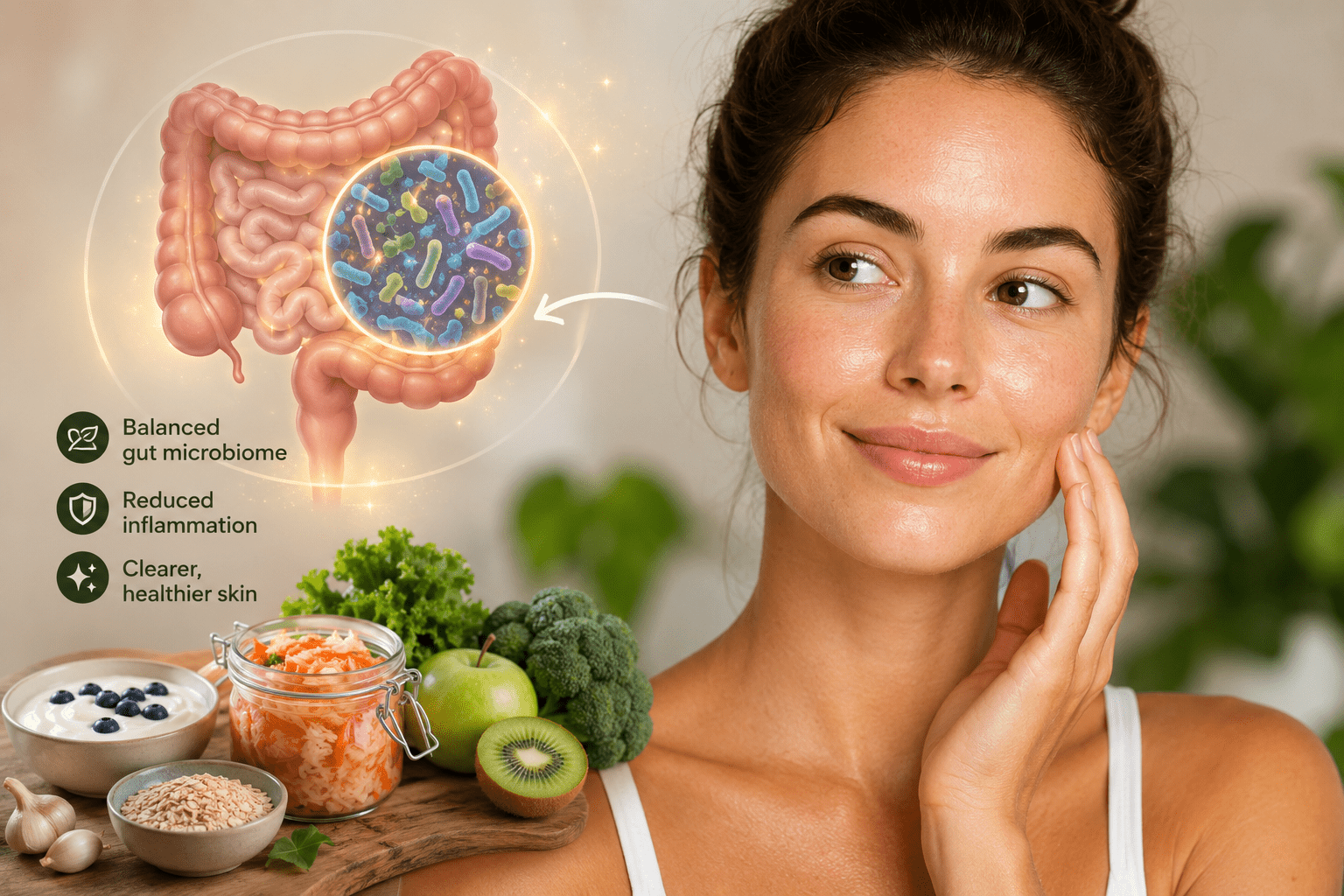
The Gut-Skin Axis: Why Your Skin Won’t Heal Until Your Gut Does
If you’ve ever stood in front of the mirror wondering why your skin just won’t settle, you’re not alone.
Many of my clients come to me after:
- Trying countless skincare products
- Cutting out food after food
- Seeing dermatologists, therapists, or practitioners
- Doing “everything right”, yet their skin still flares
Here’s the truth most people are never told:
Skin issues are very often an internal problem, not a surface one.
This is where the gut-skin axis becomes so important. The gut and skin are closely connected through inflammation, immune function, hormones, nutrient absorption, and the gut microbiome.
Research describes the gut-skin axis as an important relationship between gut health and skin health, with the gut microbiome influencing skin-related conditions through immune, metabolic, and inflammatory pathways.
How Your Gut and Skin Are Connected
Your gut and skin are in constant communication.
Your gut plays an important role in:
- Regulating inflammation
- Supporting the immune system
- Absorbing nutrients your skin needs to repair
- Supporting hormone balance
- Maintaining a healthier gut microbiome
When digestion is not working well, it can affect how efficiently the body breaks down food, absorbs nutrients, regulates inflammation, and clears waste products.
This can show up in the skin as:
- Acne that never fully clears
- Eczema or psoriasis flare-ups
- Rosacea or persistent redness
- Dry, reactive, or sensitive skin
- Dull skin or slower skin repair
Why Skincare Alone Often Is Not Enough
Topical products can be helpful, but they are often only addressing what is happening on the surface.
If the gut is inflamed, imbalanced, or struggling to absorb nutrients properly, skincare alone cannot:
- Correct nutrient deficiencies
- Support gut lining integrity
- Improve gut microbiome diversity
- Address internal inflammation
- Support hormone balance from within
That is why so many people feel stuck in a cycle of temporary improvement followed by another flare-up.
Emerging research into the gut-skin axis in acne has highlighted how the gut microbiome, inflammation, and immune function may influence acne development and skin health.
What Happens When You Support the Gut?
When the gut starts to function more efficiently, many people notice improvements that go beyond digestion.
Clients often report:
- Clearer, calmer skin
- Fewer flare-ups
- Improved digestion
- More stable energy
- Better confidence around food
- Improved understanding of their personal triggers
Most importantly, they stop feeling like they are constantly fighting against their body.
“Your skin is not separate from the rest of your body. When we support digestion, reduce inflammation, and improve nutrient absorption, the skin often becomes a reflection of better internal balance.”
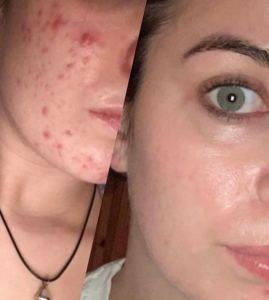
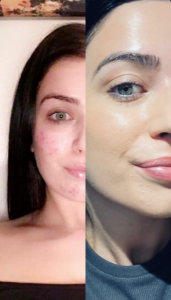
My Personal Before and After Photos
My own acne journey is one of the reasons I am so passionate about helping clients look beyond the skin and understand what their body may be trying to tell them.
A More Supportive Way Forward
Healing does not require extreme restriction or perfection.
It requires personalised support, understanding your body, and addressing the root causes that may be contributing to your symptoms.
If you are wondering whether your gut could be affecting your skin, you do not have to guess.
You may also find it helpful to read more about nutrition and gut health, explore Beth’s Complete Gut Repair 3-Month Programme, or read Beth’s personal article on how she cleared her acne naturally by healing her skin from within.
Ready to Understand What Your Skin Is Trying to Tell You?
If you are struggling with acne, eczema, rosacea, sensitive skin, digestive symptoms, or ongoing flare-ups, you do not have to navigate it alone.
As a registered nutritional therapist specialising in gut health, skin health, and hormone balance, I use a personalised approach to help uncover the factors that may be contributing to your symptoms and create a tailored nutrition and lifestyle plan designed around your individual needs.
If you would like to explore whether nutritional therapy could support your journey towards calmer skin and improved wellbeing, I would love to hear from you.
Book a free discovery call today and take the first step towards understanding what your body may be trying to tell you.
References
Mahmud, M.R. et al. (2022) ‘Impact of gut microbiome on skin health: gut-skin axis observed through the lenses of therapeutics and skin diseases’, Gut Microbes, 14(1). Available at: https://pubmed.ncbi.nlm.nih.gov/35866234/
Sánchez-Pellicer, P. et al. (2022) ‘Acne, Microbiome, and Probiotics: The Gut-Skin Axis’, Microorganisms, 10(7), p. 1303. Available at: https://pubmed.ncbi.nlm.nih.gov/35889022/

Stress and Acne: Can Stress Cause Breakouts?
Stress does not appear to be the sole cause of acne, but it may worsen breakouts in some people. Explore the stress–skin connection and practical ways to support both.
What Causes Acne?
Acne is rarely caused by one thing. This guide explains the main causes of acne and how hormones, inflammation, gut health, diet, stress, skincare and lifestyle may all contribute.
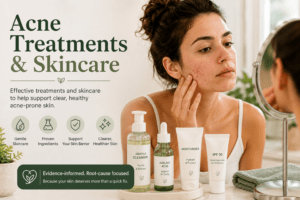
Acne Treatments & Skincare: What Actually Helps!
Table of Contents VitaminBeth Guide Estimated reading time: 10–12 minutes Reviewed by Beth Mulvey, Registered Nutritional Therapist Acne Treatments & Skincare: What Actually Helps Acne-Prone Skin? Acne skincare can feel…