My acne journey began in March 2017, when I noticed my skin becoming increasingly blemished with spots that I could not get rid of. They caused irritation, discomfort, and embarrassment, and over time, they began to affect my confidence.
Below is my personal story of how I eventually improved my skin after three years of struggling with acne by learning how to support my body from the inside out.
💡 In Plain English
This is not a “one miracle cure” acne story. It is the story of how I moved from trying to manage my skin from the outside to understanding what my body needed internally.
✅ My Acne Journey at a Glance
- My acne began suddenly in March 2017 after years of having clear skin.
- For the first year, I focused mostly on skincare and topical solutions.
- During 2018 and 2019, I explored prescription creams, birth control and symptom management.
- Over time, I noticed acne alongside IBS, constipation, irregular periods, anxious mood, oily skin and hair thinning.
- By 2020, the biggest change happened when I stopped only treating my skin from the outside and started addressing the root cause from within.
Act One: Everything Changed
March 2017: The Start of My Acne Journey
Before this, I had never really struggled with acne. I thought I had somehow avoided it and, looking back, I never truly appreciated having clear skin.
Then, in 2017, spots started appearing and disappearing constantly. It felt like as soon as one blemish began to heal, two more appeared. After around three months of my skin not improving, I had to accept that this was no longer just the odd breakout.
I was dealing with persistent acne.
Every morning, I hoped my skin would look better. Instead, I would often wake up to new spots, more redness, and the same sinking feeling that my skin was out of my control.
At the beginning, I genuinely thought my acne would just go away on its own. When it didn’t, I started to realise that my skin was trying to tell me something deeper was going on.
Beth Mulvey, Registered Nutritional Therapist
Act Two: Trying Everything on the Outside
Spring–Summer 2017: Trying to Fix My Skin from the Outside
My first thought was that my skincare routine must be the problem. With so many products marketed specifically for acne-prone skin, it made sense to start there.
I wondered whether my makeup, cleansing routine, hygiene, or clogged pores could be contributing to the breakouts, so I started experimenting with different skincare options.
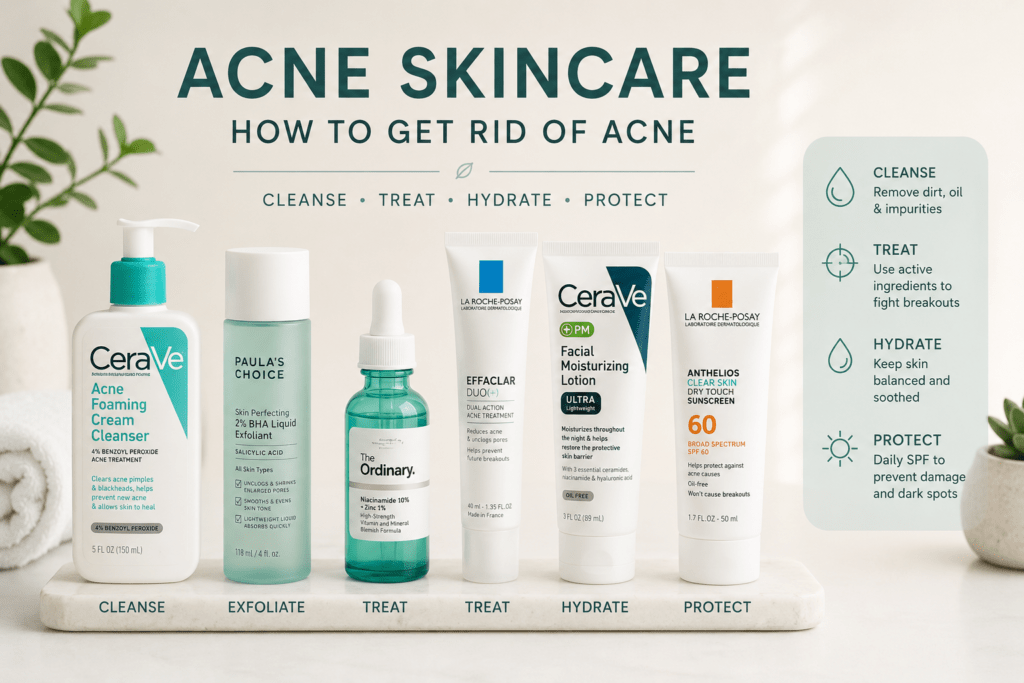
Stage 1: Acne Skincare Products
🧴 What I Tried
I researched skincare products specifically targeted at acne sufferers and tried several different options over time.
📌 What Happened
These products dried out my skin. In response, my skin seemed to produce more oil to compensate, which left it feeling more irritated and contributed to further flare-ups.
🌿 What I Learned
For me, these products were not the right long-term solution.
💭 Looking Back
I do not regret trying skincare. Looking after the skin barrier matters. But I wish I had known earlier that acne is not always a sign that your skin is dirty or that you simply need a stronger product.
Late 2017: Switching to Non-Toxic Skincare
I then researched skincare products with more natural ingredients, balanced pH levels, and fewer harsh chemicals.
🧴 What I Tried
I moved towards gentler skincare products with more natural ingredients, balanced pH levels, and fewer harsh chemicals.
📌 What Happened
These products were more expensive, but they were also much gentler on my skin. They did not cause the same level of irritation or additional flare-ups.
🌿 What I Learned
While they did not clear my acne on their own, they became part of a healthier skincare routine.
Skincare Summary
After trying different skincare products and seeing little lasting improvement, I felt deflated. I began to feel as though I had no control over my skin.
At that point, I decided it was time to seek help from my doctor.
🌿 Good to Know
Skincare can absolutely matter, especially if your skin barrier is irritated. But for me, skincare alone was not enough to address why the acne was happening.
Act Three: Managing Symptoms, But Not Understanding the Cause
2018: The Next Step Was Conventional Acne Treatment
At this stage, I was hoping the doctors would be my saving grace. I did not know what else to try, and I desperately wanted something that would help.
Stage 3: Prescription Creams
Throughout this stage, I used multiple topical acne treatments, including creams and gels that were applied daily.
💊 What I Tried
I used multiple topical acne treatments, including creams and gels that were applied daily.
📌 What Happened
The creams did provide relief while I was using them, which initially felt amazing. For the first time in a while, I felt more in control and more hopeful.
⚠️ The Problem
If I stopped using them for even a few days, the flare-ups would return. Over time, each cream seemed to become less effective, which led to going back and trying different options.
🌿 What I Learned
My skin became more sensitive, and I became increasingly aware that this approach was managing the symptoms rather than addressing why my acne was happening in the first place.
💭 Looking Back
Prescription creams gave me breathing space, and at the time that mattered. But I wish someone had explained that symptom control and root-cause support are not always the same thing.
2018–2019: Birth Control and Hormone Questions
After a while, I was advised to try a different form of contraception as part of my acne treatment.
At the time, I was not trying to conceive, so I was open to exploring this option. However, after experiencing side effects, I began to question whether synthetic hormones were helping or making things more complicated.
💊 What I Tried
I explored contraception as part of my acne treatment.
📌 What Happened
I had been using the implant for around three years, and it was around the time it needed replacing that my skin broke out significantly.
🔎 What I Noticed
I initially did not connect the implant to my acne because I had previously had clear skin while using it. However, this time around, I noticed symptoms such as anxious mood, changes in bowel habits, oily skin, hair thinning, and a significant increase in acne.
Hormonal factors can play an important role in acne, which is why some conventional approaches use hormone-based treatments such as certain contraceptives (Elsaie, 2016).
🔬 Research Snapshot
Hormonal factors can influence acne through pathways such as sebum production, inflammation and skin cell behaviour. This is why some conventional acne treatments target hormone-related pathways (Elsaie, 2016).
2019: Coming Off Birth Control
I then decided to come off birth control altogether.
This was not an instant fix. My body went through a period of adjustment as it worked to rebalance naturally. Although I noticed a slight improvement after around six months, my hormones were still not where they needed to be.
My periods were irregular, my gut health was poor, and I was also struggling with IBS and constipation. I had been told it could take around three months for hormones to return to normal, but in my experience, it took much longer.
💡 In Plain English
Looking back, my acne was not happening on its own. It was appearing alongside irregular periods, IBS, constipation, anxious mood, oily skin, hair thinning and low confidence. These were clues that my skin was part of a bigger internal picture.
Doctor Summary
After finding that prescription creams were not providing lasting results, I eventually stopped using them.
I also did not want to rely on the contraceptive pill to manage my acne because, for me, that felt like putting a plaster over the problem rather than understanding the true cause.
At this point, I realised I needed to look deeper.
Act Four: The Question That Changed Everything
Late 2019: The Moment My Perspective Changed
During the final years of struggling with acne, I became increasingly interested in health, nutrition, and understanding how imbalances within the body can affect the skin.
Instead of only asking,
“How do I get rid of acne?”, I started asking a different question:
“Why does my body keep producing acne?”
That question changed the direction of my life.
I wanted to understand the underlying science. This led me to spend four years studying the human body, nutrition, lifestyle, and the role that nutrients and diet can play in supporting health. I later qualified as a nutritional therapist.
Emerging research into the gut-skin axis has highlighted how the gut microbiome, inflammation, and immune function may influence acne development and skin health (Sánchez-Pellicer
et al., 2022).
This made so much sense to me because I was not only struggling with acne, but also with digestive symptoms, hormone imbalances, irregular periods, low mood, and poor energy.
My own acne journey is one of the reasons I’m so passionate about helping clients look beyond the skin and understand what their body may be trying to tell them.
Beth Mulvey, Registered Nutritional Therapist
Early 2020: The Approach That Finally Worked
Throughout this journey, I used testing, symptom tracking, and a personalised nutrition approach to understand what my body needed.
The aim was to support my body from the inside out by focusing on areas such as:
🦠 Gut Health and Digestion
Understanding how digestion, IBS symptoms and constipation may have been affecting the wider picture.
⚖️ Hormone Balance
Looking at my cycle, hormone-related symptoms and how my skin changed over time.
🥗 Nutrient Intake
Supporting the body with the nutrients needed for energy, skin repair and overall health.
🍽️ Blood Sugar Balance
Building meals in a way that supported steadier energy and reduced crashes.
🔥 Inflammation
Reducing inflammatory drivers that may have been contributing to persistent breakouts.
🧘 Stress and Lifestyle
Supporting the nervous system, recovery and day-to-day resilience.
🔎 Food Sensitivities
Exploring food sensitivities where appropriate rather than guessing or cutting everything out.
Research has suggested that nutrition-related lifestyle factors may play a role in acne, with one study showing improvements in acne symptoms and insulin sensitivity following a low-glycaemic-load diet (Smith
et al., 2007).
Within three to four weeks, I began noticing changes in both my skin and my body. I had more energy, felt more alert, and noticed fewer new spots appearing. My skin also felt less inflamed and irritated.
I did not want to get ahead of myself, but I felt genuinely excited.
After six months of sticking to my personalised nutrition and lifestyle plan, my skin was clear, my confidence had returned, and I finally felt like I understood what my body needed.
✅ What Changed for Me
- My skin became less inflamed and irritated.
- I noticed fewer new spots appearing.
- My energy improved.
- I felt more alert.
- My confidence returned.
- I finally felt like I understood what my body needed.
Act Five: Getting My Confidence Back
Mid 2020: My Personal Result
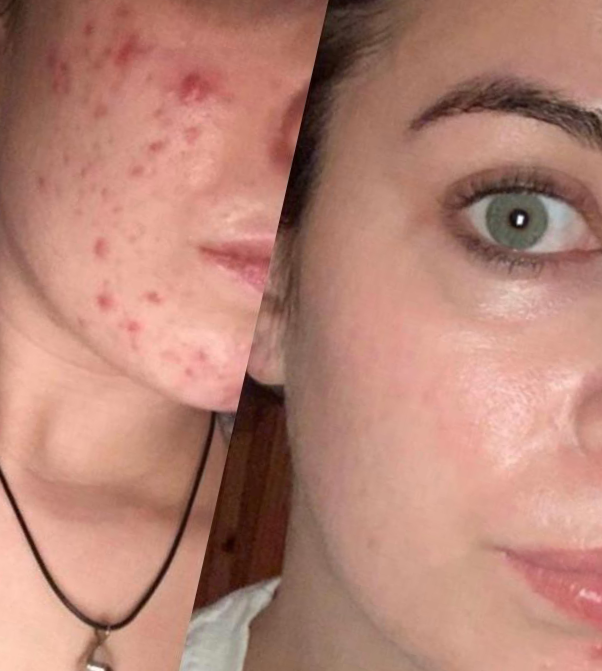
My acne journey was frustrating, emotional, and at times incredibly difficult. But it also became the reason I do what I do today.
I learned that acne is not always just a skin problem. For many people, it can be connected to internal factors such as gut health, hormone balance, nutrient status, inflammation, stress, and lifestyle.
Skincare can absolutely play an important role, but for me, the biggest transformation happened when I stopped only trying to treat my skin from the outside and started supporting my body from within.
If you are interested in learning more about the connection between gut health and skin, you may find it helpful to read about
the gut-skin axis, or explore Beth’s
Complete Gut Repair 3-Month Programme.
Why I Created VitaminBeth
I did not create VitaminBeth because I wanted to simply talk about food or supplements.
I created it because I know how lonely acne can feel. I know what it is like to try product after product, to feel embarrassed by your skin, and to wonder why nothing seems to work for long.
I also know how powerful it can be when someone finally helps you look at the bigger picture.
That is why my work now focuses on helping clients understand what may be driving their symptoms, including gut health, hormones, nutrition, inflammation, stress, digestion and lifestyle.
🌿 What This Story Is Really About
This is not about saying everyone’s acne has the same cause as mine. It is about showing how acne can sometimes be part of a wider pattern, and why looking beyond the skin can be so valuable.
Looking Back
If I could go back and speak to the version of myself who had just developed acne in 2017, I would not tell her to buy another cleanser.
I would not tell her to scrub her skin harder.
I would not tell her to hide behind makeup.
I would tell her to start listening to her body.
I would tell her that clearer skin would not come from fighting her skin, but from understanding it.
I wanted to become the kind of practitioner I wish I had met when I was struggling with my own skin.
Beth Mulvey, Registered Nutritional Therapist
What This Means For You
If you are struggling with acne, you may feel like you have tried everything on the outside: cleansers, creams, prescriptions, skincare routines or supplements.
But if your skin keeps flaring, it may be worth asking a different question:
“What is my skin trying to tell me about what is happening inside my body?”
A root-cause approach does not mean ignoring skincare or medical treatment. It means looking at the whole picture, including digestion, hormones, nutrition, inflammation, stress, sleep and lifestyle.
For a broader starting point, read
How to Get Rid of Acne. You may also find
Can Gut Health Cause Acne? helpful.
If You Are Feeling Like I Once Did
🔎 This May Feel Familiar If…
- You feel frustrated because nothing seems to work for long.
- You feel embarrassed or self-conscious about your skin.
- You are tired of trying new products without understanding the cause.
- Your acne appears alongside gut symptoms, hormone symptoms, fatigue or stress.
- You want a more personalised approach than guessing what to try next.
Ready to Start Your Own Skin Transformation?
If you’re struggling with acne, you’ve probably already tried countless skincare products, creams, medications, or supplements without finding a lasting solution.
I understand how frustrating, painful, and confidence-damaging acne can be because I’ve been there myself.
My approach focuses on identifying and addressing the root causes that may be contributing to your skin concerns, including gut health imbalances, hormone health, nutrient deficiencies, stress, and lifestyle factors.
Rather than simply masking symptoms, I help clients create personalised nutrition and lifestyle plans designed to support long-term skin health from within.
If you’d like to explore whether nutritional therapy could support your journey towards clearer skin and improved wellbeing, I’d love to hear from you.
Book a Free Discovery Call
📚 Continue Your Acne Learning
You’re reading one of VitaminBeth’s acne stories. Visit the Acne Resource Centre to explore our evidence-informed articles on acne causes, hormones, gut health, nutrition, lifestyle and personalised support in one place.
References
- Elsaie, M.L. (2016) ‘Hormonal treatment of acne vulgaris: an update’, Clinical, Cosmetic and Investigational Dermatology, 9, pp. 241–248. Available at: https://pmc.ncbi.nlm.nih.gov/articles/PMC5015761/
- Sánchez-Pellicer, P. et al. (2022) ‘Acne, Microbiome, and Probiotics: The Gut-Skin Axis’, Microorganisms, 10(7), p. 1303. Available at: https://pubmed.ncbi.nlm.nih.gov/35889022/
- Smith, R.N. et al. (2007) ‘A low-glycemic-load diet improves symptoms in acne vulgaris patients: a randomized controlled trial’, The American Journal of Clinical Nutrition, 86(1), pp. 107–115. Available at: https://pubmed.ncbi.nlm.nih.gov/17616769/