📚 VitaminBeth Guide
⏱️ Estimated reading time: 8–10 minutes
👩⚕️ Reviewed by Beth Mulvey, Registered Nutritional Therapist
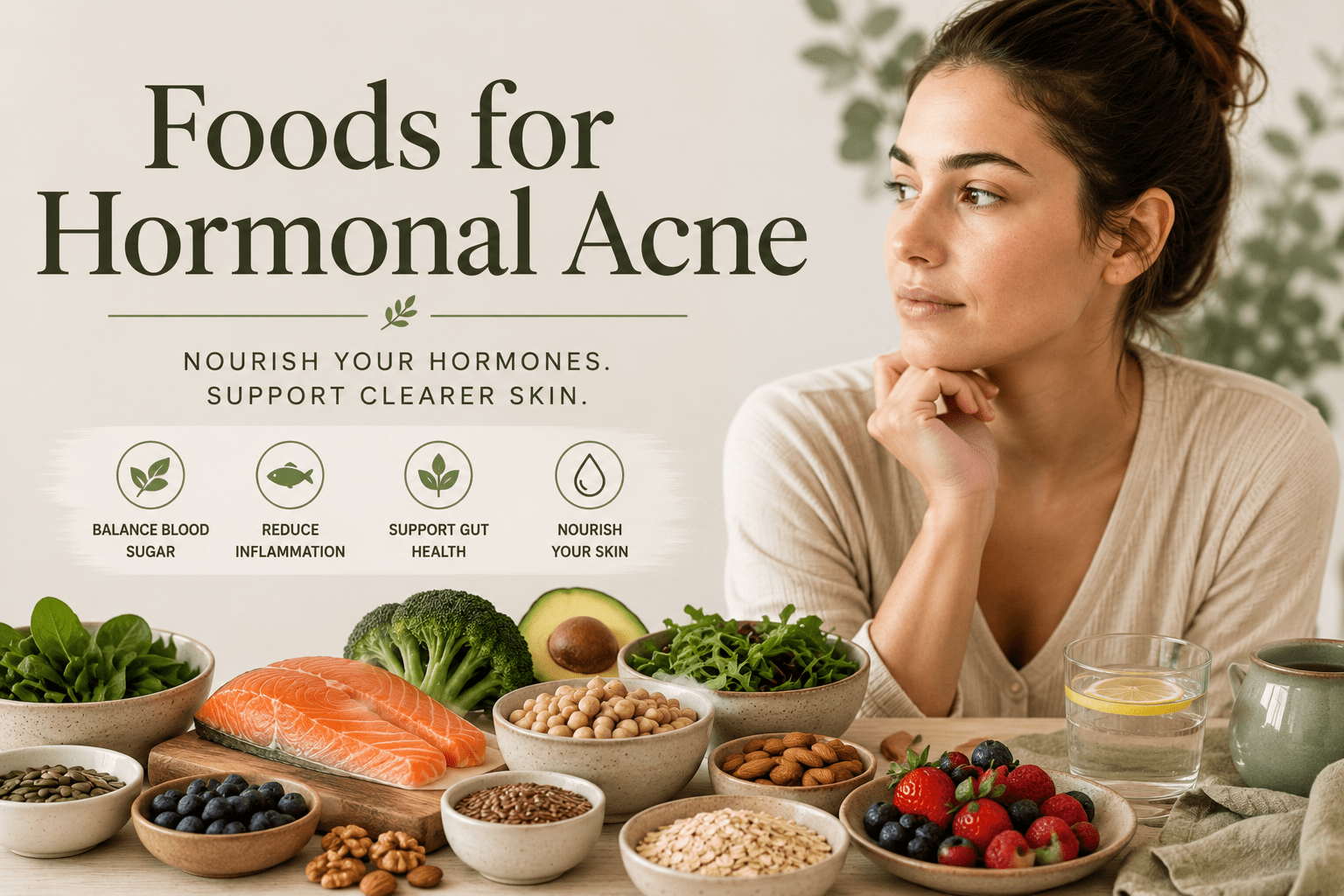
Foods for Hormonal Acne: What to Eat to Support Clearer Skin
Hormonal acne can feel incredibly frustrating, especially when breakouts keep returning around the chin, jawline, cheeks or before your period.
You may have tried skincare products, changed your routine or cut out certain foods, only to find that your skin still flares up at certain times of the month.
While food is not the only cause of hormonal acne, your diet can play an important role in supporting blood sugar balance, hormone metabolism, inflammation, gut health and skin repair.
There is no single “perfect acne diet” that works for everyone. However, certain foods may help create a better internal environment for clearer, calmer skin (Baldwin and Tan, 2021; Meixiong and Bhutani, 2022).
💡 In Plain English
Hormonal acne is not only about what happens on the surface of your skin. Food may support clearer skin by helping with blood sugar balance, inflammation, gut health, hormone metabolism and skin repair. But diet is only one part of the bigger picture.
✅ Key Takeaways
- Food alone may not completely resolve hormonal acne, but it can support the wider picture.
- Balanced meals may help support blood sugar, inflammation, gut health and hormone metabolism.
- Protein, fibre, omega-3 fats, zinc-rich foods, magnesium-rich foods and colourful plants can all be useful foundations.
- Some people may find high-sugar foods, high-glycaemic foods, dairy or whey protein worsen their skin.
- Persistent hormonal acne usually needs a root-cause approach rather than a single diet rule.
When I work with clients who have hormonal acne, I rarely focus on one single food. Blood sugar balance, gut health, inflammation, stress, nutrient status and hormone patterns all influence how the skin behaves. That is why looking at the whole picture is usually more helpful than chasing one miracle food.
Beth Mulvey, Registered Nutritional Therapist
What Is Hormonal Acne?
Hormonal acne is acne that is strongly influenced by changes in hormones, particularly androgens. Androgens can increase sebum production, which may contribute to blocked pores, inflammation and breakouts (Baldwin and Tan, 2021).
Hormonal acne often appears around the:
- Chin
- Jawline
- Lower cheeks
- Neck
- Chest or back
Many people notice that hormonal acne gets worse before their period, during times of stress, after poor sleep or when blood sugar levels feel unstable.
This is why a root-cause approach is so important. Hormonal acne is not just a skin issue. It can be connected to digestion, stress, inflammation, nutrient status, blood sugar balance and how well the body processes hormones.
🌿 Good to Know
Hormonal acne is not always caused by hormones alone. Hormones may be part of the picture, but gut health, stress, sleep, blood sugar, inflammation and nutrient status can all affect how your skin behaves.
Can Food Help Hormonal Acne?
Food alone may not completely resolve hormonal acne, but it can make a meaningful difference for some people.
Research suggests that high-glycaemic diets may be associated with acne development and acne severity. This means diets high in sugary foods, refined carbohydrates and foods that rapidly raise blood sugar may worsen breakouts in some individuals (Baldwin and Tan, 2021; Meixiong and Bhutani, 2022).
🔬 Research Snapshot
Research has found links between acne and high-glycaemic diets, with some evidence suggesting that lower-glycaemic eating patterns may help improve acne symptoms in certain people (Baldwin and Tan, 2021; Meixiong and Bhutani, 2022).
💡 In Plain English
If your meals cause sharp blood sugar spikes and crashes, this may influence insulin and hormone signalling. For some people, that can make acne more inflamed or harder to manage.
On the other hand, meals built around protein, fibre, healthy fats and colourful plant foods may help support more stable blood sugar, reduce inflammatory load and provide the nutrients your skin needs to repair.
If you are also wondering whether dairy could be affecting your skin, you may find this article helpful:
Does Dairy Cause Acne?.
Good Foods for Hormonal Acne
The best approach is not about restriction. It is about building meals that support your skin, hormones and overall health.
🔎 Signs This May Apply To You
This guide may be especially relevant if:
- Your acne flares before your period
- You get breakouts around the chin, jawline or lower cheeks
- You notice cravings, energy crashes or blood sugar dips
- Your acne worsens during stressful periods
- You also experience bloating, constipation or digestive discomfort
1. Protein-Rich Foods
Protein is important for blood sugar balance, skin repair, hormone production and satiety. Including protein with each meal can help reduce energy crashes and cravings, which may support more stable blood sugar levels throughout the day.
🌱 Plant Protein Sources
- Lentils
- Chickpeas
- Beans
- Tofu or tempeh
A simple example would be eggs with avocado and spinach for breakfast, or salmon with roasted vegetables and quinoa for lunch.
2. Omega-3 Rich Foods
Hormonal acne is often inflamed, red or tender. Omega-3 fats are important because they help support a healthy inflammatory response in the body. Dietary fats and fatty-acid balance have also been explored in relation to inflammation and acne (Pappas, 2009).
🐟 Oily Fish Sources
- Salmon
- Sardines
- Mackerel
- Anchovies
🌰 Plant Sources
- Chia seeds
- Flaxseeds
- Walnuts
If you do not eat oily fish, plant-based sources such as chia seeds, flaxseeds and walnuts can still be helpful, although the body converts them less efficiently into the active forms of omega-3.
3. Fibre-Rich Foods
Fibre supports gut health, regular bowel movements and blood sugar balance. This matters because the gut may influence inflammation and wider metabolic health.
🥦 Fibre-Rich Plant Foods
- Vegetables
- Berries
- Apples
- Oats
🫘 Higher-Fibre Staples
- Lentils
- Beans
- Chickpeas
- Ground flaxseed
If you experience bloating, constipation or irregular digestion alongside acne, this may be a sign that your gut needs support too.
You can read more about this here:
The Gut-Skin Axis: Why Your Skin Won’t Heal Until Your Gut Does.
4. Low-Glycaemic Carbohydrates
Low-glycaemic carbohydrates are digested more slowly, helping to support steadier blood sugar levels. This may be useful for hormonal acne because blood sugar spikes can influence insulin, IGF-1 and androgen-related pathways associated with acne development (Bowe and Logan, 2010; Baldwin and Tan, 2021).
🍠 Slow-Releasing Carbohydrates
- Oats
- Sweet potato
- Quinoa
- Brown rice
🌾 Fibre-Rich Options
- Lentils
- Beans
- Wholegrain bread
- Vegetables
This does not mean you need to avoid carbohydrates. It means choosing slower-releasing carbohydrates and pairing them with protein, fibre and healthy fats.
5. Zinc-Rich Foods
Zinc is involved in immune function, skin repair and normal wound healing. It is also one of the nutrients discussed in relation to acne and skin health (Pappas, 2009).
🌱 Zinc-Rich Plant Foods
- Pumpkin seeds
- Chickpeas
- Lentils
- Cashews
Pumpkin seeds are an easy option to add to porridge, salads, yoghurt alternatives or smoothies.
6. Colourful Fruits and Vegetables
Some colourful plant foods provide antioxidants, polyphenols, fibre and micronutrients that support skin health and help protect the body from oxidative stress.
🍓 Colourful Fruits
- Berries
- Apples
- Kiwi
- Citrus fruits
🥕 Colourful Vegetables
- Leafy greens
- Broccoli
- Peppers
- Carrots
- Tomatoes
- Red cabbage
- Beetroot
Aim to include a variety of colours across the week rather than relying on the same few foods every day.
7. Magnesium-Rich Foods
Stress can be a major trigger for hormonal breakouts. Magnesium supports the nervous system, muscle function and energy metabolism, making it a useful nutrient to consider when stress and skin symptoms appear together.
🌿 Magnesium-Rich Foods
- Dark leafy greens
- Pumpkin seeds
- Almonds
- Cashews
🍫 Other Helpful Sources
- Dark chocolate
- Avocado
- Beans
- Lentils
Although magnesium is not a magic acne cure, supporting stress resilience can be an important part of a wider hormonal acne plan.
Foods That May Worsen Hormonal Acne in Some People
Just as some foods may support clearer skin, others may worsen breakouts in certain individuals.
This does not mean you need to cut everything out. Instead, it can be helpful to notice patterns and identify your personal triggers.
High-Sugar and High-Glycaemic Foods
Frequent intake of sugary foods, white bread, pastries, sweets, fizzy drinks and highly refined carbohydrates may worsen acne in some people by increasing blood sugar and insulin demand (Baldwin and Tan, 2021; Meixiong and Bhutani, 2022).
Dairy
Dairy does not cause acne for everyone, but milk and whey protein may be triggers for some people. The evidence is strongest for milk, particularly skimmed milk, while the evidence around yoghurt and cheese is less consistent (Baldwin and Tan, 2021; Meixiong and Bhutani, 2022).
If you suspect dairy may be affecting your skin, read this next:
Does Dairy Cause Acne?.
Whey Protein
Some people notice breakouts after using whey protein powders. This may be related to the way whey influences insulin and IGF-1 signalling (Baldwin and Tan, 2021).
If acne started or worsened after adding whey protein, it may be worth reviewing whether it is the right option for you.
⚠️ A Balanced Note
Do not remove large food groups without a clear reason, especially if your diet is already limited. If you suspect a trigger, it is often better to track symptoms and review patterns rather than guessing.
Example Day of Eating for Hormonal Acne
Here is an example of how these foods could look across a day:
🥣 Breakfast
Porridge with chia seeds, berries, cinnamon and pumpkin seeds.
🥗 Lunch
Salmon or chickpea salad with leafy greens, avocado, quinoa and olive oil dressing.
🥕 Snack
Apple with almond butter, or carrot sticks with hummus.
🍛 Dinner
Chicken, tofu or lentil curry with vegetables and brown rice.
✅ Simple Meal Formula
For most meals, aim for protein, fibre-rich carbohydrates, colourful vegetables and healthy fats. This structure can support steadier blood sugar and better overall skin nutrition.
When Food Alone Is Not Enough
If your hormonal acne is persistent, painful, cystic or affecting your confidence, food may only be one part of the picture.
Other areas to consider include:
- Hormone patterns across your cycle
- Stress and cortisol
- Sleep quality
- Gut symptoms
- Blood sugar balance
- Nutrient deficiencies
- Skincare and medication history
This is why a personalised approach can be so helpful. Rather than guessing, you can look at what may be driving your symptoms and create a plan that supports your body as a whole.
For a broader acne support guide, you can also read:
How to Get Rid of Acne.
🌿 Good to Know
If acne keeps returning despite diet and skincare changes, it may be worth looking at the wider pattern, including hormones, digestion, stress, sleep, blood sugar and nutrient status.
✅ Key Takeaways
- There is no single perfect diet for hormonal acne.
- Balanced meals may support blood sugar, hormones, gut health and inflammation.
- Helpful foods include protein-rich foods, oily fish, fibre-rich foods, zinc-rich foods and colourful plants.
- Highly refined carbohydrates, excess sugar, dairy or whey protein may worsen breakouts in some people.
- If acne keeps returning, it may be worth exploring the root causes rather than relying on food changes alone.
Beth’s Insight
If someone has hormonal acne, I want to understand what is happening around the skin, the cycle, digestion, stress, sleep and blood sugar. Food can be powerful, but it works best when it is part of a personalised plan rather than a strict list of rules.
Beth Mulvey, Registered Nutritional Therapist
What This Means For You
Foods for hormonal acne should focus on supporting blood sugar balance, reducing inflammatory load, nourishing the gut and providing the nutrients your skin needs to heal.
Good options include protein-rich foods, oily fish, fibre-rich carbohydrates, colourful vegetables, zinc-rich foods, magnesium-rich foods and low-glycaemic meals.
However, hormonal acne is rarely caused by diet alone. If your breakouts keep returning, it may be time to look deeper at your hormones, gut health, stress levels and nutrient status.
Frequently Asked Questions
What are the best foods for hormonal acne?
Helpful foods may include protein-rich foods, oily fish, fibre-rich carbohydrates, colourful vegetables, zinc-rich foods, magnesium-rich foods and low-glycaemic meals.
Can food completely clear hormonal acne?
Food can support skin health, but hormonal acne is rarely caused by diet alone. Hormones, stress, gut health, inflammation, skincare, medication history and nutrient status may also play a role.
Does sugar make hormonal acne worse?
High-sugar and high-glycaemic foods may worsen acne in some people by affecting blood sugar, insulin and hormone signalling. This does not mean everyone needs to avoid all sugar, but regular spikes may be worth reviewing.
Can dairy trigger hormonal acne?
Dairy does not trigger acne for everyone, but milk and whey protein may worsen breakouts in some people. If you suspect dairy is affecting your skin, it may be helpful to track symptoms and review the pattern.
Are carbohydrates bad for hormonal acne?
Carbohydrates are not automatically bad for acne. The type and balance of carbohydrates matter. Slower-releasing options such as oats, sweet potato, quinoa, lentils, beans and vegetables may be better tolerated than highly refined carbohydrates.
What should I eat for breakfast if I have hormonal acne?
A balanced breakfast could include protein, fibre and healthy fats. Examples include eggs with avocado and spinach, or porridge with chia seeds, berries and pumpkin seeds.
When should I get help for hormonal acne?
If your acne is persistent, painful, cystic, affecting your confidence or keeps returning despite diet and skincare changes, it may be worth exploring the wider root causes with professional support.
Final Thoughts
Food can be a helpful part of a hormonal acne plan, especially when it supports blood sugar balance, gut health, inflammation, stress resilience and nutrient status.
However, diet is only one part of the picture. If your acne is persistent or recurring, the most useful next step may be to stop guessing and start understanding what is driving your skin symptoms.
Need Help With Hormonal Acne?
If you are struggling with recurring breakouts around your chin, jawline or menstrual cycle, you do not have to keep guessing what your skin needs.
At VitaminBeth, we use a personalised, root-cause approach to help identify what may be contributing to your acne, including hormones, gut health, inflammation, stress, diet and nutrient status.
Learn more about the Skin Therapy Programme
📚 Continue Your Acne Learning
You’re reading one of VitaminBeth’s acne guides. Visit the Acne Resource Centre to explore all of our evidence-informed articles on acne causes, hormones, gut health, nutrition, lifestyle and personalised support in one place.
References
- Baldwin, H. and Tan, J. (2021) ‘Effects of diet on acne and its response to treatment’, American Journal of Clinical Dermatology, 22(1), pp. 55–65. Available at: https://pmc.ncbi.nlm.nih.gov/articles/PMC7847434/
- Bowe, W.P. and Logan, A.C. (2010) ‘Diet and acne’, Journal of the American Academy of Dermatology, 63(1), pp. 124–141. Available at: https://pubmed.ncbi.nlm.nih.gov/20338665/
- Meixiong, J. and Bhutani, T. (2022) ‘Diet and acne: A systematic review’, JAAD International, 7, pp. 95–112. Available at: https://pmc.ncbi.nlm.nih.gov/articles/PMC8971946/
- Pappas, A. (2009) ‘The relationship of diet and acne: A review’, Dermato-Endocrinology, 1(5), pp. 262–267. Available at: https://pmc.ncbi.nlm.nih.gov/articles/PMC2836431/
- American Academy of Dermatology Association (n.d.) ‘Can the right diet get rid of acne?’. Available at: https://www.aad.org/diet