📚 VitaminBeth Guide
⏱️ Estimated reading time: 12–14 minutes
👩⚕️ Reviewed by Beth Mulvey, Registered Nutritional Therapist
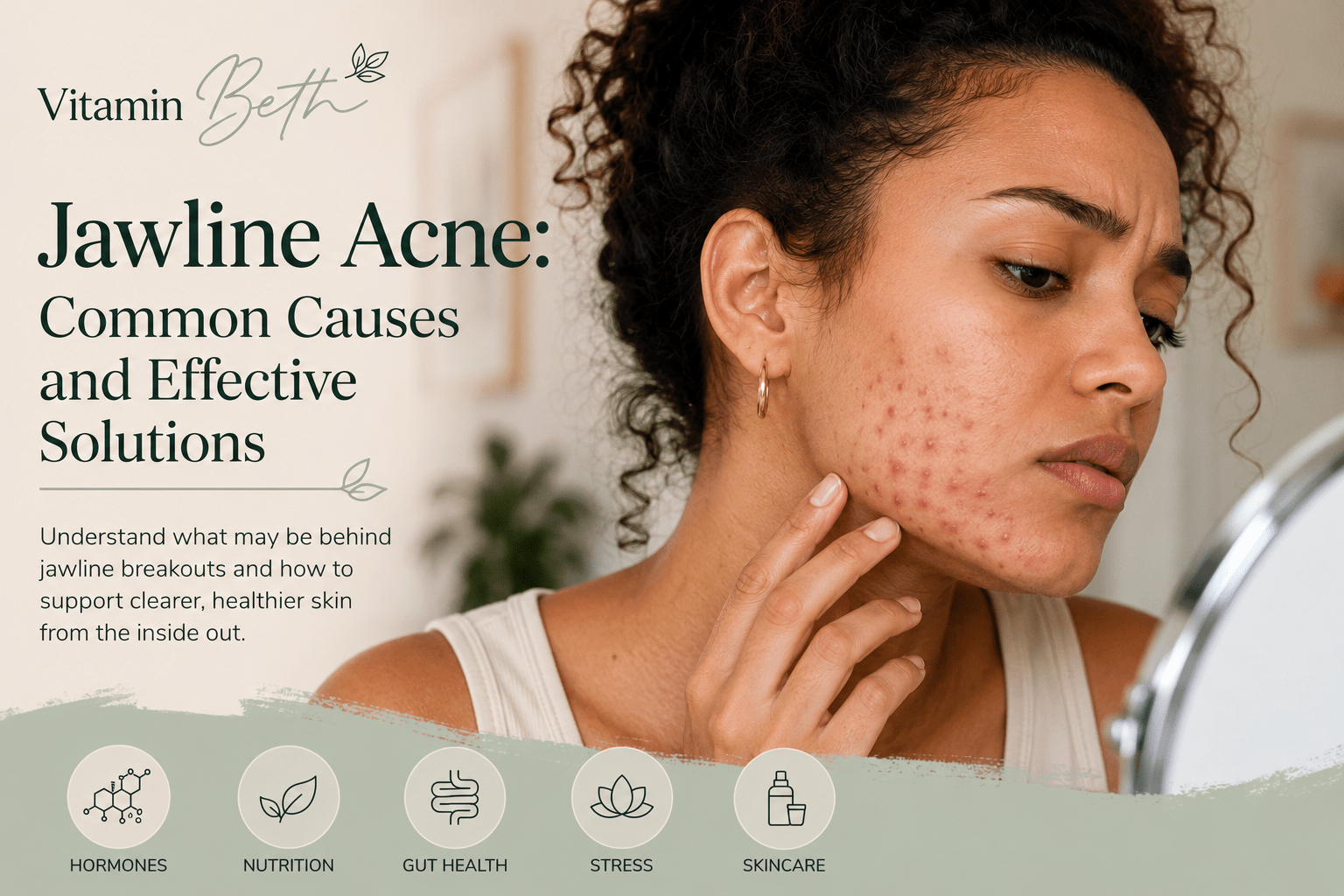
Jawline Acne: Common Causes and Effective Solutions
Jawline acne can affect both men and women, and it can feel especially frustrating when breakouts keep returning in the same area.
You may notice small bumps, whiteheads, inflamed spots, painful lumps or deeper cystic breakouts along the jaw, under the jaw or towards the neck.
Jawline acne is often described as “hormonal acne”, but location alone cannot identify the cause. Hormones can contribute to acne in people of any sex, alongside factors such as skincare, friction, shaving and some medications (DermNet, 2023).
For some people, jawline breakouts may involve androgen activity, stress, shaving or hair removal, beard products, skincare, sweat, friction, medication changes or an acne-like condition. Digestive symptoms and diet may be relevant to general health but do not identify the cause from acne location alone.
💡 In Plain English
Hormones can contribute to jawline acne in people of any sex, but the jawline location does not prove that a breakout is hormonal. The appearance, timing, severity, possible contact or shaving triggers and wider symptoms all provide more useful context.
✅ Key Takeaways
- Jawline acne can affect men and women.
- Hormones may be involved, but jawline acne is not always hormonal.
- Shaving, beard products, skincare, helmets, masks, sweat and friction can all affect the jawline area.
- Stress, sleep and some dietary patterns may be relevant, but digestive symptoms or acne location alone cannot identify the cause.
- Persistent, painful, cystic or scarring jawline acne should be assessed by a GP or dermatologist.
What Is Jawline Acne?
Jawline acne refers to acne lesions that appear along the jaw, under the jaw or around the lower face. It may overlap with chin, neck or lower-cheek acne (DermNet, 2023).
Jawline acne may appear as:
- Small clogged pores
- Whiteheads
- Blackheads
- Red inflamed bumps
- Pustules
- Deep painful lumps
- Cystic acne
Some people experience occasional spots along the jawline. Others find the same area flares repeatedly, especially during stress, after shaving, after wearing helmets or masks, after using certain skincare products, or during times of hormonal change.
If you are unsure what type of acne you have, read
Different Types of Acne.
Why Is Jawline Acne Often Linked With Hormones?
Hormones can influence oil production and inflammation in acne, but the distribution of spots along the jawline does not by itself confirm a hormonal cause (DermNet, 2023).
Androgens are hormones that are naturally present in all bodies. They can increase sebum production, which may make pores more likely to become blocked and inflamed.
This means hormonal jawline acne can affect:
- Men
- Women
- Teenagers
- Adults
- People experiencing cycle-related changes
- People with PCOS or other hormone-related symptoms
- People using or stopping certain medications or hormone-based treatments
Jawline acne may be more likely to have a hormonal component if it:
- Feels deeper, sore or cystic
- Appears around the jawline, chin, lower cheeks or neck
- Continues into adulthood
- Worsens during stress or poor sleep
- Flares around the menstrual cycle, where relevant
- Appears alongside oily skin, excess hair growth, irregular periods or other hormone-related symptoms, where relevant
🔬 Research Snapshot
Acne is multifactorial. Follicular blockage, sebum, inflammation, the skin microbiome, genetics and hormones may all contribute. Androgens can increase sebum production, but no facial location can diagnose the underlying driver on its own (Sutaria, Masood and Schlessinger, 2023).
If your acne feels hormone-related, you may find
Foods for Hormonal Acne helpful.
Jawline Acne in Men
Men can experience jawline acne for several reasons. Hormones may be involved, but the jawline is also an area commonly affected by shaving, beard care, sweat, friction and product build-up.
Possible contributors in men may include:
- Androgen activity and increased oil production
- Shaving irritation
- Ingrown hairs
- Beard oils, balms or heavy grooming products
- Sweat from training or sport
- Helmet straps, chin straps or sports equipment
- Whey protein or training supplements in some people
- Stress, poor sleep and inflammation
Jawline spots after shaving may not be acne. Pseudofolliculitis barbae—also called razor bumps—is an inflammatory reaction to hairs growing back into the skin and commonly affects the jaw and neck. It is more frequent with coarse or tightly curled hair and can affect anyone who removes facial hair (DermNet, 2023).
If bumps are itchy, spreading, very inflamed, painful or infected-looking, it is worth speaking to a GP or pharmacist for advice.
Jawline Acne in Women
People who menstruate can experience jawline acne alongside cycle-related hormonal changes, skincare irritation, stress and other acne factors. The location alone does not confirm a hormonal disorder.
Jawline acne may be more likely to have a hormonal component if it appears alongside:
- Breakouts that flare before a period
- Irregular periods
- Oily skin
- Excess facial or body hair
- Hair thinning on the scalp
- Changes after starting, stopping or changing hormonal contraception
These signs are not diagnostic of PCOS, but a combination of irregular or absent periods and signs of androgen excess may be worth discussing with your GP. Do not start, stop or change hormonal contraception or other medication because of acne without appropriate medical advice.
Jawline Acne and PCOS
Jawline acne can sometimes be linked with polycystic ovary syndrome, also known as PCOS.
Not everyone with jawline acne has PCOS, and not everyone with PCOS has acne. However, acne is a recognised symptom of PCOS and may be linked with increased androgen activity and insulin resistance.
PCOS may be worth discussing with your GP if jawline acne appears alongside:
🔎 Signs PCOS May Be Worth Exploring
- Irregular periods
- Absent periods
- Excess facial or body hair
- Oily skin
- Thinning hair on the scalp
- Acne alongside other possible signs of androgen excess
If this sounds familiar, read
Acne and PCOS: Why PCOS Can Affect Your Skin.
Other Common Causes of Jawline Acne
Although jawline acne is often discussed as hormonal, several other factors may contribute.
⚖️ Hormone Patterns
Androgen activity, stress hormones, medication changes, contraception changes, puberty, adult hormonal shifts or PCOS may influence jawline breakouts.
🪒 Shaving and Beard Care
Shaving, ingrown hairs, beard oils, balms, aftershaves and heavy grooming products may irritate or block follicles along the jawline.
🧣 Friction and Pressure
Masks, helmets, chin straps, scarves, collars, phone contact or resting the face on your hand may aggravate the jawline area.
🍽️ Blood Sugar Balance
Frequent blood sugar spikes and crashes may influence insulin and hormone signalling in some people.
🦠 Gut Health
Research is exploring possible relationships between the gut microbiome and acne, but digestive symptoms do not establish that gut health is causing jawline acne.
🧴 Skincare and Makeup
Heavy products, comedogenic makeup, SPF, moisturisers or irritation from too many active ingredients may contribute to clogged pores.
Can Gut Health Affect Jawline Acne?
Digestive symptoms can occur alongside acne, but they do not prove that gut health is causing jawline breakouts. Persistent digestive symptoms deserve assessment in their own right.
Research into communication between the gut, immune system and skin—sometimes called the gut-skin axis—is developing. Current evidence does not show that digestive symptoms identify the cause of an individual’s acne, and gut testing or restrictive diets should not replace appropriate acne care.
💡 In Plain English
Jawline acne is not automatically a gut problem. Seek appropriate support for persistent digestive symptoms, and avoid restrictive diets or gut protocols based on acne location alone.
You can read more in
Can Gut Health Cause Acne? and
The Gut-Skin Axis.
Can Food Trigger Jawline Acne?
Diet is not the cause of jawline acne for everyone. Research suggests that high-glycaemic dietary patterns and dairy may be relevant for some people, but the evidence varies and does not justify removing foods without an individual reason (Baldwin and Tan, 2021).
Possible food-related factors may include:
- A high-glycaemic dietary pattern
- Frequent high-sugar foods and drinks
- Dairy products in some people
- Whey protein in some people, although current evidence is mixed
This does not mean you need to cut everything out. It means it may be useful to track symptoms and look for repeated patterns.
If food triggers are a concern, read
Foods That May Trigger Acne and
Does Dairy Cause Acne?.
Skincare Considerations for Jawline Acne
Jawline acne can sometimes be made worse by irritation, over-cleansing, friction or using too many active ingredients.
It may help to review:
- Whether your cleanser is too harsh
- Whether makeup, SPF, moisturiser or beard products are clogging your pores
- Whether products are being removed fully from the jawline
- Whether hair products touch the jawline or neck
- Whether shaving or hair removal is irritating the skin
- Whether masks, helmets or clothing collars rub the area
- Whether your skin barrier feels dry, tight, sore or flaky
Ingredients such as salicylic acid or benzoyl peroxide are established options for acne, but suitability depends on severity, skin tolerance, pregnancy considerations and other individual factors (NICE, 2026). Ask a pharmacist, GP or dermatologist if you are unsure.
Read
Salicylic Acid or Benzoyl Peroxide for Acne to understand the difference.
⚠️ Avoid Overloading Your Skin
Using too many acne products at once can irritate the skin barrier. If your jawline acne becomes more red, sore, dry, flaky or inflamed, your skin may need a gentler approach.
Jawline Acne, Shaving and Hair Removal
Jawline acne can sometimes overlap with shaving irritation, ingrown hairs or follicle inflammation.
This may be more likely if breakouts appear after:
- Shaving
- Waxing
- Threading
- Plucking
- Using beard oils, balms or heavy grooming products
- Using fragranced aftershaves or strong skincare products
- Wearing tight collars, helmets, masks or chin straps
If bumps are itchy, spreading, very inflamed or infected-looking, it is worth seeking medical advice to rule out folliculitis or another skin condition.
For a wider comparison of acne-like breakouts, read
Hormonal Acne vs Bacterial Acne vs Fungal Acne.
When Jawline Acne May Need Medical Support
Some jawline acne should be assessed by a GP, pharmacist or dermatologist. Early support is particularly important when acne is nodular or cystic, is causing scarring, is diagnostically uncertain, is associated with possible endocrine symptoms or is significantly affecting wellbeing (NICE, 2026).
Seek medical support if your acne is:
- Painful or cystic
- Leaving scars or dark marks
- Spreading to the chin, neck, chest or back
- Linked with irregular periods or possible PCOS symptoms, where relevant
- Not improving despite consistent skincare
- Very itchy, infected-looking or spreading quickly
- Affecting your confidence or mental wellbeing
Nutritional therapy can support the wider picture, but it should not replace medical care where acne is severe, scarring, infected-looking or linked with possible endocrine symptoms.
How to Support Jawline Acne From the Inside Out
Supporting jawline acne usually works best when you look at the bigger picture.
Helpful foundations may include:
🥗 Balanced Meals
Build meals around protein, fibre-rich carbohydrates, colourful vegetables and healthy fats to support blood sugar balance.
🦠 Gut Support
Support digestion, bowel regularity and gut health if acne appears alongside bloating, constipation or IBS-type symptoms.
🧘 Stress and Sleep
Stress and poor sleep can affect hormones, cravings, inflammation and skin repair.
☀️ Nutrient Status
A varied diet supports general health, but supplements are not a routine substitute for evidence-based acne care. Possible deficiencies should be assessed from symptoms, diet and appropriate testing rather than assumed from acne alone.
🧴 Skin Barrier Support
A consistent, non-irritating skincare routine can support the skin while internal factors are addressed.
🔎 Personalised Assessment
If jawline acne keeps returning, identifying your specific drivers is more useful than guessing.
If you are exploring nutrient factors, read
Can Vitamin Deficiencies Cause Acne?.
When someone has jawline acne, I want to understand the full pattern rather than assuming it is only hormonal. Does it flare with stress, shaving, beard products, gym habits, poor sleep, digestive symptoms, blood sugar crashes or cycle changes? The jawline location gives us a clue, but the full picture tells us much more.
Beth Mulvey, Registered Nutritional Therapist
Jawline Acne Compared With Other Acne Locations
Jawline acne can overlap with chin acne, neck acne and lower cheek acne. It may also form part of a wider body acne pattern if breakouts appear on the chest, back or shoulders.
If you are noticing acne in several areas, read
Acne by Location: What Different Breakout Areas May Tell You.
You may also find these location guides helpful:
Frequently Asked Questions
What does jawline acne mean?
Jawline acne is often associated with hormonal patterns, but it can also be influenced by shaving, beard products, skincare, stress, digestion, blood sugar balance, sweat, friction and inflammation.
Is jawline acne always hormonal?
No. Jawline acne can be hormonal, but location alone does not confirm the cause. Men and women can both experience jawline acne for different reasons, including hormones, shaving, skincare, sweat, friction and lifestyle factors.
Can men get hormonal jawline acne?
Yes. Androgens are present in all bodies and can influence oil production. Men can also experience jawline acne linked with hormones, stress, sweat, shaving, beard products, training supplements or inflammation.
Can PCOS cause jawline acne?
PCOS can contribute to jawline and chin acne in some people because of increased androgen activity and insulin resistance. If jawline acne appears alongside irregular periods, excess hair growth, oily skin or thinning scalp hair, speak to your GP.
Can shaving cause jawline acne?
Shaving can irritate the skin and hair follicles, which may contribute to bumps along the jawline. In some cases, shaving-related bumps may be ingrown hairs or folliculitis rather than acne.
Can gut health affect jawline acne?
Research is exploring links between the gut microbiome and acne, but digestive symptoms do not prove that gut health is causing jawline breakouts. Seek appropriate support for persistent digestive symptoms and avoid restrictive diets based on acne location alone.
When should I get help for jawline acne?
Seek support if your jawline acne is painful, cystic, leaving scars, not improving with skincare, very itchy, infected-looking, linked with wider symptoms or affecting your confidence.
Final Thoughts
Jawline acne is commonly linked with hormonal patterns, but it is not only a women’s issue and it is rarely about one factor alone.
For some people, jawline acne may be influenced by androgen activity, PCOS, stress, poor sleep, blood sugar balance, gut health, diet, skincare, shaving, beard products, sweat, friction or irritation.
The most helpful approach is to look at the full pattern rather than treating the jawline as a separate problem. When does it flare? What does it look like? Is it painful, itchy, cystic or inflamed? What else is happening in your body and lifestyle?
Those answers can help guide a more personalised plan.
Need Help Understanding Your Jawline Acne?
If your jawline acne keeps returning and you feel unsure whether it is hormonal, gut-related, stress-related, skincare-related or something else, you do not have to keep guessing.
At VitaminBeth, we use a personalised, root-cause approach to help identify what may be contributing to acne, including gut health, hormones, inflammation, stress, diet and nutrient status.
Learn more about the Skin Therapy Programme
📚 Continue Your Acne Learning
You’re reading one of VitaminBeth’s acne guides. Visit the Acne Resource Centre to explore all of our evidence-informed articles on acne causes, hormones, gut health, nutrition, lifestyle and personalised support in one place.
References
- DermNet (2023) ‘Acne vulgaris’. Available at: https://dermnetnz.org/topics/acne-vulgaris
- NICE (2026) ‘Acne vulgaris: management’. Available at: https://www.nice.org.uk/guidance/ng198
- Sutaria, A.H., Masood, S. and Schlessinger, J. (2023) ‘Acne Vulgaris’, StatPearls. Available at: https://www.ncbi.nlm.nih.gov/books/NBK459173/
- Damoulaki, E. et al. (2025) ‘Polycystic ovary syndrome-associated acne: The interplay of hyperandrogenism, insulin resistance, and therapeutic strategies’, Cureus, 17(11), e98103. Available at: https://pmc.ncbi.nlm.nih.gov/articles/PMC12747725/
- DermNet (2023) ‘Pseudofolliculitis barbae’. Available at: https://dermnetnz.org/topics/pseudofolliculitis-barbae
- Baldwin, H. and Tan, J. (2021) ‘Effects of diet on acne and its response to treatment’, American Journal of Clinical Dermatology, 22(1), pp.55–65. Available at: https://pmc.ncbi.nlm.nih.gov/articles/PMC7847434/