📚 VitaminBeth Guide
⏱️ Estimated reading time: 10–12 minutes
👩⚕️ Reviewed by Beth Mulvey, Registered Nutritional Therapist
Foods That May Trigger Acne: What the Research Says
If you struggle with acne, it is natural to wonder whether something in your diet could be making your breakouts worse.
You may have heard that chocolate causes acne, dairy is the problem, or sugar is always to blame. The truth is more nuanced. Acne is a complex skin condition, and food is rarely the only cause.
However, research suggests that certain foods and dietary patterns may worsen acne in some people, particularly those that influence blood sugar, insulin, inflammation and hormone signalling (Baldwin and Tan, 2021; Meixiong and Bhutani, 2022).
In this guide, we will look at the foods that may trigger acne, what the research says and how to work out whether your skin may be responding to something in your diet.
💡 In Plain English
Food is rarely the only cause of acne. However, certain foods may worsen breakouts in some people by affecting blood sugar, insulin, inflammation and hormone signalling.
✅ Key Takeaways
- Acne is rarely caused by one single food.
- High-glycaemic foods, high-sugar foods, dairy and whey protein may worsen acne in some people.
- Food triggers vary between individuals.
- A food, skin and symptom diary can help you identify repeated patterns.
- Removing several foods at once can make it harder to identify the real trigger.
- The goal is not fear or unnecessary restriction, but understanding how your skin responds.
What Causes Acne?
Acne develops when hair follicles become blocked by sebum and dead skin cells. Bacterial activity and inflammation can then contribute to blackheads, whiteheads, inflamed spots or deeper lesions (Baldwin and Tan, 2021).
Factors that may contribute to acne include:
- Hormonal changes
- Increased sebum production
- Blocked hair follicles
- Inflammation
- Genetics
- Stress
- Sleep disruption
- Some medications or supplements
- Dietary patterns in some people
Acne is therefore rarely explained by one food alone. However, diet may act as a trigger or amplifier alongside other factors.
For a wider explanation, read What Causes Acne?.
Can Food Really Trigger Acne?
Food does not directly cause acne in everyone. However, diet can influence several biological processes involved in acne development (Bowe and Logan, 2010; Meixiong and Bhutani, 2022).
For example, some dietary patterns may increase insulin and insulin-like growth factor 1, also known as IGF-1. These pathways may influence androgen signalling, sebum production and skin-cell behaviour (Baldwin and Tan, 2021; Meixiong and Bhutani, 2022).
Researchers have therefore explored possible connections between acne and high-glycaemic diets, dairy consumption and Western-style dietary patterns. The evidence suggests that these factors may be relevant for some individuals, but responses are not universal (Baldwin and Tan, 2021; Juhl et al., 2018; Meixiong and Bhutani, 2022).
🔬 Research Snapshot
Systematic reviews have identified possible associations between acne and high-glycaemic diets or dairy consumption. However, the available studies vary in quality and design, so the evidence does not show that one specific food causes acne in everyone (Juhl et al., 2018; Meixiong and Bhutani, 2022).
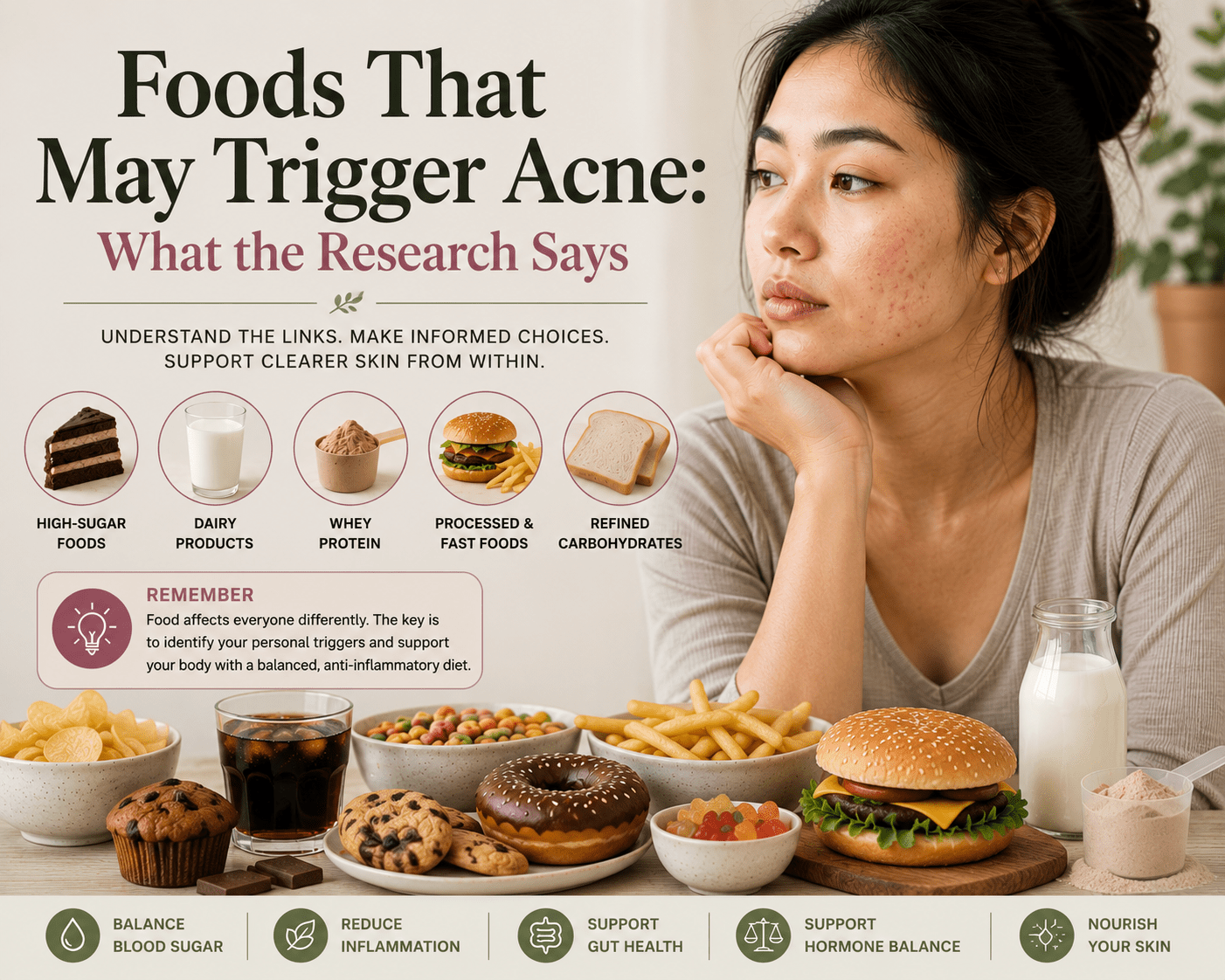
1. High-Glycaemic Foods
High-glycaemic foods are foods that can raise blood glucose relatively quickly. In response, the body produces insulin to help move glucose into cells.
Repeated elevations in insulin and related signalling pathways may influence androgen activity, sebum production and skin-cell growth in people who are susceptible to acne (Baldwin and Tan, 2021; Meixiong and Bhutani, 2022).
Examples of higher-glycaemic foods can include:
🍞 Refined Carbohydrates
- White bread
- Sugary breakfast cereals
- Cakes and pastries
- Refined crackers
- Large portions of refined rice or pasta without protein or fibre
🍬 Sugary Foods and Drinks
- Sweets
- Biscuits
- Fizzy drinks
- Fruit juice
- Sweetened energy drinks
Several studies have found that lower-glycaemic dietary patterns may improve acne severity in some participants. However, this does not mean that individual higher-glycaemic foods must be completely avoided (Bowe and Logan, 2010; Baldwin and Tan, 2021).
A balanced approach is to combine carbohydrate foods with protein, fibre and healthy fats where appropriate.
2. Dairy Products
Dairy is one of the most frequently discussed food groups in relation to acne.
A systematic review and meta-analysis found an association between dairy intake and acne in children, adolescents and young adults. Associations were reported for several dairy categories, although observational findings cannot prove that dairy directly caused the acne (Juhl et al., 2018).
Some research has identified a stronger association with skimmed or low-fat milk. The reasons remain uncertain, and factors such as insulin and IGF-1 signalling have been proposed as possible mechanisms (Baldwin and Tan, 2021; Juhl et al., 2018).
Dairy does not worsen acne for everyone. Some people tolerate milk, yoghurt and cheese without noticing any change in their skin, while others report a pattern between particular dairy products and breakouts.
For a more detailed explanation, read Does Dairy Cause Acne?.
🌿 Good to Know
An association does not prove that dairy causes acne. If you suspect dairy affects your skin, tracking your usual intake and symptoms is generally more informative than removing all dairy products without a clear plan.
3. Whey Protein
Whey protein is derived from milk and is commonly found in protein powders, shakes, bars and sports-nutrition products.
There have been reports of acne developing or worsening after people begin using whey protein supplements. Whey may influence insulin-related pathways, but the evidence is more limited than the research into overall dairy intake or glycaemic load (Baldwin and Tan, 2021; Meixiong and Bhutani, 2022).
If your breakouts began or noticeably worsened after starting a protein powder, check whether the product contains whey. It may be helpful to record the timing, dose and location of your breakouts before deciding whether to trial an alternative.
🏋️ Check Your Supplements
Protein powders may also contain sweeteners, flavourings or other added ingredients. Review the whole product rather than assuming whey is automatically responsible.
4. High-Sugar Foods and Drinks
High-sugar foods often overlap with high-glycaemic foods. Frequent intake may contribute to rapid changes in blood glucose and increased insulin demand, particularly when sugary foods are eaten without protein, fibre or fat.
These changes may be relevant to acne because insulin-related pathways can affect sebum production and androgen signalling (Baldwin and Tan, 2021; Meixiong and Bhutani, 2022).
Examples include:
🍫 High-Sugar Foods
- Sweets
- Chocolate confectionery
- Cakes
- Biscuits
- Sweet pastries
🥤 Sweetened Drinks and Products
- Fizzy drinks
- Sweetened coffee drinks
- Energy drinks
- Sweetened yoghurts
- Some breakfast products
This does not mean that eating sugar occasionally will automatically cause a breakout. The overall dietary pattern, frequency, portion size and your individual response matter more than one isolated food.
💡 In Plain English
Sugar is not necessarily the whole problem. For some people, repeated blood sugar spikes and the hormonal signals that follow may make acne feel more inflamed or difficult to manage.
5. Highly Processed Foods
Highly processed foods have not been proven to directly cause acne in everyone.
However, dietary patterns dominated by refined carbohydrates, sweetened drinks and highly processed foods may overlap with the high-glycaemic Western-style dietary patterns that have been associated with acne in some studies (Baldwin and Tan, 2021; Meixiong and Bhutani, 2022).
Examples may include:
🍟 Processed Meals and Snacks
- Some fast foods
- Crisps
- Some ready meals
- Packaged snack foods
🥐 Refined Foods
- Sweet baked goods
- Refined snack bars
- Sugary cereals
- Confectionery
The issue is unlikely to be one takeaway or one packaged snack. It is more helpful to consider whether highly processed foods regularly replace meals containing protein, fibre, vegetables and essential nutrients.
6. Chocolate: Does It Really Cause Acne?
Chocolate has been blamed for acne for decades, but the evidence remains mixed.
Chocolate products vary considerably. Milk chocolate and confectionery may contain cocoa alongside sugar, milk and other ingredients, making it difficult to identify which component might be relevant.
Some people report flare-ups after consuming chocolate, while others notice no relationship. It is therefore more helpful to track the type, amount and frequency of chocolate consumed rather than assuming all chocolate will affect the skin.
One of the biggest misconceptions I see is that acne is caused by one “bad” food. In reality, acne is usually influenced by several factors working together. Rather than fearing food, I encourage clients to become curious about patterns and how their body responds.
Beth Mulvey, Registered Nutritional Therapist
Could Other Foods Affect Your Acne?
People sometimes report acne changes after eating foods not commonly highlighted in research. This does not necessarily mean those foods are universally linked with acne.
Individual responses may be influenced by:
- The overall composition of the meal
- Portion size and frequency
- Allergy or intolerance
- Digestive symptoms
- Menstrual-cycle changes
- Stress and sleep
- Skincare or medication changes
- New supplements
A single breakout after eating one food does not confirm a trigger. Repeated patterns provide more useful information.
How to Identify Your Personal Acne Triggers
If you suspect a food may be contributing to your acne, avoid removing several foods at the same time. Doing so can make your diet unnecessarily restrictive and make it difficult to work out which change made a difference.
A more structured approach may include:
📝 1. Record Your Usual Diet
Keep a food, skin and symptom diary for two to four weeks before making major changes.
🔎 2. Track the Wider Picture
Record breakouts alongside digestion, stress, sleep, menstrual-cycle changes, skincare and supplements.
📅 3. Look for Repetition
Look for patterns that occur repeatedly rather than blaming a food after one isolated breakout.
🧪 4. Trial One Change
Where appropriate, change one factor at a time so that the outcome is easier to interpret.
↩️ 5. Consider Reintroduction
Reintroducing a suspected food can help show whether symptoms return, provided it is medically safe to do so.
🤝 6. Seek Personalised Support
Professional support may be helpful if your diet is already restricted or you are unsure how to test a suspected trigger safely.
⚠️ A Balanced Note
Do not reintroduce a food if you have a diagnosed food allergy or have previously experienced swelling, breathing difficulty, faintness or another serious reaction. Food allergies should be managed with an appropriate healthcare professional.
Children, pregnant people and anyone at risk of nutritional deficiency should seek professional advice before undertaking a restrictive diet.
Foods That May Support Clearer Skin
Instead of focusing only on what to remove, it is helpful to consider what your skin and wider health may need more of.
A balanced eating pattern may include:
🥚 Protein and Repair
- Eggs
- Fish
- Poultry
- Tofu
- Beans and lentils
🐟 Omega-3 Fats
- Salmon
- Sardines
- Mackerel
- Chia seeds
- Walnuts
🌈 Colourful Plant Foods
- Leafy vegetables
- Berries
- Peppers
- Broccoli
- Carrots
🌾 Fibre-Rich Carbohydrates
- Oats
- Beans
- Lentils
- Wholegrains
- Root vegetables
🌿 Zinc-Rich Foods
- Seafood
- Meat
- Pumpkin seeds
- Beans
- Lentils
🥑 Healthy Fats
- Olive oil
- Avocado
- Nuts
- Seeds
- Oily fish
You can explore this further in Foods for Hormonal Acne.
When Acne Is More Than a Food Issue
If your acne is persistent, painful, cystic or affecting your confidence, food may be only one part of the picture.
Other factors may include:
- Hormonal changes
- PCOS
- Genetic susceptibility
- Stress
- Poor sleep
- Skincare products
- Medications or supplements
- Digestive symptoms
- Possible nutrient insufficiency
If your skin does not improve despite sensible dietary and skincare changes, it may be helpful to explore the wider factors contributing to your symptoms.
For broader support, read How to Get Rid of Acne.
If you experience acne alongside irregular periods, excess facial or body hair or thinning scalp hair, read Acne and PCOS.
You may also find The Gut-Skin Axis: Why Your Skin Won’t Heal Until Your Gut Does helpful.
🌿 Good to Know
Food may be relevant without being the only cause. Hormones, genetics, skincare, medications, stress and sleep can all influence acne, so the wider pattern matters.
When to Seek Medical Support
Speak to your GP or another appropriate healthcare professional if your acne is severe, painful, persistent, cystic or causing scarring.
Medical support is also important if acne appears alongside:
- Irregular or absent periods
- Excess facial or body hair
- Thinning scalp hair
- Sudden or unexplained symptoms
- Significant changes in weight
- Low mood or a major effect on your confidence
⚠️ When To Get Medical Support
Dietary changes should not replace medical acne treatment. Seek medical advice for painful, nodular, cystic or scarring acne, or if your skin is having a significant effect on your emotional wellbeing.
Frequently Asked Questions
Can one food cause acne?
Acne is rarely caused by one food alone. However, a particular food or dietary pattern may worsen breakouts in someone who is already susceptible. Repeated patterns are more informative than one isolated reaction.
How quickly can food affect acne?
There is no single timeframe that applies to everyone. Acne lesions develop through several stages, so a breakout noticed after one meal may not have been caused by that meal. Tracking your diet and skin over several weeks can provide a clearer picture.
Should I stop eating dairy if I have acne?
Not automatically. Research has identified an association between dairy intake and acne, but dairy does not affect everyone in the same way. A structured trial may be considered if you repeatedly notice a connection, ideally with support if dairy is an important source of protein, calcium or iodine in your diet.
Can whey protein cause acne?
Some people report that acne begins or worsens after they start using whey protein. The evidence is limited, but reviewing your protein powder may be worthwhile if the timing matches a clear change in your skin.
Does chocolate cause acne?
The evidence is mixed. Chocolate products often contain several ingredients, including sugar and milk, so it can be difficult to identify which component may be relevant. Your own repeated pattern is more useful than assuming all chocolate is a trigger.
Do I need to avoid sugar completely?
No. The aim is not to remove every source of sugar. It may be more helpful to reduce frequent high-sugar foods and drinks, build balanced meals and observe whether steadier eating patterns make a difference to your skin.
What is the best way to test an acne trigger?
Start by recording your usual diet, skin, digestion, menstrual cycle, stress and sleep. If a repeated pattern appears, trial one carefully selected change at a time. Avoid removing several food groups simultaneously.
When should I get professional help with my acne?
Seek medical support if your acne is painful, cystic, scarring, persistent or affecting your wellbeing. Nutritional support may be useful alongside medical care when you need help assessing dietary patterns without becoming unnecessarily restrictive.
Final Thoughts
Research suggests that high-glycaemic dietary patterns and dairy consumption may be associated with acne in some people. Whey protein and other dietary factors may also be relevant for certain individuals, although the evidence is not equally strong for every proposed trigger (Juhl et al., 2018; Baldwin and Tan, 2021; Meixiong and Bhutani, 2022).
This does not mean that everyone with acne should eliminate dairy, carbohydrates, sugar or chocolate.
The most useful approach is to look for repeated personal patterns while maintaining a varied and nutritionally balanced diet. Where a possible trigger is identified, change one factor at a time and consider how your skin is also being influenced by hormones, stress, sleep, skincare and medical factors.
✅ Key Takeaways
- Food is rarely the only cause of acne.
- High-glycaemic diets and dairy have been associated with acne in some research.
- Whey protein may be a trigger for some individuals, although evidence remains limited.
- Chocolate and highly processed foods cannot be assumed to affect everyone.
- A structured food and symptom diary can help identify repeated patterns.
- Avoid unnecessary restriction and seek medical care for severe or scarring acne.
What This Means For You
If you feel as though your skin reacts to everything, the answer is not necessarily to remove more and more foods.
Begin by looking at your overall eating pattern and tracking your skin alongside stress, sleep, digestion, menstrual-cycle changes, skincare and supplements.
Focus on consistent balanced meals, make one change at a time and remember that acne usually has several contributing factors.
Struggling to Find What Triggers Your Acne?
If you feel like your skin reacts to everything and you are tired of guessing, personalised support can help you explore what may be contributing to your breakouts.
At VitaminBeth, we take a personalised approach to acne by considering diet, gut health, hormone-related symptoms, inflammation, stress, lifestyle and nutrient intake.
The aim is not to give you a longer list of foods to fear. It is to help you build a structured, balanced plan based on your symptoms and individual needs.
Learn more about the Skin Therapy Programme
📚 Continue Your Acne Learning
You’re reading one of VitaminBeth’s acne guides. Visit the Acne Resource Centre to explore all of our evidence-informed articles on acne causes, hormones, gut health, nutrition, lifestyle and personalised support in one place.
References
- American Academy of Dermatology Association (n.d.) ‘Can the right diet get rid of acne?’. Available at: https://www.aad.org/public/diseases/acne/causes/diet
- Baldwin, H. and Tan, J. (2021) ‘Effects of diet on acne and its response to treatment’, American Journal of Clinical Dermatology, 22(1), pp. 55–65. Available at: https://pmc.ncbi.nlm.nih.gov/articles/PMC7847434/
- Bowe, W.P. and Logan, A.C. (2010) ‘Diet and acne’, Journal of the American Academy of Dermatology, 63(1), pp. 124–141. Available at: https://pubmed.ncbi.nlm.nih.gov/20338665/
- Juhl, C.R., Bergholdt, H.K.M., Miller, I.M., Jemec, G.B.E., Kanters, J.K. and Ellervik, C. (2018) ‘Dairy intake and acne vulgaris: A systematic review and meta-analysis of 78,529 children, adolescents, and young adults’, Nutrients, 10(8), p. 1049. Available at: https://pubmed.ncbi.nlm.nih.gov/30096883/
- Meixiong, J. and Bhutani, T. (2022) ‘Diet and acne: A systematic review’, JAAD International, 7, pp. 95–112. Available at: https://pmc.ncbi.nlm.nih.gov/articles/PMC8971946/