📚 VitaminBeth Guide
⏱️ Estimated reading time: 8–10 minutes
👩⚕️ Reviewed by Beth Mulvey, Registered Nutritional Therapist
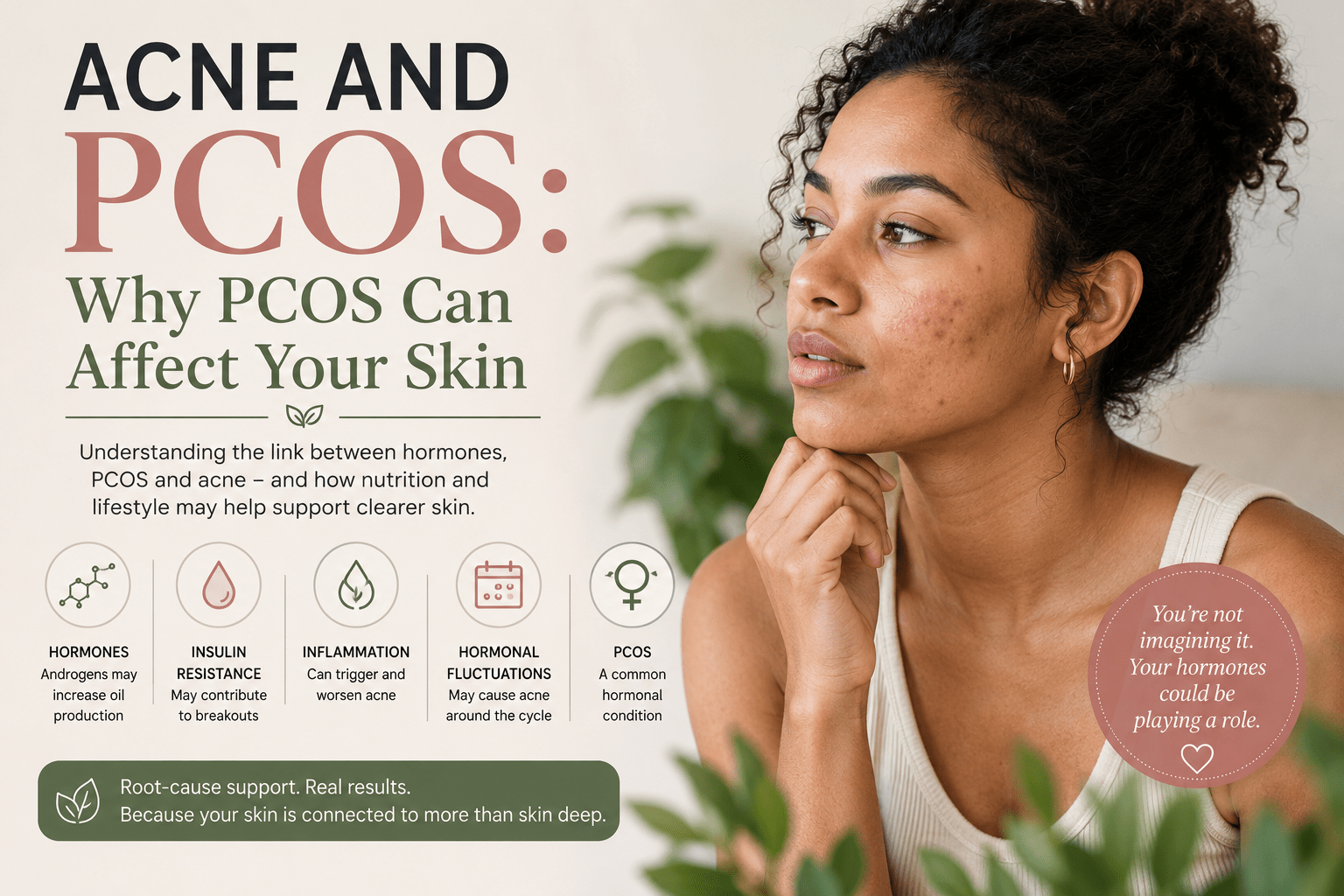
Acne and PCOS: Why PCOS Can Affect Your Skin
If you have acne alongside irregular periods, oily skin, excess facial or body hair, or difficulty managing your weight, you may have wondered whether PCOS could be involved.
PCOS, also known as polycystic ovary syndrome, is a common hormonal condition that can affect the skin, menstrual cycle, metabolism and overall wellbeing (NHS, 2022; NICE, 2025).
Not everyone with acne has PCOS, and not everyone with PCOS has acne. However, acne is a recognised symptom of PCOS and is often linked with increased androgen activity, insulin resistance and inflammation (Legro et al., 2013; Damoulaki, Stratigos and Katsambas, 2025).
In this guide, we will explore the link between acne and PCOS, what PCOS-related acne may look like, and how nutrition and lifestyle support may help your skin alongside appropriate medical care.
💡 In Plain English
PCOS can affect the skin because it may influence hormones, oil production, blood sugar balance and inflammation. Acne alone does not mean you have PCOS, but acne alongside irregular periods, excess hair growth or oily skin may be worth exploring.
✅ Key Takeaways
- PCOS can be linked with acne through androgen activity, insulin resistance and inflammation.
- PCOS-related acne often appears around the chin, jawline, neck, chest or back.
- Acne location alone cannot diagnose PCOS.
- If acne appears alongside irregular periods, excess hair growth or thinning scalp hair, medical assessment is important.
- Nutrition and lifestyle may support the wider picture, but they should not replace medical care.
What Is PCOS?
PCOS is a complex endocrine condition that affects how the ovaries work and how the body manages hormones and metabolism (Legro et al., 2013; NHS, 2022).
Common features of PCOS can include:
- Irregular periods or absent periods
- Excess facial or body hair
- Oily skin or acne
- Thinning hair or hair loss from the scalp
- Difficulty getting pregnant due to irregular ovulation
- Weight changes or difficulty losing weight
- Insulin resistance
Symptoms vary between individuals, and not everyone with PCOS experiences every feature (NHS, 2022; NICE, 2025).
If you suspect you may have PCOS, it is important to speak to your GP or healthcare professional for proper assessment and diagnosis.
⚠️ Medical Note
PCOS should be assessed by a GP or appropriate healthcare professional. Nutritional therapy may support the wider picture, but it should not replace medical diagnosis or treatment.
How Are Acne and PCOS Linked?
Acne and PCOS are often linked through higher levels of androgens. Androgens are sometimes described as “male-type” hormones, but they are naturally present in all bodies.
In PCOS, androgen levels may be higher than expected, or the skin may be more sensitive to androgen activity. This can increase oil production in the skin, making pores more likely to become blocked and inflamed (Legro et al., 2013; Damoulaki, Stratigos and Katsambas, 2025).
This can lead to persistent breakouts, especially in areas where hormonal acne commonly appears, such as the chin, jawline, neck, chest and back.
🔬 Research Snapshot
Research suggests that PCOS-related acne is often linked with androgen activity, insulin resistance and inflammatory changes. However, acne alone is not enough to diagnose PCOS (Damoulaki, Stratigos and Katsambas, 2025).
What Does PCOS Acne Look Like?
PCOS acne can look different from person to person. Some people experience mild but persistent breakouts, while others develop deeper, painful or cystic spots.
🔎 Signs This May Apply To You
PCOS may be worth discussing with your GP if acne appears alongside:
- Irregular or absent periods
- Excess facial or body hair
- Oily skin
- Thinning hair on the scalp
- Difficulty managing weight
- Fertility concerns
- Cravings, energy crashes or blood sugar dips
Hormonal Acne and PCOS
Hormonal acne and PCOS are closely connected because both involve hormone signalling. In PCOS, higher androgen activity can increase sebum production, which may contribute to blocked pores and inflamed breakouts (Damoulaki, Stratigos and Katsambas, 2025).
This type of acne often feels persistent and may not respond fully to skincare alone.
If your acne feels hormonal, you may also find this useful: Foods for Hormonal Acne.
Chin Acne and PCOS
Chin acne and PCOS are commonly discussed together because hormonal breakouts often appear around the lower face.
Breakouts around the chin and jawline do not automatically mean you have PCOS. However, if chin acne appears alongside irregular periods, excess hair growth, oily skin or other hormonal symptoms, it may be worth discussing this with your GP.
Cystic Acne and PCOS
Both cystic acne and PCOS can be particularly distressing. Cystic acne usually appears as deeper, painful lumps under the skin that may take longer to heal and can increase the risk of scarring.
If your acne is painful, severe, cystic or leaving scars, it is important to seek medical advice. Nutritional therapy may support the wider picture, but cystic acne often needs medical assessment too (NICE Guideline Updates Team, 2021).
You can learn more about acne types here: Different Types of Acne.
Back Acne and PCOS
Back acne and PCOS may also be linked through androgen activity. The back has many oil glands, so increased sebum production may contribute to blocked pores and inflamed spots in this area.
Back acne can also be influenced by sweat, friction, tight clothing, hair products, body products and training supplements, so it is important to consider the full picture.
Body Acne and PCOS
Body acne and PCOS may appear on the chest, shoulders, back or neck. If breakouts occur alongside symptoms such as irregular cycles, excess hair growth or thinning scalp hair, hormonal factors may be involved.
Again, this does not mean PCOS is the cause in every case, but it can be a clue worth investigating.
💡 In Plain English
Where acne appears can give clues, but it cannot diagnose PCOS. Chin, jawline, neck, chest or back acne may be hormonal, but symptoms such as cycle changes, excess hair growth and oily skin matter too.
Why Insulin Resistance Matters in PCOS Acne
Insulin resistance is common in PCOS. This means the body has to produce more insulin to help move glucose from the blood into the cells (Legro et al., 2013).
Higher insulin levels may contribute to increased androgen production, which can then influence oil production and acne. This is one reason why blood sugar balance is often an important part of supporting PCOS and skin health (Legro et al., 2013; Damoulaki, Stratigos and Katsambas, 2025).
Meals that contain protein, fibre, healthy fats and slower-releasing carbohydrates may help support steadier blood sugar levels.
🌿 Good to Know
Blood sugar balance can be especially relevant in PCOS because insulin and androgens can influence each other. Supporting steadier blood sugar may help support the wider hormonal picture.
Can Diet Help Acne and PCOS?
Diet cannot cure PCOS, and nutrition should not replace medical care. However, nutrition may play a supportive role in managing blood sugar balance, inflammation, gut health, energy levels and overall hormone wellbeing alongside appropriate medical treatment.
Helpful dietary foundations may include:
🥚 Protein With Meals
- Eggs
- Fish
- Chicken
- Lentils
- Beans
🌾 High-Fibre Carbohydrates
- Oats
- Lentils
- Beans
- Vegetables
- Wholegrains
🐟 Omega-3 Rich Foods
- Salmon
- Sardines
- Chia seeds
- Flaxseeds
- Walnuts
🌈 Colourful Plant Foods
- Leafy greens
- Berries
- Peppers
- Broccoli
- Carrots
It may also be helpful to reduce frequent high-sugar and high-glycaemic foods, and to support regular meals to reduce blood sugar crashes and cravings.
If you suspect certain foods worsen your acne, read: Foods That May Trigger Acne.
Could Gut Health Be Involved Too?
Some people with PCOS and acne also experience bloating, constipation, IBS symptoms or food sensitivities.
Gut health does not directly cause acne in everyone, but the gut-skin axis may influence inflammation, immune regulation and hormone metabolism.
You can explore this further here: Can Gut Health Cause Acne?.
Many women spend years trying different skincare products without realising that persistent acne may have an underlying hormonal component. Looking at the wider picture, including menstrual health, stress, blood sugar balance, gut health and nutrition, can provide valuable insights.
Beth Mulvey, Registered Nutritional Therapist
Other Signs Your Acne May Be Hormonal
Your acne may have a hormonal component if you notice:
- Breakouts around the chin, jawline or neck
- Acne that worsens before your period
- Deep, painful or cystic spots
- Oily skin alongside irregular periods
- Excess facial or body hair
- Thinning hair on the scalp
- Cravings, energy crashes or blood sugar dips
- Acne that has continued into adulthood
These signs do not automatically mean you have PCOS, but they may suggest it is worth investigating hormones with a healthcare professional.
When to Speak to Your GP
You should speak to your GP or healthcare professional if you suspect PCOS or if you have acne alongside irregular periods, excess hair growth, fertility concerns, thinning scalp hair or significant changes in weight (NHS, 2022; NICE, 2025).
Medical assessment is important because PCOS can affect more than the skin. It may also be associated with metabolic health, fertility, menstrual health and long-term wellbeing (Legro et al., 2013; NICE, 2025).
If your acne is severe, painful, cystic or scarring, you should also seek support from your GP or a dermatologist (NICE Guideline Updates Team, 2021).
⚠️ When To Get Medical Support
Speak to your GP if acne appears alongside irregular periods, excess hair growth, fertility concerns, thinning scalp hair, sudden weight changes, painful cystic acne or scarring.
The Bottom Line
Acne and PCOS can be linked through androgen activity, insulin resistance, inflammation and hormone patterns.
PCOS-related acne may appear as hormonal acne, chin acne, cystic acne, back acne or body acne, although acne location alone cannot diagnose PCOS.
If you suspect PCOS may be affecting your skin, medical assessment is important. Nutritional therapy may then support the wider picture by helping you explore diet, gut health, blood sugar balance, stress and lifestyle factors that may be contributing to your symptoms.
✅ Key Takeaways
- PCOS can affect acne through androgen activity, insulin resistance and inflammation.
- PCOS acne often affects the chin, jawline, neck, chest or back.
- Irregular periods, excess hair growth and thinning scalp hair are important signs to discuss with a GP.
- Blood sugar balance, gut health, stress and nutrition may all support the wider picture.
- Persistent, painful, cystic or scarring acne should be medically assessed.
What This Means For You
If you have acne alongside irregular periods, oily skin, excess facial or body hair, thinning scalp hair or blood sugar symptoms, PCOS may be worth exploring with your GP.
If PCOS is confirmed, the next step is not just to focus on skincare. A wider approach may include medical care, blood sugar support, nutrition, gut health, stress management and lifestyle changes.
For broader acne support, read How to Get Rid of Acne.
Frequently Asked Questions
Can acne be the first sign of PCOS?
Acne can be one feature of PCOS, but acne alone is not enough to diagnose the condition. PCOS may be worth discussing with your GP if acne appears alongside irregular periods, excess facial or body hair, thinning scalp hair or fertility concerns.
Does everyone with PCOS have acne?
No. PCOS symptoms vary from person to person. Some people experience acne or oily skin, while others may mainly experience irregular periods, excess hair growth, fertility difficulties or metabolic symptoms.
What does PCOS acne usually look like?
PCOS-related acne may be persistent, inflamed or cystic and can appear around the chin, jawline, neck, chest or back. However, acne location alone cannot confirm that PCOS is the cause.
Can you have PCOS with regular periods?
Some people with PCOS may still experience periods that appear relatively regular. Diagnosis considers a wider combination of symptoms, medical history, hormone-related signs and appropriate investigations, so concerns should be discussed with a GP.
Can diet cure PCOS acne?
No. Diet cannot cure PCOS and should not replace medical care. Nutrition may, however, support blood sugar balance, energy, inflammation and overall metabolic health as part of a wider management plan.
Does insulin resistance always occur with PCOS?
No. Insulin resistance is common in PCOS, but it does not affect everyone in the same way. A healthcare professional can assess your individual symptoms and metabolic health.
When should I see my GP about hormonal acne?
Speak to your GP if acne appears alongside irregular or absent periods, excess hair growth, thinning scalp hair, fertility concerns or significant weight changes. You should also seek medical support for painful, severe, cystic or scarring acne.
Final Thoughts
Acne can be one visible sign of the hormonal and metabolic changes associated with PCOS, but acne alone does not confirm that you have the condition.
If your breakouts appear alongside irregular periods, excess hair growth, thinning scalp hair, fertility concerns or blood sugar symptoms, speak to your GP for appropriate assessment.
Where PCOS is diagnosed, the most helpful approach is usually a combination of appropriate medical care and personalised support for nutrition, blood sugar balance, stress, gut health and lifestyle.
Struggling With Acne and Hormonal Symptoms?
If you are experiencing acne alongside irregular periods, chin or jawline breakouts, bloating, cravings or other hormone-related symptoms, you do not have to keep guessing what your skin needs.
At VitaminBeth, we take a personalised, root-cause approach to acne, exploring diet, gut health, hormones, inflammation, stress and nutrient status to help identify what may be contributing to your breakouts.
Learn more about the Skin Therapy Programme
📚 Continue Your Acne Learning
You’re reading one of VitaminBeth’s acne guides. Visit the Acne Resource Centre to explore all of our evidence-informed articles on acne causes, hormones, gut health, nutrition, lifestyle and personalised support in one place.
References
- Damoulaki, E., Stratigos, A.J. and Katsambas, A. (2025) ‘Polycystic ovary syndrome-associated acne’, Journal of Clinical Medicine. Available at: https://pmc.ncbi.nlm.nih.gov/articles/PMC12747725/
- Legro, R.S., Arslanian, S.A., Ehrmann, D.A., Hoeger, K.M., Murad, M.H., Pasquali, R. and Welt, C.K. (2013) ‘Diagnosis and treatment of polycystic ovary syndrome: An Endocrine Society clinical practice guideline’, The Journal of Clinical Endocrinology & Metabolism, 98(12), pp. 4565–4592. Available at: https://pubmed.ncbi.nlm.nih.gov/24151290/
- NHS (2022) ‘Polycystic ovary syndrome’. Available at: https://www.nhs.uk/conditions/polycystic-ovary-syndrome-pcos/
- National Institute for Health and Care Excellence (NICE) (2025) ‘Polycystic ovary syndrome’. Available at: https://cks.nice.org.uk/topics/polycystic-ovary-syndrome/
- NICE Guideline Updates Team (2021) ‘Acne vulgaris: management options for people with acne vulgaris and polycystic ovary syndrome’, NCBI Bookshelf. Available at: https://www.ncbi.nlm.nih.gov/books/NBK573053/