📚 VitaminBeth Guide
⏱️ Estimated reading time: 10–12 minutes
👩⚕️ Reviewed by Beth Mulvey, Registered Nutritional Therapist
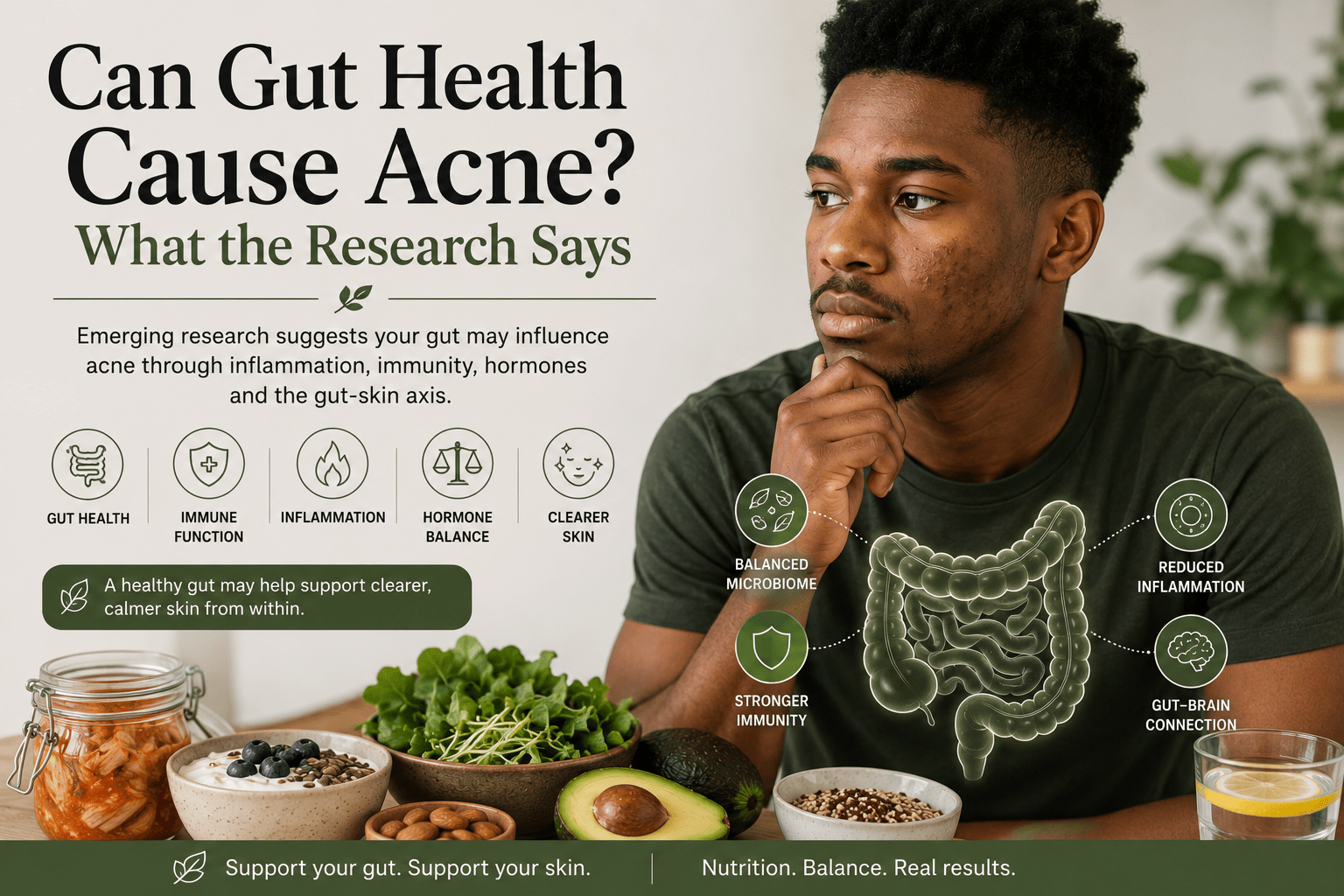
Can Gut Health Cause Acne? What the Research Says
If you struggle with acne and also experience bloating, constipation, food sensitivities or digestive discomfort, you may have wondered whether your gut health could be affecting your skin.
Gut health is unlikely to be the only cause of acne. Acne is a complex skin condition influenced by hormones, genetics, sebum production, blocked follicles, inflammation and other individual factors.
However, research into the gut-skin axis suggests that the digestive system and gut microbiome may influence processes relevant to skin health, including immune signalling, systemic inflammation, stress responses and nutrient metabolism (Bowe and Logan, 2011; Salem et al., 2018; Mahmud et al., 2022).
This connection is commonly known as the gut-skin axis.
Rather than viewing acne as purely a surface-level issue, the gut-skin axis provides one possible explanation for why digestive and skin symptoms sometimes occur together.
💡 In Plain English
Gut health does not cause acne for everyone. However, digestive symptoms may be one clue that inflammation, immune balance, stress or nutrient intake could be contributing to the wider picture.
✅ Key Takeaways
- Gut health is unlikely to be the only cause of acne.
- The gut-skin axis describes communication between the gut microbiome, immune system, nervous system and skin.
- Gut-related changes may influence inflammation, immune signalling, stress responses and nutrient availability.
- Acne alongside bloating, constipation, diarrhoea or IBS-type symptoms may be worth exploring more carefully.
- Probiotics may support some people, but they are not a guaranteed acne treatment.
- Gut support should be personalised rather than based on extreme restriction or guesswork.
What Is the Gut-Skin Axis?
The gut-skin axis describes the two-way relationship between the digestive system, gut microbiome, immune system, nervous system and skin.
The gut microbiome is made up of trillions of microorganisms, including bacteria, fungi and viruses. These organisms interact with digestion, immune regulation, metabolism and inflammatory signalling (Salem et al., 2018; Mahmud et al., 2022).
When the composition or function of the gut microbiome changes, sometimes described as dysbiosis, this may influence immune responses and inflammatory activity elsewhere in the body. Research has explored whether these changes could be relevant to inflammatory skin conditions, including acne (Lee, Byun and Kim, 2019; Sánchez-Pellicer et al., 2022).
This does not mean that an altered microbiome directly causes acne. The relationship is complex, and the available evidence is still developing.
You can explore this connection further in The Gut-Skin Axis: Why Your Skin Won’t Heal Until Your Gut Does.
🔬 Research Snapshot
Research suggests that the gut microbiome may influence immune signalling, inflammation and skin function. However, current evidence does not show that poor gut health directly causes acne in everyone (Lee, Byun and Kim, 2019; Mahmud et al., 2022; Sánchez-Pellicer et al., 2022).
So, Can Gut Health Cause Acne?
Gut health does not directly cause acne in everyone. Acne develops through several interacting factors, including sebum production, blocked follicles, hormonal signalling, inflammation and changes within the skin microbiome (Baldwin and Tan, 2021; Lee, Byun and Kim, 2019).
However, digestive health may contribute to the wider environment in which acne develops or persists.
Possible areas of influence include:
- Systemic inflammation
- Immune signalling
- Stress responses
- Nutrient intake and absorption
- Blood sugar regulation
- Interactions between the gut, brain and skin
This may help explain why some people notice changes in their skin when they also improve bowel regularity, dietary quality, stress levels or digestive symptoms. However, improvement does not prove that the gut was the sole cause.
How Might Gut Health Affect Acne?
Researchers have proposed several ways in which gut health may influence acne-prone skin.
🔥 1. Inflammatory Signalling
Acne is an inflammatory skin condition. Changes in the gut microbiome may influence inflammatory signalling throughout the body, although the extent to which this contributes to acne varies between individuals (Salem et al., 2018; Lee, Byun and Kim, 2019).
🛡️ 2. Immune Function
The gut interacts closely with the immune system. Gut microbes may affect how immune responses are regulated, which could influence the body’s response to inflammation in the skin (Mahmud et al., 2022).
🥗 3. Nutrient Availability
Digestive symptoms, restricted eating or certain gut conditions may affect nutrient intake or absorption. Skin repair depends on adequate protein, fats, vitamins and minerals.
⚖️ 4. Metabolism and Elimination
The digestive system contributes to normal metabolism and waste elimination. Regular bowel movements support normal waste removal, although constipation alone has not been shown to directly cause acne.
🧠 5. Stress Signalling
The gut, brain and skin communicate through nervous, hormonal and immune pathways. Stress may affect gut motility, sleep, food choices and inflammatory responses, all of which may influence acne (Bowe and Logan, 2011).
Digestion and Nutrient Support for the Skin
The skin requires a regular supply of nutrients to support normal repair, immune function and barrier health.
Important nutrients include:
🛡️ Zinc
Zinc supports normal immune function, wound healing and skin repair.
🐟 Omega-3 Fats
Omega-3 fats contribute to normal inflammatory regulation and form part of healthy cell membranes.
🥕 Vitamin A
Vitamin A supports normal skin-cell growth and immune function. High-dose supplements should only be used with appropriate professional guidance.
☀️ Vitamin D
Vitamin D supports immune function and wider health. Deficiency should be assessed appropriately rather than assumed from skin symptoms.
🌿 Magnesium and B Vitamins
These nutrients support normal energy metabolism and many wider body processes.
🥚 Protein
Protein provides amino acids needed for tissue repair, enzyme production and normal skin structure.
If digestive symptoms lead you to avoid several food groups, your overall nutrient intake may become limited. This may be more relevant to skin health than one individual food.
You may find these related guides helpful:
Could the Gut Influence Hormone-Related Acne?
Hormones are an important contributor to acne, particularly breakouts that appear around the chin or jawline or fluctuate during the menstrual cycle.
The gut contributes to normal hormone metabolism and elimination. Gut microorganisms may also interact with some hormone-related pathways, although this area remains complex and is still being studied (Salem et al., 2018; Mahmud et al., 2022).
Regular bowel movements support normal waste removal. However, constipation alone has not been shown to directly cause acne, and it should not be assumed that improving bowel frequency will automatically clear the skin.
If your acne appears alongside cycle changes or other hormone-related symptoms, read Foods for Hormonal Acne.
You may also find Acne and PCOS helpful if you experience irregular periods, excess facial or body hair or thinning scalp hair.
Stress Can Affect Both the Gut and Skin
Stress can affect digestion, gut motility, sleep, appetite, food choices and inflammatory signalling. It may also worsen acne through changes in stress hormones and oil production.
This is one reason some people notice that their digestion and skin flare at the same time during periods of high pressure or poor sleep.
The gut-brain-skin connection does not mean stress is the only cause. It means that stress may be one factor interacting with hormones, skincare, diet and existing acne susceptibility (Bowe and Logan, 2011).
Read more in Stress and Acne.
Many clients are surprised when we discuss digestion during an acne consultation. It is not uncommon for people with persistent skin issues to also experience bloating, constipation or other digestive symptoms. Looking at the body as a whole can provide useful clues without assuming that every breakout begins in the gut.
Beth Mulvey, Registered Nutritional Therapist
Signs Gut Health May Be Worth Exploring
Not everyone with acne has a digestive problem. However, it may be worth looking more closely at gut health if acne appears alongside ongoing digestive symptoms.
🔎 Signs Gut Health May Be Worth Exploring
- Frequent bloating
- Persistent constipation
- Regular diarrhoea or loose stools
- IBS-type symptoms
- Reflux or indigestion
- Abdominal discomfort
- A very restricted diet because of digestive symptoms
- A history of repeated antibiotic use
- Repeated skin flare-ups alongside digestive symptoms
These symptoms do not prove that your gut is causing your acne. They suggest that digestion may be one part of the wider health picture.
Can Probiotics Help Acne?
Some research has explored whether probiotics may support people with acne by influencing the gut microbiome, immune regulation and inflammatory signalling.
Early findings are of interest, but the evidence is still developing. Probiotics should not be presented as a replacement for established acne treatment (Bowe and Logan, 2011; Sánchez-Pellicer et al., 2022).
It is also important to understand that probiotics are strain-specific. Different strains may have different effects, so the word “probiotic” does not describe one single treatment.
Some studies have investigated strains belonging to groups such as Lactobacillus and Bifidobacterium, but there is not enough evidence to recommend one universal probiotic product for acne.
Fermented foods and probiotic supplements are also not the same. Fermented foods may contain live microorganisms, but the type and amount can vary considerably.
🌿 Good to Know
Probiotics do not work the same way for everyone. Some people may experience additional gas, bloating or discomfort. A more personalised approach may be appropriate if you have significant digestive symptoms, suspected SIBO, immune suppression or complex health needs.
You can learn more in Probiotics and Acne: What the Research Says.
How to Support Gut Health for Clearer Skin
If you suspect your digestive health may be contributing to your acne, the aim is not to follow an extreme diet. It is to support regular digestion, adequate nourishment and the wider factors that influence both gut and skin health.
🥦 1. Increase Fibre Gradually
Vegetables, fruit, oats, beans, lentils, chickpeas, ground flaxseed and wholegrains can support fibre intake.
Increase fibre gradually, particularly if you already experience bloating or abdominal discomfort.
🌈 2. Include Plant Variety
Different plant foods provide different fibres and plant compounds. Aim for a varied range of vegetables, fruits, legumes, nuts, seeds and wholegrains where tolerated.
🍽️ 3. Build Balanced Meals
Combine protein, fibre-rich carbohydrates and healthy fats to support energy and blood sugar stability.
💧 4. Drink Enough Fluid
Adequate hydration supports normal digestion and bowel function. Increasing fibre without sufficient fluid may worsen constipation for some people.
🚶 5. Support Regular Movement
Regular physical activity may support bowel motility, stress management and overall health.
😴 6. Prioritise Sleep and Stress Support
Sleep and stress can influence digestion, appetite, inflammatory responses and acne flare-ups.
⚖️ 7. Avoid Unnecessary Restriction
Removing several foods at once can make it difficult to identify what is helping and may reduce nutrient intake.
📝 8. Track Patterns
A food, digestion, skin, stress and cycle diary may help you identify repeated patterns rather than relying on guesswork.
You can learn more about dietary patterns in Foods That May Trigger Acne.
Dairy may be relevant for some people but not everyone. Read Does Dairy Cause Acne?.
⚠️ A Balanced Note
Avoid removing several food groups without a clear reason or plan. Restrictive diets can reduce nutrient intake and increase anxiety around food.
Seek professional guidance if you already have a restricted diet, a diagnosed digestive condition, a history of disordered eating, unexplained weight loss or concerns about nutritional deficiency.
When to Speak to Your GP
Persistent digestive symptoms should not automatically be treated as a microbiome imbalance or food intolerance.
Speak to your GP or another appropriate healthcare professional if you experience:
- Blood in your stools
- Black or tar-like stools
- Unexplained weight loss
- Persistent vomiting
- Severe or worsening abdominal pain
- Persistent diarrhoea
- Ongoing constipation that does not improve
- Difficulty swallowing
- A persistent change in bowel habits
- Fever alongside digestive symptoms
- Symptoms that wake you during the night
You should also seek medical advice if your acne is painful, nodular, cystic, scarring or having a significant effect on your confidence or emotional wellbeing.
⚠️ When To Get Medical Support
Gut support and dietary changes should not replace medical investigation. Seek appropriate medical care for red-flag digestive symptoms, severe acne, scarring or symptoms that are persistent or worsening.
When Personalised Support May Help
A personalised approach may be useful if you experience acne alongside ongoing digestive symptoms and are unsure which factors are most relevant.
Support may be worth considering if you have:
- Acne that continues despite an appropriate skincare routine
- Recurring painful or inflamed breakouts
- Bloating, constipation or IBS-type symptoms
- A restricted diet because of suspected food triggers
- Energy crashes, cravings or irregular eating patterns
- A history of repeated antibiotic use
- Difficulty knowing whether diet, stress, hormones or digestion are contributing
A broader assessment can help separate likely contributors from assumptions and reduce the risk of unnecessary dietary restriction.
For a wider overview, read How to Get Rid of Acne.
Frequently Asked Questions
Can poor gut health really cause acne?
Poor gut health has not been shown to directly cause acne in everyone. However, the gut microbiome may influence inflammation, immune signalling and stress responses that could be relevant to acne in some people.
Can constipation cause acne?
Constipation has not been proven to directly cause acne. However, ongoing constipation may indicate that digestion, diet, hydration or bowel motility need attention. It should be considered as part of the wider health picture rather than treated as the single cause of breakouts.
Can IBS make acne worse?
IBS does not automatically cause acne. Stress, dietary restriction, altered eating patterns and digestive discomfort may influence the wider factors associated with skin health, but the relationship varies between individuals.
Should everyone with acne take probiotics?
No. Probiotic effects are strain-specific, and current research does not support one universal probiotic for acne. Some people may also experience bloating or discomfort after taking them.
Can antibiotics affect the gut microbiome?
Antibiotics can alter the gut microbiome, although the extent and duration vary. Antibiotics should not be stopped or avoided when medically necessary. Discuss concerns with the healthcare professional who prescribed them.
What foods support gut health?
A varied diet containing vegetables, fruit, legumes, nuts, seeds and wholegrains can support fibre and plant diversity. Foods should be increased gradually and adapted to your individual tolerance.
How long does it take for gut changes to affect the skin?
There is no set timeframe. Acne lesions develop over time, and changes in the skin may also be influenced by hormones, skincare, stress and medical treatment. A short-term change does not always prove that the gut was responsible.
When should I seek medical help?
Seek medical advice for blood in the stools, unexplained weight loss, severe abdominal pain, persistent vomiting, ongoing diarrhoea or constipation, or a lasting change in bowel habits. Medical support is also important for painful, cystic or scarring acne.
Final Thoughts
Gut health is unlikely to be the only cause of acne. However, research into the gut-skin axis suggests that the digestive system, immune system, stress responses and skin may influence one another (Bowe and Logan, 2011; Salem et al., 2018; Mahmud et al., 2022).
If acne appears alongside persistent bloating, constipation, diarrhoea or other digestive symptoms, it may be worth exploring the wider picture rather than focusing only on skincare.
The most balanced approach is to support nutritional adequacy, fibre intake, bowel regularity, sleep and stress while avoiding unnecessary restriction. Persistent digestive symptoms and severe acne should be assessed appropriately rather than treated through supplements or elimination diets alone.
✅ Key Takeaways
- Gut health does not directly cause acne in everyone.
- The gut-skin axis may help explain why digestive and skin symptoms sometimes occur together.
- The gut microbiome may influence inflammation, immune signalling and stress responses.
- Probiotics are strain-specific and are not a guaranteed acne treatment.
- Increase fibre gradually and maintain adequate hydration.
- Avoid unnecessary dietary restriction.
- Seek medical support for persistent digestive symptoms, severe acne or red-flag symptoms.
What This Means For You
If your acne appears alongside ongoing bloating, constipation, diarrhoea or food-related symptoms, digestion may be one part of the picture.
Begin by looking at your overall eating pattern, bowel habits, stress, sleep, menstrual cycle, supplements and skincare rather than assuming that one food or one gut imbalance is responsible.
Make gradual changes, track repeated patterns and seek appropriate support where symptoms are persistent, severe or difficult to interpret.
Struggling With Acne and Gut Symptoms?
If you feel like your skin and digestion are both trying to tell you something, you do not have to keep guessing.
At VitaminBeth, we use a personalised approach to explore the factors that may be contributing to acne, including gut health, hormone-related symptoms, inflammation, stress, diet, lifestyle and nutrient intake.
The aim is not to place you on an unnecessarily restrictive diet. It is to help you understand your symptoms and build a structured plan around your individual needs.
Learn more about the Skin Therapy Programme
📚 Continue Your Acne Learning
You’re reading one of VitaminBeth’s acne guides. Visit the Acne Resource Centre to explore all of our evidence-informed articles on acne causes, hormones, gut health, nutrition, lifestyle and personalised support in one place.
References
- Baldwin, H. and Tan, J. (2021) ‘Effects of diet on acne and its response to treatment’, American Journal of Clinical Dermatology, 22(1), pp. 55–65. Available at: https://pmc.ncbi.nlm.nih.gov/articles/PMC7847434/
- Bowe, W.P. and Logan, A.C. (2011) ‘Acne vulgaris, probiotics and the gut-brain-skin axis: Back to the future?’, Gut Pathogens, 3, p. 1. Available at: https://pubmed.ncbi.nlm.nih.gov/21281494/
- Lee, Y.B., Byun, E.J. and Kim, H.S. (2019) ‘Potential role of the microbiome in acne: A comprehensive review’, Journal of Clinical Medicine, 8(7), p. 987. Available at: https://pmc.ncbi.nlm.nih.gov/articles/PMC6678709/
- Mahmud, M.R. et al. (2022) ‘Impact of gut microbiome on skin health: Gut-skin axis observed through the lenses of therapeutics and skin diseases’, Gut Microbes, 14(1), 2096995. Available at: https://pmc.ncbi.nlm.nih.gov/articles/PMC9311318/
- Salem, I. et al. (2018) ‘The gut microbiome as a major regulator of the gut-skin axis’, Frontiers in Microbiology, 9, p. 1459. Available at: https://pmc.ncbi.nlm.nih.gov/articles/PMC6048199/
- Sánchez-Pellicer, P. et al. (2022) ‘Acne, microbiome, and probiotics: The gut-skin axis’, Microorganisms, 10(7), p. 1303. Available at: https://pmc.ncbi.nlm.nih.gov/articles/PMC9318165/


I like how you clarified that gut health isn’t the sole cause of acne but can still influence things like inflammation and hormone balance. The gut-skin axis concept really helps connect symptoms people might otherwise see as unrelated, like digestive issues and breakouts. It would be interesting to explore how long it typically takes for gut-focused changes to start reflecting in the skin.