📚 VitaminBeth Guide
⏱️ Estimated reading time: 10–12 minutes
👩⚕️ Reviewed by Beth Mulvey, Registered Nutritional Therapist
Is Zinc Good for Acne?
Zinc is one of the most commonly discussed nutrients for acne. You may have seen it recommended in supplements, skincare advice, social media posts or acne forums.
It is easy to understand why. Zinc supports normal immune function, wound healing, tissue repair and protection from oxidative stress. These functions are relevant when someone is experiencing inflamed, persistent or slow-healing spots.
However, the most useful question is not simply:
Is zinc good for acne?
The better question is:
Is zinc relevant to your acne?
Research suggests that people with acne may have lower blood zinc levels on average and that oral or topical zinc may improve inflammatory acne in some circumstances. However, the quality of the evidence varies, and zinc is not a guaranteed treatment for everyone (Cervantes et al., 2018; Yee et al., 2020).
For some people, zinc may be a useful part of the picture. For others, acne may be influenced more strongly by hormones, stress, gut health, blood sugar balance, skincare irritation, medication, genetics or several factors working together.
This guide explains what zinc does, what the research says, which foods contain zinc, when supplements may need careful consideration and why personalised support is often more useful than guessing.
💡 In Plain English
Zinc supports normal skin repair, immune function and wound healing. It may help some people with inflammatory acne, but not everyone with acne is deficient and taking more zinc is not always better.
✅ Key Takeaways
- Zinc supports normal immune function, wound healing and skin repair.
- People with acne may have lower blood zinc levels on average, but this does not mean everyone with acne is deficient.
- Research suggests zinc may improve inflammatory acne in some people.
- Food is usually the safest place to begin when considering zinc intake.
- High-dose or long-term zinc supplementation can cause side effects and interfere with copper absorption.
- Persistent acne usually involves more than one contributing factor.
How Does Zinc Affect the Skin?
Zinc is an essential mineral, which means the body cannot make it and must obtain it through food or supplements.
Zinc contributes to several processes relevant to skin health:
- Normal immune-system function
- Wound healing and tissue repair
- Normal cell division and growth
- Protection from oxidative stress
- Maintenance of normal skin
- Inflammatory and immune responses involved in healing
This matters because acne is not simply a surface-level problem.
Acne develops when hair follicles become blocked with sebum and dead skin cells. Inflammation, immune activity, bacteria and hormonal signalling can then contribute to red, swollen, painful or persistent lesions.
Zinc has been studied in acne because of its involvement in immune activity, inflammation and tissue repair. However, current evidence does not support treating zinc as a standalone cure (Brandt, 2013; Cervantes et al., 2018).
🌿 Good to Know
Zinc may support several processes involved in acne-prone skin, but it cannot address every possible cause of acne. Hormones, genetics, skincare, medication, stress and other dietary factors may still need to be considered.
What Does the Research Say About Zinc and Acne?
A systematic review and meta-analysis found that people with acne had lower serum zinc levels on average than people without acne. The same review found that zinc treatment was associated with improvements in inflammatory papules, although the evidence varied between studies (Yee et al., 2020).
Earlier reviews also concluded that zinc may have a role in acne management, but highlighted important differences between studies, including the type of zinc used, the dose, treatment duration and the severity of acne being treated (Brandt, 2013; Cervantes et al., 2018).
The studies varied in:
- The form of zinc used
- The amount of zinc provided
- The length of treatment
- The type and severity of acne
- Whether zinc was taken orally or applied topically
- Whether zinc was used alone or alongside other treatments
This means the research cannot tell us that one zinc supplement, dose or treatment plan will work for everyone.
🔬 Research Snapshot
People with acne may have lower serum zinc levels on average, and zinc treatment may reduce inflammatory lesions in some people. However, study methods and results vary, so zinc should not be presented as a universal acne treatment (Cervantes et al., 2018; Yee et al., 2020).
Can Low Zinc Status Contribute to Acne?
Low zinc status may be one possible contributing factor for some people, but it cannot be diagnosed from acne alone.
Zinc intake or absorption may be worth considering when someone has:
- A very limited or restrictive diet
- Low intake of zinc-rich foods
- A poorly planned vegetarian or vegan diet
- Persistent digestive symptoms
- Long-term diarrhoea
- A diagnosed condition that may affect nutrient absorption
- Increased nutritional needs
Plant foods such as grains, legumes, nuts and seeds contain compounds known as phytates. Phytates can bind to minerals, including zinc, and reduce the amount absorbed.
This does not mean that plant foods are unhealthy or that plant-based diets cause acne. It means zinc intake and food preparation may need more consideration when most dietary zinc comes from plant sources.
🌱 Plant-Based Diets and Zinc
Plant-based diets can provide zinc, but absorption may be lower than from some animal foods. Eating a varied diet and using preparation methods such as soaking, sprouting, fermenting and thorough cooking may help improve mineral availability.
What Are the Signs of Low Zinc?
Zinc deficiency cannot be diagnosed from symptoms alone. Many possible signs are non-specific and can also occur for other reasons.
🔎 Signs Zinc Status May Be Worth Exploring
- Slow wound healing
- Frequent infections
- Changes in taste or smell
- Reduced appetite
- Hair shedding
- Skin that appears slow to recover
- A very restricted diet
- Persistent digestive symptoms that may affect intake or absorption
These signs do not prove that zinc is low. Hair shedding, poor healing and fatigue can also relate to iron status, vitamin D, protein intake, thyroid health, stress, sleep, medication or other medical conditions.
This is why looking at zinc in isolation may be misleading.
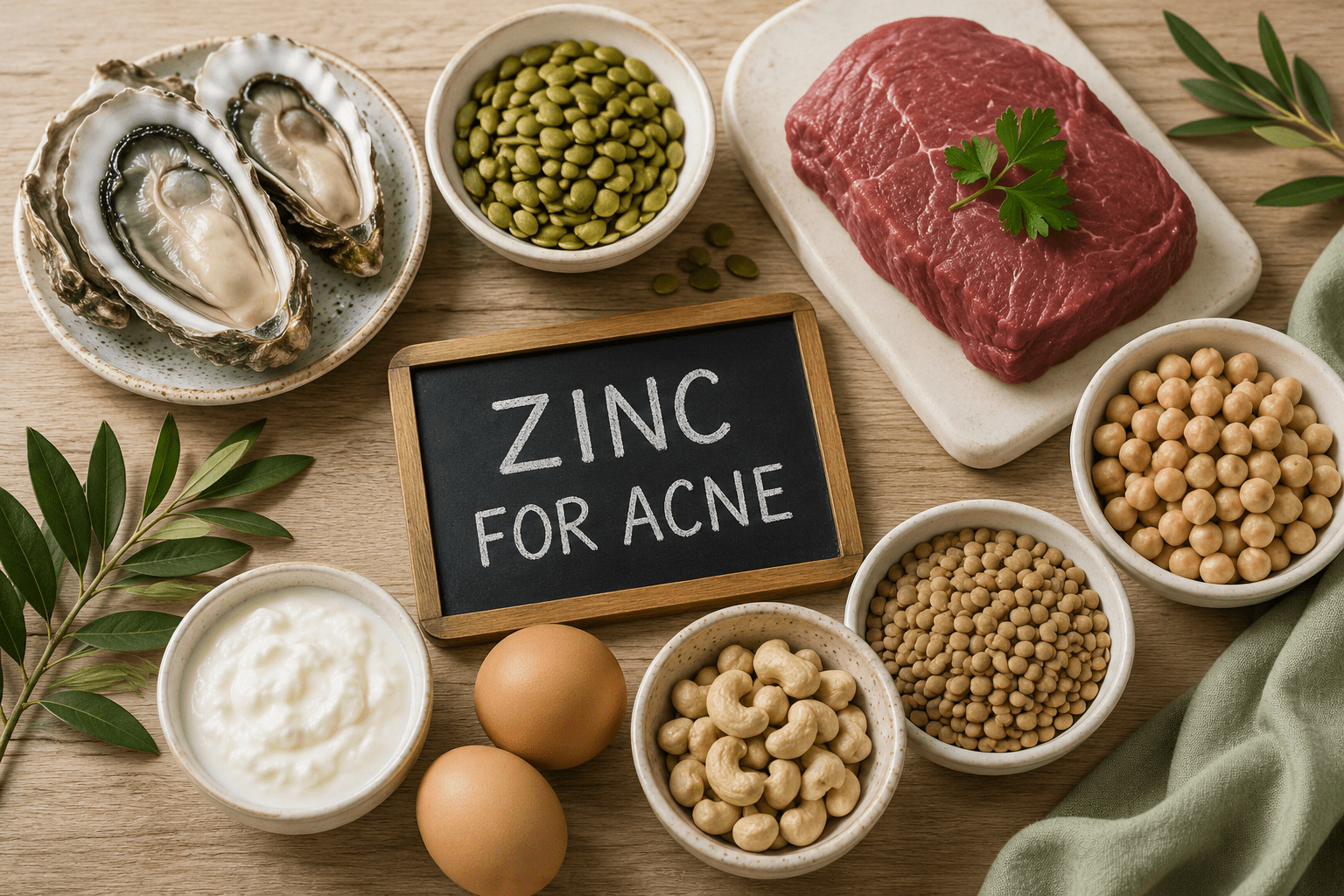
What Foods Are High in Zinc?
Food is generally the best place to begin when considering zinc intake.
🦪 Shellfish
- Oysters
- Crab
- Mussels
- Prawns
🌱 Plant Sources
- Pumpkin seeds
- Sesame seeds
- Cashew nuts
- Chickpeas
- Lentils
- Wholegrains
Animal foods generally provide zinc in a form that is more readily absorbed. Plant foods still contribute useful zinc, but the amount absorbed can be influenced by phytates and the overall composition of the diet.
How to Support Zinc Intake Through Food
You do not need to build every meal around zinc. A varied diet containing regular sources of protein, seeds, pulses, wholegrains, meat, eggs, dairy or seafood can contribute to overall intake.
🍳 Add Protein at Breakfast
Try eggs, Greek yoghurt, fortified alternatives, nuts, seeds or beans alongside breakfast.
🥗 Include Pulses Regularly
Add lentils, chickpeas or beans to soups, salads, curries and stews.
🎃 Use Seeds as a Topping
Add pumpkin or sesame seeds to porridge, yoghurt, salads or roasted vegetables.
🦪 Include Seafood Where Suitable
Shellfish can provide zinc alongside protein and other nutrients.
🌾 Prepare Plant Foods Well
Soaking, sprouting, fermenting and cooking may help reduce some phytates in plant foods.
🌈 Focus on Overall Variety
Zinc works alongside protein, copper and other nutrients, so the whole diet matters more than one isolated food.
Should You Take Zinc Supplements for Acne?
Zinc supplements may be appropriate in some circumstances, but they should not be taken simply because you have acne.
The available research does not identify one universal zinc form or dose that is suitable for everyone. Supplement choice may need to take account of:
- Your current dietary intake
- Whether deficiency is suspected or confirmed
- Your age and health history
- Other medications or supplements
- Digestive tolerance
- The form and elemental amount of zinc provided
- How long the supplement is intended to be used
Taking more zinc does not necessarily produce better results.
Excessive intake can cause:
- Nausea
- Vomiting
- Stomach discomfort
- Headaches
- Reduced copper absorption
- Copper deficiency with prolonged excessive use
- Wider nutrient imbalances
Zinc and copper interact, so long-term zinc supplementation without considering the wider diet can create an imbalance.
⚠️ Supplement Safety: Zinc
Do not assume that a high-dose product is more effective. Check the amount of elemental zinc rather than relying only on the compound name shown on the label.
Speak to a GP, pharmacist or appropriately qualified practitioner before taking zinc long term, combining several zinc-containing products or using it alongside medication.
Can Zinc Make Acne Worse?
Zinc is not commonly recognised as a direct cause of acne, but supplements do not suit everyone.
Some people experience nausea, abdominal discomfort or vomiting, particularly when zinc is taken without food. Others notice no skin improvement because zinc was not the main factor contributing to their acne.
It can also be difficult to interpret a skin change when several things are altered at once, such as diet, skincare, supplements, medication and stress levels.
If your skin or general wellbeing worsens after starting a supplement, stop using it and seek appropriate advice.
Is Zinc Good for Hormonal Acne?
Zinc may support normal skin repair and immune function in someone with hormonal acne, but it is unlikely to address the entire hormonal picture.
Hormonal acne may be influenced by:
- Androgen activity
- Sebum production
- Menstrual-cycle changes
- Stress
- Blood sugar regulation
- Inflammation
- PCOS in some people
A zinc supplement cannot be assumed to correct these factors.
If your acne appears around the chin or jawline or worsens before your period, read Foods for Hormonal Acne.
If acne appears alongside irregular periods, excess facial or body hair or thinning scalp hair, read Acne and PCOS.
Zinc Is Only One Piece of the Acne Puzzle
It is tempting to focus on one nutrient because it appears to offer a simple solution. Acne, however, is rarely explained by one factor alone.
Two people can take the same zinc supplement and experience completely different results because their breakouts may have different underlying contributors.
For example:
- One person may have predominantly hormone-related acne.
- Another may have breakouts linked with irritating or pore-clogging skincare products.
- Another may experience acne alongside stress and poor sleep.
- Another may have digestive symptoms and a highly restricted diet.
- Another may have several nutrient gaps rather than low zinc alone.
- Another may require medical acne treatment.
This is why acne support should not be based on copying someone else’s supplement routine.
You may also find these guides helpful:
Myth vs Fact: Zinc and Acne
❌ Myth: Zinc cures acne
Fact: Zinc may help some people, particularly with inflammatory lesions, but acne is rarely caused by one nutrient alone.
❌ Myth: Everyone With Acne Needs Zinc
Fact: Not everyone with acne has low zinc status or requires supplementation.
❌ Myth: More Zinc Means Better Results
Fact: Excessive zinc can cause side effects and may interfere with copper absorption.
❌ Myth: Zinc Should Work Quickly
Fact: Skin changes take time, and zinc may have little effect when another factor is more relevant.
❌ Myth: Plant Foods Do Not Provide Zinc
Fact: Pulses, nuts, seeds and wholegrains provide zinc, although absorption may be lower than from some animal foods.
❌ Myth: A Supplement Can Replace Medical Treatment
Fact: Painful, cystic or scarring acne may require assessment and appropriate medical treatment.
One of the biggest misconceptions I see is the belief that one supplement will resolve acne. Zinc can be an important nutrient for skin health, but lasting improvements usually come from understanding the bigger picture, including diet, hormones, gut health, stress, inflammation, digestion and overall nutrient status.
Beth Mulvey, Registered Nutritional Therapist
When Should You Look Deeper?
If you have tried zinc, skincare changes, dietary changes or several supplements without lasting improvement, it may be time to look beyond individual products.
This does not mean zinc is irrelevant. It means zinc may be only one part of the picture, or it may not be the main issue for your skin.
🔎 Signs It May Be Time to Look Deeper
- Your acne keeps returning despite appropriate treatment
- Your breakouts are painful, inflamed or cystic
- Your acne leaves dark marks or scars
- Your acne changes with your menstrual cycle
- You also experience persistent digestive symptoms
- You have tried several supplements without clear improvement
- Your diet has become increasingly restricted
- You are unsure whether medication, skincare or hormones may be involved
A personalised approach can help identify which factors appear most relevant rather than relying on guesswork.
When to Speak to Your GP
Diet and supplements should not replace appropriate medical care for acne.
Speak to your GP or another appropriate healthcare professional if:
- Your acne is painful, nodular or cystic
- Your acne is causing scarring
- Your skin is having a significant effect on your confidence or mental wellbeing
- Your acne began suddenly or has changed significantly
- You suspect a medication is contributing
- You have irregular periods, excess facial or body hair or thinning scalp hair
- You have symptoms that may suggest a nutritional deficiency
- You are considering long-term or high-dose zinc supplementation
⚠️ When to Get Medical Support
Seek medical advice for painful, cystic, nodular or scarring acne. Zinc supplements should not be used as a substitute for medical acne treatment or investigation of possible deficiency.
How Nutritional Therapy May Support Acne
Nutritional therapy can help move the focus away from random supplementation and towards a more structured assessment of your diet, symptoms and lifestyle.
At VitaminBeth, acne support may include exploring:
- Your skin history and breakout pattern
- Your usual diet and overall nutrient intake
- Possible zinc and other nutrient gaps
- Hormonal and menstrual-cycle symptoms where relevant
- Gut symptoms and digestive function
- Stress, sleep and lifestyle factors
- Blood sugar balance
- Current medication and supplement use
- Whether further medical support may be appropriate
The aim is not to give everyone with acne the same supplement plan. It is to understand the wider pattern and build realistic support around your individual needs.
Frequently Asked Questions
Is zinc good for hormonal acne?
Zinc may support normal skin repair and immune function, but hormonal acne usually involves several factors. Menstrual-cycle changes, androgen activity, stress, blood sugar balance and PCOS may also need to be considered.
Explore Foods for Hormonal Acne →
How much zinc should I take for acne?
There is no single amount that is suitable for everyone with acne. The appropriate intake depends on your diet, health history, medications, other supplements and whether low zinc status is suspected. Avoid guessing with high-dose or long-term supplementation.
Can too much zinc be harmful?
Yes. Excessive zinc can cause nausea, vomiting and stomach discomfort. Long-term excessive intake can reduce copper absorption and may contribute to copper deficiency.
Which foods are highest in zinc?
Oysters are particularly rich in zinc. Other sources include beef, lamb, poultry, eggs, dairy products, pumpkin seeds, sesame seeds, cashews, chickpeas, lentils and wholegrains.
Can low zinc cause acne?
Low zinc status may contribute to acne in some people, but acne is rarely caused by one nutrient alone. Research shows an association between lower serum zinc and acne, but this does not prove that every person with acne is deficient (Yee et al., 2020).
How long does zinc take to improve acne?
There is no reliable timeframe that applies to everyone. Research studies have used different zinc forms, amounts and treatment periods. Zinc may also have little effect when low zinc status is not relevant to the acne.
Should I get my zinc level tested?
Testing may be considered when deficiency is suspected, but blood zinc results can be difficult to interpret in isolation. Speak to a GP or appropriately qualified practitioner if you have symptoms, dietary risk factors or concerns about deficiency.
Final Thoughts
Zinc is important for normal immune function, wound healing and skin repair. Research suggests that people with acne may have lower serum zinc levels on average and that zinc treatment may reduce inflammatory lesions in some people (Cervantes et al., 2018; Yee et al., 2020).
However, this does not mean that everyone with acne is deficient or should begin taking a supplement.
A food-first approach is usually the safest place to begin. Supplements should be selected carefully because excessive zinc can cause digestive side effects and interfere with copper absorption.
Most importantly, zinc should be viewed as one possible part of a much wider acne picture that may include hormones, skincare, genetics, medication, stress, sleep, diet and digestive health.
✅ Key Takeaways
- Zinc supports normal immune function, wound healing and skin repair.
- People with acne may have lower serum zinc levels on average.
- Zinc may improve inflammatory acne in some people, but results are not universal.
- Food sources include shellfish, meat, eggs, seeds, pulses and wholegrains.
- Not everyone with acne requires a zinc supplement.
- Excess zinc may cause side effects and reduce copper absorption.
- Severe, cystic or scarring acne requires appropriate medical support.
What This Means for You
If you are wondering whether zinc may be relevant to your acne, begin by considering your usual diet rather than immediately buying a high-dose supplement.
Look at whether you regularly eat zinc-containing foods and whether your diet is restricted, predominantly plant-based or affected by ongoing digestive symptoms.
If you have persistent acne, possible deficiency symptoms or are considering long-term supplementation, seek personalised guidance rather than relying on a standard supplement routine designed for someone else.
Ready to Stop Guessing What Your Acne Needs?
If you are struggling with persistent acne, inflamed breakouts, hormone-related spots, digestive symptoms or skin that does not improve despite everything you try, you do not have to work through it alone.
At VitaminBeth, we take a personalised approach to exploring the factors that may be contributing to acne, including diet, nutrient intake, gut health, hormone-related symptoms, stress, lifestyle and inflammation.
The aim is not to place everyone on the same supplement routine. It is to help you understand the wider pattern and create a plan around your individual needs.
Learn more about the Skin Therapy Programme
📚 Continue Your Acne Learning
You’re reading one of VitaminBeth’s acne guides. Visit the Acne Resource Centre to explore all of our evidence-informed articles on acne causes, hormones, gut health, nutrition, lifestyle and personalised support in one place.
References
- Brandt, S. (2013) ‘The clinical effects of zinc as a topical or oral agent on the clinical response and pathophysiologic mechanisms of acne’, Journal of Drugs in Dermatology, 12(5), pp. 542–545. Available at: https://pubmed.ncbi.nlm.nih.gov/23652948/
- Cervantes, J. et al. (2018) ‘The role of zinc in the treatment of acne: A review of the literature’, Dermatologic Therapy, 31(1), e12576. Available at: https://pubmed.ncbi.nlm.nih.gov/29193602/
- Yee, B.E. et al. (2020) ‘Serum zinc levels and efficacy of zinc treatment in acne vulgaris: A systematic review and meta-analysis’, Dermatologic Therapy, 33(6), e14252. Available at: https://pubmed.ncbi.nlm.nih.gov/32860489/