📚 VitaminBeth Guide
⏱️ Estimated reading time: 8–10 minutes
👩⚕️ Reviewed by Beth Mulvey, Registered Nutritional Therapist
Stress and Acne: Can Stress Cause Breakouts?
If your skin seems to flare during deadlines, exams, poor sleep or emotionally difficult periods, you may wonder whether stress is causing your acne. The most accurate answer is that stress is unlikely to be the only cause of acne, but it may worsen existing acne or make breakouts more difficult to manage in some people.
Acne is a complex inflammatory skin condition. Genetics, hormones, sebum production, blocked follicles, skin microbes, skincare, medication, diet and lifestyle may all contribute. Stress can interact with several of these factors, while acne itself can also create distress. This means the relationship can work in both directions.
💡 In Plain English
Stress does not automatically create acne in otherwise acne-free skin. However, if you are already prone to breakouts, periods of higher stress may make them more frequent, inflamed or slower to settle.
✅ Key Takeaways
- Stress may worsen existing acne, but it is rarely the only factor.
- Research shows an association between higher stress and greater acne severity, although much of the evidence cannot prove cause and effect.
- Stress may affect oil production, inflammation, sleep and everyday habits that influence the skin.
- Stress management can support wellbeing and may help reduce one possible trigger, but it does not replace appropriate acne treatment.
- Persistent, painful, scarring or emotionally distressing acne deserves medical support.
What Is Stress Acne?
“Stress acne” is not a separate medical diagnosis. It is an everyday term for acne that appears or becomes worse during stressful periods. The spots are still acne lesions, such as blackheads, whiteheads, inflamed papules, pustules, nodules or cysts.
There is no single location that proves stress is involved. A flare might occur wherever you usually develop acne, including the face, jawline, neck, chest or back. Location alone cannot tell you the cause.
🌿 Good to Know
A sudden crop of small, itchy or very uniform bumps is not necessarily acne. Folliculitis, irritation, contact reactions and other skin conditions can look similar. A pharmacist, GP or dermatologist can help if the pattern is unusual or unclear.
How Could Stress Make Acne Worse?
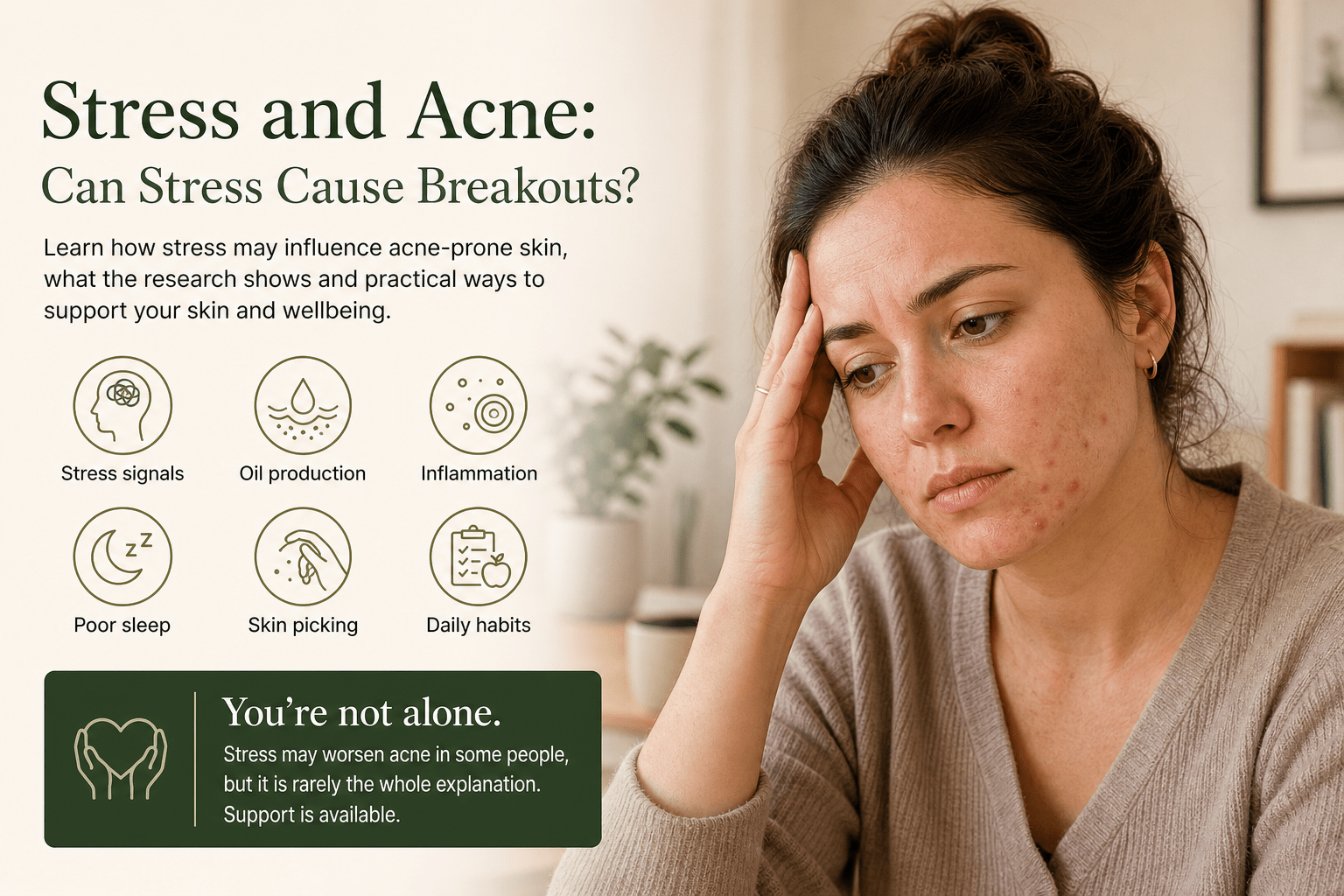
Stress activates communication between the brain, nervous system, endocrine system and skin. Researchers have proposed several overlapping pathways that could influence acne-prone skin (Jović et al., 2017).
🧠 Stress Signalling
Stress-related hormones and neuropeptides may affect sebaceous glands and inflammatory signalling within the skin. This could make an existing tendency towards acne more noticeable.
🔥 Inflammation
Acne is inflammatory from its early stages. Ongoing psychological stress may influence immune and inflammatory pathways, although the response varies between individuals.
🌙 Sleep and Recovery
Stress often disrupts sleep. Poor sleep may affect stress regulation, skin barrier recovery and daily habits, making it difficult to separate the effect of stress from the effect of reduced rest.
👐 Everyday Habits
During stressful periods, people may touch or pick their skin more, skip skincare, eat differently, exercise less or rely more on alcohol or smoking. These behaviours may aggravate acne or slow healing.
When acne flares during a stressful period, I would not assume cortisol is the whole answer. I would look at what has changed around sleep, meals, digestion, menstrual patterns, skincare and daily routines, as well as the stress itself.
Beth Mulvey, Registered Nutritional Therapist
What Does the Research Say About Stress and Acne?
A prospective study of university students compared acne severity during examinations and less stressful periods. Increased stress was associated with increased acne severity even after the researchers adjusted for changes in sleep and diet. However, it was a relatively small observational study, so it cannot establish that stress directly caused the change (Chiu et al., 2003).
A later review concluded that biological mechanisms linking psychological stress and acne are plausible, but also highlighted that relatively few studies have examined stress as a cause or aggravating factor (Jović et al., 2017). More recent reviews have continued to report an association, but many included studies are cross-sectional, rely on self-reported stress and focus on student populations. Those limitations make it difficult to apply the findings to everyone (Alzahrani et al., 2025).
🔬 Research Snapshot
The evidence supports a possible relationship between stress and acne severity, but it does not show that stress is the sole cause of acne. Stress, sleep, behaviour and acne-related distress can influence one another, so the relationship is likely to be individual and bidirectional.
Can Cortisol Cause Acne?
Cortisol is one hormone involved in the stress response, but the phrase “cortisol acne” can be misleading. Acne does not develop because of one hormone acting alone, and you cannot determine your cortisol level from the appearance or location of a breakout.
Stress biology involves cortisol alongside androgens, neuropeptides, immune signals and nervous-system activity. These may affect oil glands and inflammation, but acne still develops within a wider pattern of follicular blockage, sebum, microbes and individual susceptibility (Jović et al., 2017).
Commercial cortisol testing is therefore not automatically the right next step for ordinary acne or day-to-day stress. If you have concerning symptoms or suspect a hormonal or medical condition, discuss them with a GP rather than trying to diagnose the cause from an online test.
How Can You Tell Whether Stress Is Affecting Your Skin?
There is no definitive home test, but looking for a repeatable pattern may be useful. Keep the rest of your routine as consistent as reasonably possible and record changes for several weeks.
🔎 Signs This May Be Worth Exploring
- Breakouts repeatedly worsen during deadlines, exams, travel or emotionally difficult periods.
- Flares occur alongside poorer sleep, irregular meals or changes to your usual routine.
- You touch, squeeze or pick your skin more when feeling tense.
- Your established acne treatment becomes less consistent when life feels overwhelming.
- Acne itself is increasing worry, low mood, avoidance or self-consciousness.
A pattern can offer clues, but it does not prove that stress is the cause. Menstrual-cycle changes, new skincare, medication, sweating, friction and dietary changes can happen at the same time. If hormonal patterns seem relevant, you may also find Foods for Hormonal Acne helpful.
Practical Ways to Support Stress and Acne
1. Continue Evidence-Based Acne Care
Managing stress should complement, not replace, acne treatment. Use a gentle cleanser, avoid scrubbing and choose non-comedogenic skincare. Try not to squeeze or pick spots, as this can increase inflammation and the risk of scarring. A pharmacist can advise on mild acne, while a GP can discuss prescription options when needed (NHS, 2023).
You can explore the wider treatment picture in Acne Treatments & Skincare.
2. Choose One Realistic Stress-Support Habit
You do not need a perfect wellness routine. A short walk, regular breaks, talking to someone, planning a demanding day or practising slow breathing may be more sustainable than attempting several major changes at once. The NHS recommends setting small targets and using practical techniques such as activity, time management and breathing exercises (NHS, 2026a).
3. Protect Your Sleep Routine
Aim for a reasonably consistent sleep and wake time, create a short wind-down period and reduce stimulating work close to bedtime where possible. Sleep will not single-handedly clear acne, but it can support stress regulation, decision-making and consistency with skincare and meals.
4. Keep Meals Regular and Balanced
Stress can change appetite, cravings and meal timing. Rather than following a restrictive “clear skin” diet, try to build regular meals with protein, fibre-rich carbohydrates, healthy fats and colourful vegetables. This may support energy and make daily routines easier to maintain.
If digestive symptoms are also present, read Can Gut Health Cause Acne? for a balanced overview of the gut–skin connection.
5. Reduce Skin Picking Triggers
Keep hands occupied during stressful tasks, move mirrors away from work areas and use hydrocolloid patches where appropriate to create a physical barrier. If skin picking feels difficult to control or is causing wounds or distress, speak with a GP or mental-health professional.
6. Track Patterns Without Becoming Fixated
A brief weekly note on stress, sleep, menstrual timing, skincare and acne severity may be enough. Daily close-up photographs and repeated checking can increase anxiety for some people, so stop tracking if it is making you feel worse.
💡 What This Means for You
If stress appears to be one of your triggers, support both sides of the picture: keep appropriate acne care in place and make stress-management changes that are small enough to repeat. Progress may be gradual, and a flare does not mean you have failed.
When Should You Seek Professional Help?
Acne of any severity can affect emotional wellbeing. NICE advises clinicians to take psychological distress into account and to consider specialist or mental-health referral when acne is contributing to persistent distress or a mental-health condition (NICE, 2026).
⚠️ Safety Note
Speak with a pharmacist or GP if acne is persistent or not responding to self-care. Seek medical advice for painful nodules or cysts, scarring, widespread chest or back acne, sudden or unusual changes, or signs of infection. Ask for support promptly if acne or stress is causing significant anxiety, low mood, social withdrawal, thoughts of self-harm or difficulty coping. Do not stop prescribed acne or mental-health medication without speaking to the clinician who manages it.
Frequently Asked Questions
Can stress cause acne overnight?
A spot that appears overnight usually began developing earlier. Stress may contribute to a flare in acne-prone skin, but it is unlikely to create a fully formed lesion instantly.
Where does stress acne appear?
There is no medically recognised “stress acne” location. It can appear wherever you normally develop acne, including the face, jawline, neck, chest or back. Location alone cannot identify the cause.
Does reducing stress clear acne?
Reducing stress may help limit one trigger and improve wellbeing, but it may not clear acne on its own. Appropriate skincare or medical treatment may still be needed.
How long can a stress-related breakout last?
There is no set timeline. Individual lesions and deeper spots heal at different rates, and new breakouts may continue if several contributing factors remain active. Avoid picking and seek advice if acne is persistent, painful or scarring.
Can anxiety make acne worse?
Anxiety may increase stress signalling, disrupt sleep and change habits such as skin picking, which could aggravate acne in some people. Acne can also worsen anxiety, so it is appropriate to seek support for either concern.
Should I test my cortisol because of acne?
Not routinely. The appearance of acne cannot diagnose a cortisol problem. Speak with a GP if you have broader symptoms that suggest a hormonal or medical condition rather than relying on a commercial test alone.
Final Thoughts
Stress may worsen acne in some people, but it is rarely the complete explanation. The most useful approach is to look at the pattern around your breakouts while continuing suitable acne care. Supporting sleep, regular meals, stress management and consistent skincare may help, but persistent or severe acne should not be dismissed as “just stress”.
If acne is affecting your confidence or mental wellbeing, that matters regardless of how severe it looks to someone else. Support is available for both your skin and how you are feeling.
Need Help Understanding What Is Driving Your Acne?
If your breakouts seem connected with stress, poor sleep, hormone changes, digestion or other recurring symptoms, a personalised assessment can help you look at the wider pattern. Beth’s Skin Therapy Programme combines practical nutrition and lifestyle support with appropriate medical care where needed.
Learn more about the Skin Therapy Programme
📚 Continue Your Acne Learning
You’re reading one of VitaminBeth’s acne guides. Visit the Acne Resource Centre to explore all of our evidence-informed articles on acne causes, hormones, gut health, nutrition, lifestyle and personalised support in one place.
References
- Alzahrani, L.A. et al. (2025) ‘Impact of Stress on the Prevalence of Acne Among Medical Students in the Middle East: A Systematic Review’, Cureus, 17(8), e90815. Available at: https://pubmed.ncbi.nlm.nih.gov/40988809/.
- Chiu, A., Chon, S.Y. and Kimball, A.B. (2003) ‘The response of skin disease to stress: changes in the severity of acne vulgaris as affected by examination stress’, Archives of Dermatology, 139(7), pp. 897–900. Available at: https://pubmed.ncbi.nlm.nih.gov/12873885/.
- Jović, A. et al. (2017) ‘The impact of psychological stress on acne’, Acta Dermatovenerologica Croatica, 25(2), pp. 133–141. Available at: https://pubmed.ncbi.nlm.nih.gov/28871928/.
- National Health Service (NHS) (2023) ‘Acne’. Available at: https://www.nhs.uk/conditions/acne/.
- National Health Service (NHS) (2026a) ‘Get help with stress’. Available at: https://www.nhs.uk/mental-health/feelings-symptoms-behaviours/feelings-and-symptoms/stress/.
- National Institute for Health and Care Excellence (NICE) (2026) ‘Acne vulgaris: management (NG198)’. Available at: https://www.nice.org.uk/guidance/ng198.