📚 VitaminBeth Guide
⏱️ Estimated reading time: 12–14 minutes
👩⚕️ Reviewed by Beth Mulvey, Registered Nutritional Therapist
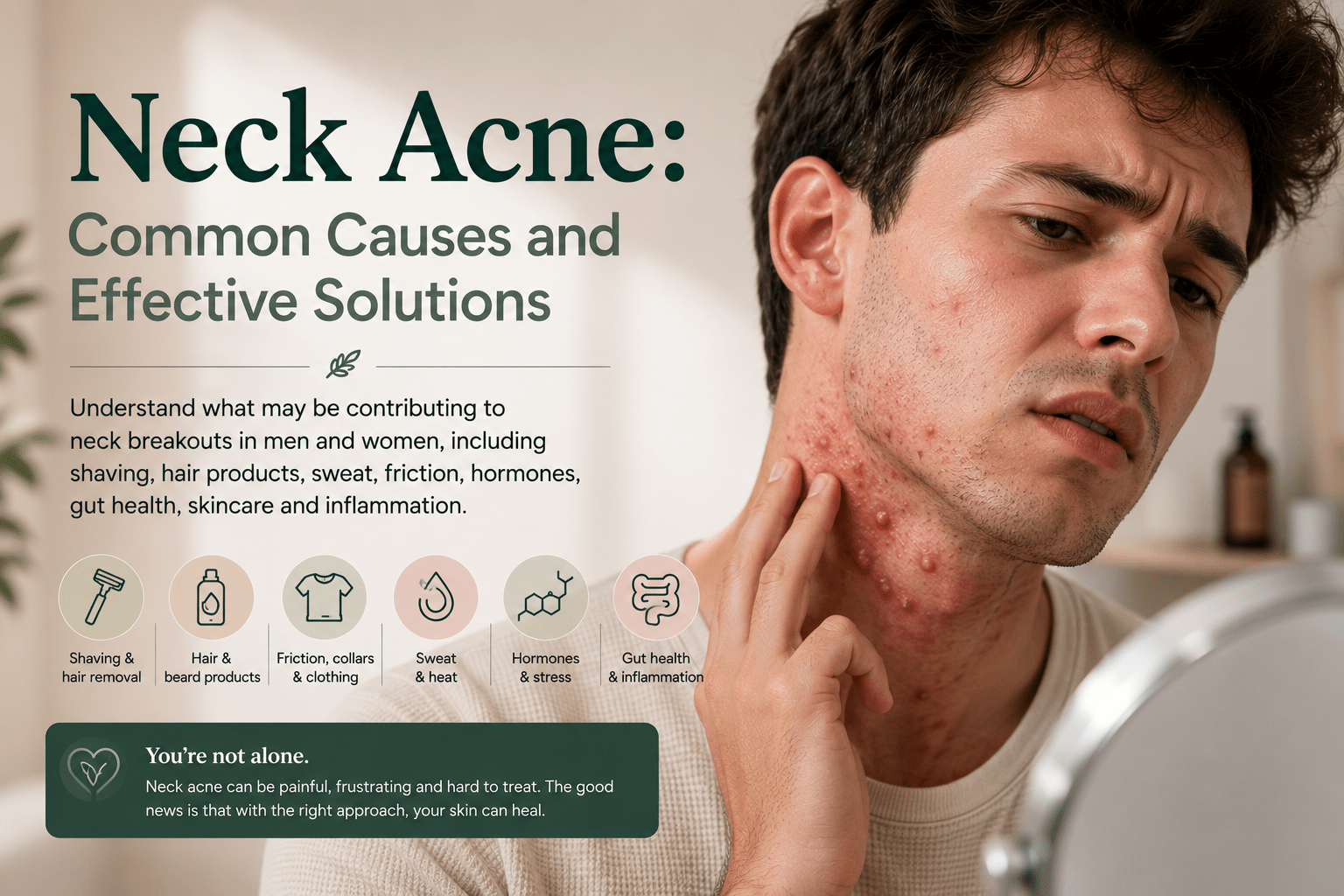
Neck Acne: Common Causes and Effective Solutions
Neck acne can be uncomfortable, frustrating and sometimes painful, especially when breakouts keep returning around the sides of the neck, under the jaw, near the hairline or around clothing collars.
Neck acne can affect men and women, teenagers and adults. It may appear as small clogged pores, red inflamed bumps, pustules, deeper painful lumps, cystic acne or acne-like bumps linked with shaving or folliculitis.
Neck breakouts are sometimes described as hormonal acne, but their location does not identify the cause. Hormones may contribute to acne in people of any sex, while shaving or hair removal, products, friction, sweat, some medications and acne-like follicular conditions may also be relevant (DermNet, 2023).
💡 In Plain English
Neck acne is not automatically hormonal. Shaving, hair removal, sweat, friction and products may aggravate the area, while some bumps may instead be pseudofolliculitis, folliculitis or dermatitis. Digestive symptoms do not identify the cause of a neck breakout.
✅ Key Takeaways
- Neck acne can affect men and women.
- Common external triggers include shaving, beard products, hair products, sweat, collars, scarves, helmets and friction.
- Hormones, stress, sleep and some dietary patterns may be relevant, but gut symptoms or acne location alone cannot identify the cause.
- Itchy, spreading or infected-looking bumps may suggest folliculitis or another acne-like condition.
- Persistent, painful, cystic, scarring or worsening neck acne should be assessed by a GP, pharmacist or dermatologist.
What Is Neck Acne?
Neck acne refers to acne lesions that appear on the front, sides or back of the neck. It may overlap with jawline, chin, hairline, chest or back acne (DermNet, 2023).
Neck acne may appear as:
- Small clogged pores
- Whiteheads
- Blackheads
- Red inflamed bumps
- Pustules
- Deep painful lumps
- Cystic acne
- Small itchy bumps linked with folliculitis
Some people notice neck acne after shaving, sweating, wearing collars, using hair products or wearing helmets. Others notice it appears alongside jawline acne, hormonal patterns, stress, gut symptoms or body acne.
If you are unsure what type of acne you have, read
Different Types of Acne.
Common Causes of Neck Acne
Neck acne can have several possible causes. Often, more than one factor is involved.
🪒 Shaving and Hair Removal
Shaving, waxing, threading, plucking and hair removal can irritate follicles and contribute to bumps on the neck.
🧴 Hair and Beard Products
Hair oils, conditioners, gels, beard oils, balms and fragranced aftershaves can transfer onto the neck and irritate or clog follicles.
👕 Collars and Friction
Tight collars, scarves, helmets, chin straps, sports gear and work uniforms can rub against the neck and trap sweat.
💧 Sweat and Heat
Exercise, hot weather, gym clothing and poor airflow can increase sweat and irritation around the neck.
⚖️ Hormones
Hormone patterns, androgen activity, stress hormones and PCOS-related symptoms may contribute in some people.
🦠 Folliculitis
Small, itchy, tender or infected-looking bumps may sometimes be folliculitis rather than typical acne.
Neck Acne, Shaving and Ingrown Hairs
Shaving is one of the most common reasons people develop bumps around the neck, especially under the jaw or along the beard line.
Shaving-related neck bumps may be due to:
- Irritation from razors
- Ingrown hairs
- Razor bumps
- Follicle inflammation
- Fragranced aftershaves
- Heavy beard products
- Shaving too closely or too frequently
These bumps are not always acne. Pseudofolliculitis barbae is an inflammatory reaction to hairs growing back into the skin, whereas folliculitis barbae may involve infection. Both can resemble acne and may coexist. Pseudofolliculitis is particularly common around the jaw and neck after close shaving and is more frequent with coarse or tightly curled hair (DermNet, 2023).
🌿 Good to Know
If neck bumps appear mainly after shaving, acne may not be the only possibility. Avoid repeatedly shaving over painful or inflamed bumps and seek individual advice if symptoms persist, spread or scar; the appropriate approach depends on the diagnosis.
If bumps are very painful, infected-looking, spreading or not improving, seek advice from a GP, pharmacist or dermatologist.
Hair Products, Beard Products and Neck Acne
Products used on the hair, scalp, beard or face can easily transfer onto the neck.
This may be relevant if neck acne appears near the hairline, behind the ears, under the jaw or where products touch the skin.
Possible triggers include:
- Hair oils
- Leave-in conditioners
- Styling gels, waxes and pomades
- Beard oils and balms
- Fragranced aftershaves
- Heavy moisturisers
- Sunscreens or body lotions
This does not mean every product is a problem. But if breakouts started after introducing a new hair, beard or skincare product, it may be worth reviewing.
Sweat, Collars and Friction
The neck is often exposed to sweat and friction from clothing, sports gear and workwear.
This may be especially relevant if you:
- Exercise regularly
- Wear tight collars or uniforms
- Wear scarves or high-neck clothing
- Use helmets or chin straps
- Wear sports equipment around the neck or shoulders
- Notice breakouts after hot weather or sweating
Sweat itself is not dirty, but when it mixes with oil, skincare, hair products and friction, it can irritate follicles and contribute to breakouts.
Could Neck Acne Be Folliculitis?
Some neck breakouts may not be acne vulgaris.
Folliculitis is inflammation of hair follicles and can resemble acne. Infectious folliculitis, sterile irritation from regrowing hairs and pseudofolliculitis require different approaches, so persistent or unclear cases should be assessed (DermNet, 2023).
Folliculitis may be worth considering if bumps are:
🔎 Signs Folliculitis May Be Worth Considering
- Itchy
- Tender or sore
- Small and similar-looking
- Appearing after shaving
- Worse with sweat, heat or friction
- Pus-filled, crusting, spreading or increasingly painful
- Leaving pigment changes or scars
- Not improving with standard acne products
This does not confirm folliculitis, but it may mean proper assessment is needed.
For a wider comparison of acne-like breakouts, read
Hormonal Acne vs Bacterial Acne vs Fungal Acne.
Can Hormones Cause Neck Acne?
Hormones can contribute to acne, but spots on the neck, jawline, chin, chest or back do not by themselves confirm a hormonal cause (Sutaria, Masood and Schlessinger, 2023).
Androgens are hormones present in all bodies. They can increase oil production, which may contribute to clogged pores and inflammation.
Hormones may be more relevant if neck acne appears alongside:
- Jawline or chin acne
- Deeper or cystic spots
- Oily skin
- Stress-related flare-ups
- Adult acne
- Cycle-related changes, where relevant
- PCOS symptoms, where relevant
If your acne feels hormone-related, you may find
Foods for Hormonal Acne and
Acne and PCOS helpful.
Can Gut Health Affect Neck Acne?
Digestive symptoms can occur alongside acne, but they do not prove that gut health is causing neck breakouts. Persistent digestive symptoms deserve assessment in their own right.
Research into communication between the gut, immune system and skin—sometimes called the gut-skin axis—is developing. Current evidence does not show that digestive symptoms identify the cause of an individual’s acne, and gut testing or restrictive diets should not replace appropriate acne assessment and treatment.
💡 In Plain English
Neck acne is not automatically a gut problem. Seek appropriate support for persistent digestive symptoms and avoid restrictive diets or gut protocols based on acne location alone.
You can read more in
Can Gut Health Cause Acne? and
The Gut-Skin Axis.
Can Food Trigger Neck Acne?
Diet is not the cause of neck acne for everyone. Research suggests that high-glycaemic dietary patterns and dairy may be relevant for some people, but the evidence varies and does not justify removing foods without an individual reason (Baldwin and Tan, 2021).
Possible food-related factors may include:
- A high-glycaemic dietary pattern
- Frequent high-sugar foods and drinks
- Dairy products in some people
- Whey protein in some people, although current evidence is mixed
This does not mean you need to remove foods randomly. It means it may be useful to track symptoms and look for repeated patterns.
If food triggers are a concern, read
Foods That May Trigger Acne and
Does Dairy Cause Acne?.
Skincare Considerations for Neck Acne
The neck can be more sensitive than other areas, so harsh acne products may irritate it more easily.
It may help to review:
- Whether your cleanser is too harsh
- Whether shaving products are irritating the skin
- Whether beard oils, hair products or SPF are clogging follicles
- Whether collars, helmets or scarves rub the area
- Whether sweat is being left on the skin for long periods
- Whether your skin feels dry, sore, tight, itchy or flaky
- Whether you are using too many active ingredients
Ingredients such as salicylic acid or benzoyl peroxide are established options for acne, but suitability depends on the diagnosis, severity, skin tolerance, pregnancy considerations and other individual factors (NICE, 2026). Ask a pharmacist, GP or dermatologist if you are unsure.
Read
Salicylic Acid or Benzoyl Peroxide for Acne to understand the difference.
⚠️ Avoid Overloading Your Neck Skin
The neck can become irritated quickly. If products cause burning, itching, peeling, soreness or worsening redness, stop using them and seek advice if symptoms do not settle.
Practical Steps That May Help Neck Acne
Depending on what is contributing to your neck acne, useful steps may include:
🪒 Review Shaving Habits
Use gentle shaving techniques, avoid dull razors and consider whether ingrown hairs or razor bumps are involved.
🧴 Check Hair and Beard Products
Avoid heavy oils, waxes or fragranced products touching the neck if they seem to trigger breakouts.
👕 Reduce Friction
Review tight collars, scarves, helmets, chin straps and sports gear that rub the neck.
💧 Cleanse After Sweating
Gently cleanse after workouts, hot weather or wearing helmets or collars for long periods.
🥗 Support Blood Sugar
Build meals around protein, fibre-rich carbohydrates, colourful plants and healthy fats.
🧘 Support Stress and Sleep
Stress and poor sleep can influence oil production, cravings, inflammation and skin repair.
When Neck Acne May Need Medical Support
Some neck acne or acne-like bumps should be assessed by a GP, pharmacist or dermatologist. Early support is particularly important when the diagnosis is unclear, lesions are nodular, cystic or infected-looking, scarring or persistent pigment changes are developing, or symptoms are significantly affecting wellbeing (NICE, 2026).
Seek support if your breakouts are:
- Painful or cystic
- Leaving scars or dark marks
- Very itchy or spreading
- Infected-looking
- Not improving despite consistent skincare
- Worse after standard acne products
- Appearing suddenly after medication changes—without stopping prescribed medication unless advised
- Affecting your confidence or mental wellbeing
Nutritional therapy can support the wider picture, but it should not replace medical care where acne is severe, scarring, infected-looking or unclear.
How to Support Neck Acne From the Inside Out
Supporting neck acne usually works best when you look at the full pattern.
Helpful foundations may include:
🥗 Balanced Meals
Build meals around protein, fibre-rich carbohydrates, colourful vegetables and healthy fats to support blood sugar balance.
🦠 Gut Support
Support digestion, bowel regularity and gut health if acne appears alongside bloating, constipation or IBS-type symptoms.
🧘 Stress and Sleep
Stress and poor sleep can affect hormones, cravings, inflammation and skin repair.
☀️ Nutrient Status
A varied diet supports general health, but supplements are not a routine substitute for evidence-based acne care. Possible deficiencies should be assessed from symptoms, diet and appropriate testing rather than assumed from acne alone.
🧴 Skin Barrier Support
A consistent, non-irritating skincare routine can support the skin while internal factors are addressed.
🔎 Personalised Assessment
If neck acne keeps returning, identifying your specific drivers is more useful than guessing.
If you are exploring nutrient factors, read
Can Vitamin Deficiencies Cause Acne?.
When someone has neck acne, I want to understand both external and internal triggers. Shaving, collars, sweat, hair products and friction can matter, but so can stress, sleep, digestion, hormones, blood sugar and inflammation.
Beth Mulvey, Registered Nutritional Therapist
Neck Acne Compared With Other Acne Locations
Neck acne can overlap with jawline acne, chin acne, chest acne, back acne and shoulder acne. If you are noticing acne in several areas, it may be more useful to look at the full breakout pattern rather than one location alone.
Read
Acne by Location: What Different Breakout Areas May Tell You.
You may also find these location guides helpful:
Frequently Asked Questions
What causes neck acne?
Neck acne may be caused by several factors, including shaving, ingrown hairs, hair products, beard products, sweat, collars, scarves, helmets, skincare, hormones, stress, gut symptoms, food triggers and inflammation.
Is neck acne hormonal?
Neck acne can involve hormones, especially when it appears alongside jawline, chin, chest or back acne. However, shaving, sweat, friction, collars, hair products and folliculitis can also contribute.
Can shaving cause neck acne?
Shaving can irritate the skin and hair follicles, which may contribute to bumps on the neck. In some cases, shaving-related bumps may be ingrown hairs, razor bumps or folliculitis rather than acne.
Could neck acne be folliculitis?
Yes. Itchy, tender, spreading or similar-looking bumps around the neck may sometimes suggest folliculitis rather than typical acne. A GP, pharmacist or dermatologist can help assess this.
Can gut health affect neck acne?
Research is exploring links between the gut microbiome and acne, but digestive symptoms do not prove that gut health is causing neck breakouts. Seek appropriate support for persistent digestive symptoms and avoid restrictive diets based on acne location alone.
When should I get help for neck acne?
Seek support if your neck acne is painful, cystic, leaving scars, very itchy, spreading, infected-looking, not improving with skincare or affecting your confidence.
Final Thoughts
Neck acne can affect men and women, teenagers and adults.
It may be linked with shaving, ingrown hairs, beard products, hair products, sweat, collars, scarves, helmets, skincare, hormones, stress, gut health, food triggers, inflammation or folliculitis.
The most helpful approach is to look at the full pattern. Does it appear after shaving? Is it worse with sweat or collars? Is it itchy, painful, cystic or inflamed? Do you also have jawline acne, gut symptoms, stress, poor sleep or wider skin concerns?
Those answers can help guide a more personalised plan.
Need Help Understanding Your Neck Acne?
If your neck acne keeps returning and you feel unsure whether it is linked with shaving, sweat, friction, skincare, gut health, hormones or something else, you do not have to keep guessing.
At VitaminBeth, we use a personalised, root-cause approach to help identify what may be contributing to acne, including gut health, hormones, inflammation, stress, diet and nutrient status.
Learn more about the Skin Therapy Programme
📚 Continue Your Acne Learning
You’re reading one of VitaminBeth’s acne guides. Visit the Acne Resource Centre to explore all of our evidence-informed articles on acne causes, hormones, gut health, nutrition, lifestyle and personalised support in one place.
References
- DermNet (2023) ‘Acne vulgaris’. Available at: https://dermnetnz.org/topics/acne-vulgaris
- DermNet (2023) ‘Folliculitis’. Available at: https://dermnetnz.org/topics/folliculitis
- DermNet (2023) ‘Pseudofolliculitis barbae’. Available at: https://dermnetnz.org/topics/pseudofolliculitis-barbae
- DermNet (2023) ‘Folliculitis barbae’. Available at: https://dermnetnz.org/topics/folliculitis-barbae
- NICE (2026) ‘Acne vulgaris: management’. Available at: https://www.nice.org.uk/guidance/ng198
- Sutaria, A.H., Masood, S. and Schlessinger, J. (2023) ‘Acne Vulgaris’, StatPearls. Available at: https://www.ncbi.nlm.nih.gov/books/NBK459173/
- Baldwin, H. and Tan, J. (2021) ‘Effects of diet on acne and its response to treatment’, American Journal of Clinical Dermatology, 22(1), pp.55–65. Available at: https://pmc.ncbi.nlm.nih.gov/articles/PMC7847434/