📚 VitaminBeth Guide
⏱️ Estimated reading time: 8–10 minutes
👩⚕️ Reviewed by Beth Mulvey, Registered Nutritional Therapist
Foods That May Trigger Acne: What the Research Says
If you struggle with acne, it is natural to wonder whether something in your diet could be making your breakouts worse.
You may have heard that chocolate causes acne, dairy is the problem, or sugar is always to blame. But the truth is more nuanced. Acne is a complex skin condition, and food is rarely the only cause.
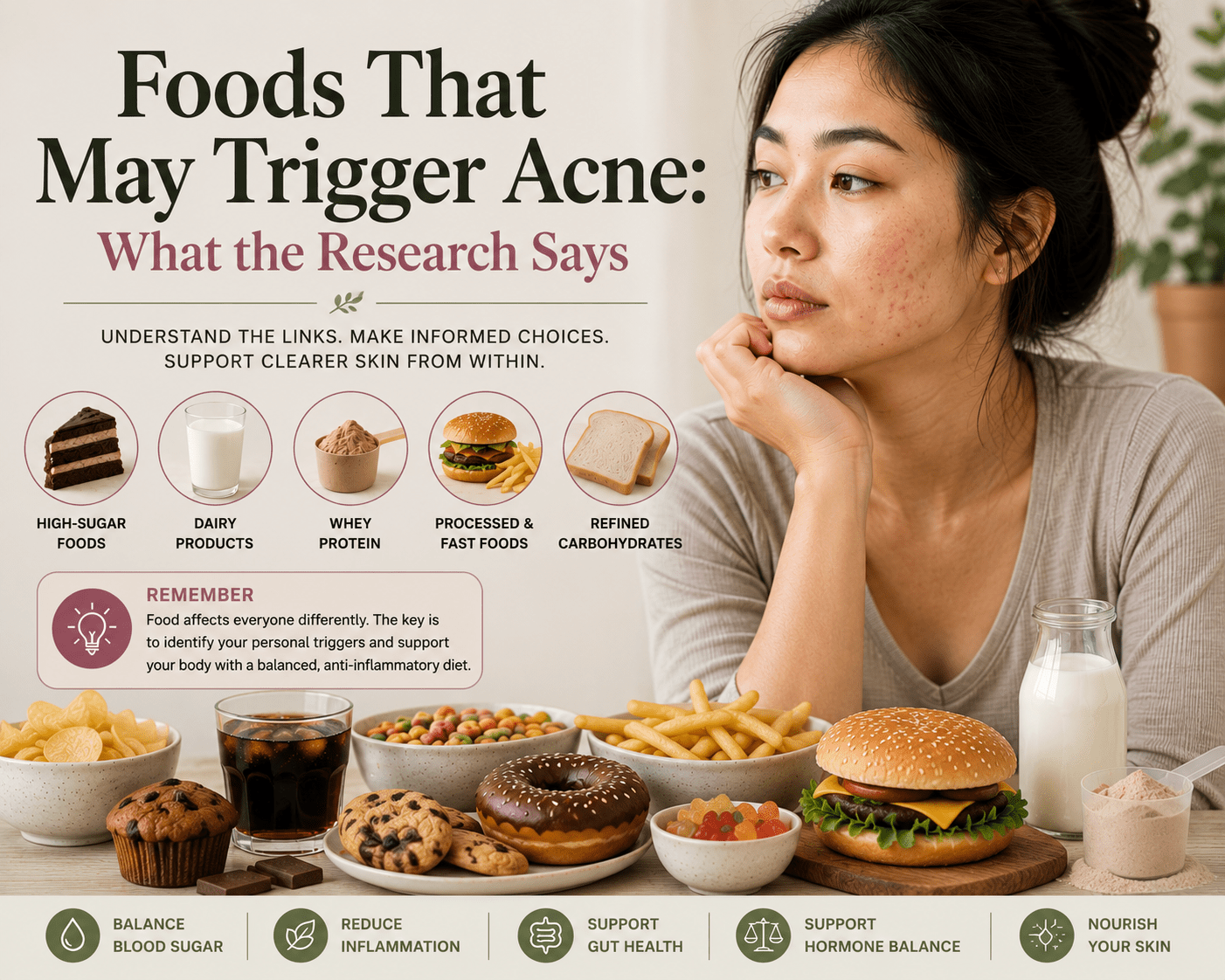
However, research does suggest that certain foods may worsen acne in some people, particularly foods that affect blood sugar, insulin, inflammation and hormone signalling (Baldwin and Tan, 2021; Meixiong and Bhutani, 2022).
In this article, we will look at the foods that may trigger acne, what the research actually says, and how to work out whether your skin is reacting to something in your diet.
💡 In Plain English
Food is rarely the only cause of acne, but certain foods may worsen breakouts in some people by affecting blood sugar, insulin, inflammation and hormone signalling.
✅ Key Takeaways
- Acne is rarely caused by one single food.
- High-glycaemic foods, high-sugar foods, dairy, whey protein and highly processed foods may worsen acne in some people.
- Food triggers can vary from person to person.
- A food, skin and symptom diary can help identify patterns.
- The goal is not fear or restriction, but understanding what your skin may be responding to.
What Causes Acne?
Acne develops when pores become blocked with oil, dead skin cells and bacteria, leading to inflammation, blackheads, whiteheads, spots or deeper cystic breakouts (Baldwin and Tan, 2021).
Common contributors to acne include:
- Hormonal changes
- Increased sebum production
- Inflammation
- Genetics
- Stress
- Gut health
- Sleep disruption
- Blood sugar imbalance
- Dietary triggers in some people
This means that acne is rarely about one single food. But for some people, food can be an important trigger or amplifier.
For a wider explanation of acne causes, read
What Causes Acne?.
Can Food Really Trigger Acne?
Food may not directly “cause” acne in everyone, but diet can influence several processes involved in acne development (Bowe and Logan, 2010; Meixiong and Bhutani, 2022).
For example, some dietary patterns may increase insulin and insulin-like growth factor 1, also known as IGF-1. These pathways can influence sebum production, inflammation and skin cell turnover, which are all involved in acne (Baldwin and Tan, 2021; Meixiong and Bhutani, 2022).
This is why researchers have become increasingly interested in the link between acne, high-glycaemic foods, dairy, Western dietary patterns and inflammation (Baldwin and Tan, 2021; Meixiong and Bhutani, 2022).
🔬 Research Snapshot
Research has explored links between acne and dietary patterns such as high-glycaemic diets, dairy intake and Western-style diets. The evidence does not mean these foods trigger acne for everyone, but they may be relevant for some people (Baldwin and Tan, 2021; Juhl et al., 2018; Meixiong and Bhutani, 2022).
1. High-Glycaemic Foods
High-glycaemic foods are foods that raise blood sugar quickly. These foods can increase insulin levels, which may influence androgen activity, sebum production and inflammation (Baldwin and Tan, 2021; Meixiong and Bhutani, 2022).
Examples include:
🍞 Refined Carbohydrates
- White bread
- Sugary cereals
- Cakes and pastries
- White rice or refined pasta eaten without protein or fibre
🍬 Sugary Foods and Drinks
- Sweets
- Biscuits
- Fizzy drinks
- Fruit juice
Several studies suggest that low-glycaemic diets may improve acne symptoms in some people. This does not mean you can never eat these foods, but frequent blood sugar spikes may be unhelpful if you are prone to acne (Bowe and Logan, 2010; Baldwin and Tan, 2021).
A more skin-supportive approach is to build meals around protein, fibre, healthy fats and slower-releasing carbohydrates.
2. Dairy Products
Dairy is one of the most commonly discussed food groups when it comes to acne.
Research has found an association between dairy intake and acne, particularly milk consumption. Some studies suggest the link may be stronger with skimmed or low-fat milk than full-fat dairy, although the reasons are not fully understood (Juhl et al., 2018; Meixiong and Bhutani, 2022).
Milk may influence acne-related pathways because it can affect insulin and IGF-1 signalling. These pathways are involved in growth, oil production and skin cell behaviour (Baldwin and Tan, 2021; Meixiong and Bhutani, 2022).
However, dairy does not trigger acne in everyone. Some people tolerate it well, while others notice that milk or whey-based products make their skin worse.
For a deeper explanation, read:
Does Dairy Cause Acne?
🌿 Good to Know
Dairy does not trigger acne in everyone. If you suspect dairy affects your skin, it is usually more helpful to track patterns carefully rather than removing foods without a clear reason.
3. Whey Protein
Whey protein is derived from milk and is commonly used in protein powders, shakes and gym supplements.
Some people notice new or worsening acne after starting whey protein, especially around the jawline, cheeks, chest or back.
This may be because whey protein can stimulate insulin and IGF-1 pathways, which may worsen acne in susceptible individuals (Baldwin and Tan, 2021; Meixiong and Bhutani, 2022).
If you started breaking out after adding protein shakes, it may be worth reviewing whether whey protein is a trigger for you.
4. High-Sugar Foods
High-sugar foods often overlap with high-glycaemic foods, but they deserve their own mention because many people notice breakouts after periods of eating more sugar than usual.
Sugar may contribute to acne by increasing blood sugar fluctuations, insulin demand and inflammatory load. This can be particularly relevant if you also experience energy crashes, cravings, mood swings or hormonal symptoms (Baldwin and Tan, 2021; Meixiong and Bhutani, 2022).
Examples include:
🍫 High-Sugar Foods
- Sweets
- Chocolate bars
- Cakes
- Biscuits
🥤 Sweetened Drinks and Products
- Fizzy drinks
- Sugary coffee drinks
- Sweetened yoghurts
This does not mean you need to fear sugar. But if acne flares after frequent high-sugar intake, your skin may be responding to blood sugar instability rather than sugar itself being the only issue.
💡 In Plain English
Sugar itself is not always the whole problem. For some people, frequent blood sugar spikes and crashes may be what makes acne feel more inflamed or harder to manage.
5. Highly Processed Foods
Highly processed foods are not proven to directly cause acne in everyone, but diets high in ultra-processed foods are often lower in fibre, antioxidants, omega-3 fats, zinc and other nutrients that support skin health.
Examples include:
🍟 Processed Meal and Snack Foods
- Fast food
- Crisps
- Ready meals
- Packaged snacks
🥐 Refined and Processed Foods
- Processed meats
- Refined baked goods
The issue is usually not one takeaway or one snack. It is the overall pattern. If processed foods regularly replace nutrient-dense meals, the body may have fewer resources to support hormone balance, gut health and skin repair.
6. Chocolate: Does It Really Cause Acne?
Chocolate has been blamed for acne for decades, but the evidence is mixed.
The problem may not be cocoa itself. It may be the combination of sugar, dairy and refined ingredients found in many chocolate bars.
Some people tolerate dark chocolate well, especially when it is lower in sugar. Others notice flare-ups after eating chocolate frequently.
Again, the key is not fear. It is noticing your own patterns.
One of the biggest misconceptions I see is that acne is caused by one ‘bad’ food. In reality, acne is usually influenced by several factors working together. Rather than fearing food, I encourage clients to become curious about patterns and how their body responds.
Beth Mulvey, Registered Nutritional Therapist
How to Identify Your Personal Acne Triggers
If you suspect food is triggering your acne, avoid cutting out lots of foods at once. This can make your diet unnecessarily restrictive and make it harder to identify what is actually affecting your skin.
A better approach is to:
- Keep a food, skin and symptom diary for 2–4 weeks
- Track breakouts, digestion, stress, sleep and menstrual cycle changes
- Look for repeated patterns rather than one-off reactions
- Trial one change at a time, such as reducing high-glycaemic foods or removing dairy temporarily
- Reintroduce foods gradually to see whether symptoms return
A structured approach gives you better information than guessing.
⚠️ A Balanced Note
Avoid cutting out lots of foods at once. This can make your diet unnecessarily restrictive and make it harder to understand what is actually affecting your skin.
Foods That May Support Clearer Skin
Instead of only focusing on what to avoid, it is helpful to think about what your skin needs more of.
Skin-supportive foods may include:
🥚 Protein and Repair
- Protein-rich foods to support repair and blood sugar balance
🐟 Omega-3 Fats
- Oily fish, chia seeds and walnuts for omega-3 fats
🌈 Antioxidants and Fibre
- Vegetables and fruit for antioxidants and fibre
- Oats, beans and lentils for slower-releasing carbohydrates
🌿 Key Nutrients
- Pumpkin seeds, seafood and lentils for zinc
- Leafy greens, nuts and seeds for magnesium
You can read more here:
Foods for Hormonal Acne.
When Acne Is More Than a Food Issue
If your acne is persistent, painful, cystic or affecting your confidence, food may only be one part of the picture.
Acne may also be linked with:
- Hormonal imbalances
- PCOS-related symptoms
- High stress levels
- Poor sleep
- Gut symptoms
- Constipation
- Nutrient deficiencies
- Inflammation
If your skin does not improve despite making sensible changes, it may be time to look deeper at what is driving your symptoms.
For a wider guide, read:
How to Get Rid of Acne.
You may also find this article helpful:
The Gut-Skin Axis: Why Your Skin Won’t Heal Until Your Gut Does.
If acne appears alongside bloating, constipation, reflux, IBS-type symptoms or food sensitivities, you may also find
Can Gut Health Cause Acne? helpful.
🌿 Good to Know
If acne is persistent, painful, cystic or affecting your confidence, food may only be one part of the picture. Hormones, gut health, stress, sleep, inflammation and nutrient status may also be involved.
The Bottom Line
Foods that may trigger acne include high-glycaemic foods, high-sugar foods, dairy, whey protein and heavily processed foods. However, these foods do not affect everyone in the same way (Juhl et al., 2018; Baldwin and Tan, 2021; Meixiong and Bhutani, 2022).
The most helpful approach is to identify your personal triggers while also supporting your skin with balanced meals, enough protein, fibre, healthy fats and key nutrients.
Acne is rarely about one food alone. It is usually a sign that several internal factors need support.
✅ Key Takeaways
- Foods that may trigger acne include high-glycaemic foods, high-sugar foods, dairy, whey protein and heavily processed foods.
- These foods do not affect everyone in the same way.
- Personal triggers are best identified through patterns rather than guesswork.
- Skin-supportive foods include protein, fibre, healthy fats and key nutrients.
- Acne is rarely about one food alone.
What This Means For You
If you feel like your skin reacts to everything, the answer is not necessarily to cut out more foods.
A more useful approach is to track patterns, support your skin with balanced meals, and look at the wider acne picture, including gut health, hormones, stress, sleep, blood sugar balance and nutrient status.
Struggling to Find What Triggers Your Acne?
If you feel like your skin reacts to everything and you are tired of guessing, personalised support can help you understand what may be driving your breakouts.
At VitaminBeth, we take a root-cause approach to acne, looking at diet, gut health, hormones, inflammation, stress and nutrient status to create a plan that is tailored to you.
Learn more about the Skin Therapy Programme
📚 Continue Your Acne Learning
You’re reading one of VitaminBeth’s acne guides. Visit the Acne Resource Centre to explore all of our evidence-informed articles on acne causes, hormones, gut health, nutrition, lifestyle and personalised support in one place.
References
- American Academy of Dermatology Association (n.d.) ‘Can the right diet get rid of acne?’. Available at: https://www.aad.org/diet
- Baldwin, H. and Tan, J. (2021) ‘Effects of diet on acne and its response to treatment’, American Journal of Clinical Dermatology, 22(1), pp.55–65. Available at: https://pmc.ncbi.nlm.nih.gov/articles/PMC7847434/
- Bowe, W.P. and Logan, A.C. (2010) ‘Diet and acne’, Journal of the American Academy of Dermatology, 63(1), pp.124–141. Available at: https://pubmed.ncbi.nlm.nih.gov/20338665/
- Juhl, C.R., Bergholdt, H.K.M., Miller, I.M., Jemec, G.B.E., Kanters, J.K. and Ellervik, C. (2018) ‘Dairy intake and acne vulgaris: A systematic review and meta-analysis of 78,529 children, adolescents, and young adults’, Nutrients, 10(8), p.1049. Available at: https://pubmed.ncbi.nlm.nih.gov/30096883/
- Meixiong, J. and Bhutani, T. (2022) ‘Diet and acne: A systematic review’, JAAD International, 7, pp.95–112. Available at: https://pmc.ncbi.nlm.nih.gov/articles/PMC8971946/