📚 VitaminBeth Guide
⏱️ Estimated reading time: 8–10 minutes👩⚕️ Reviewed by Beth Mulvey, Registered Nutritional Therapist
Salicylic Acid or Benzoyl Peroxide for Acne: Which Is Better?
If you have acne, you may have wondered whether salicylic acid or benzoyl peroxide is better for your skin.
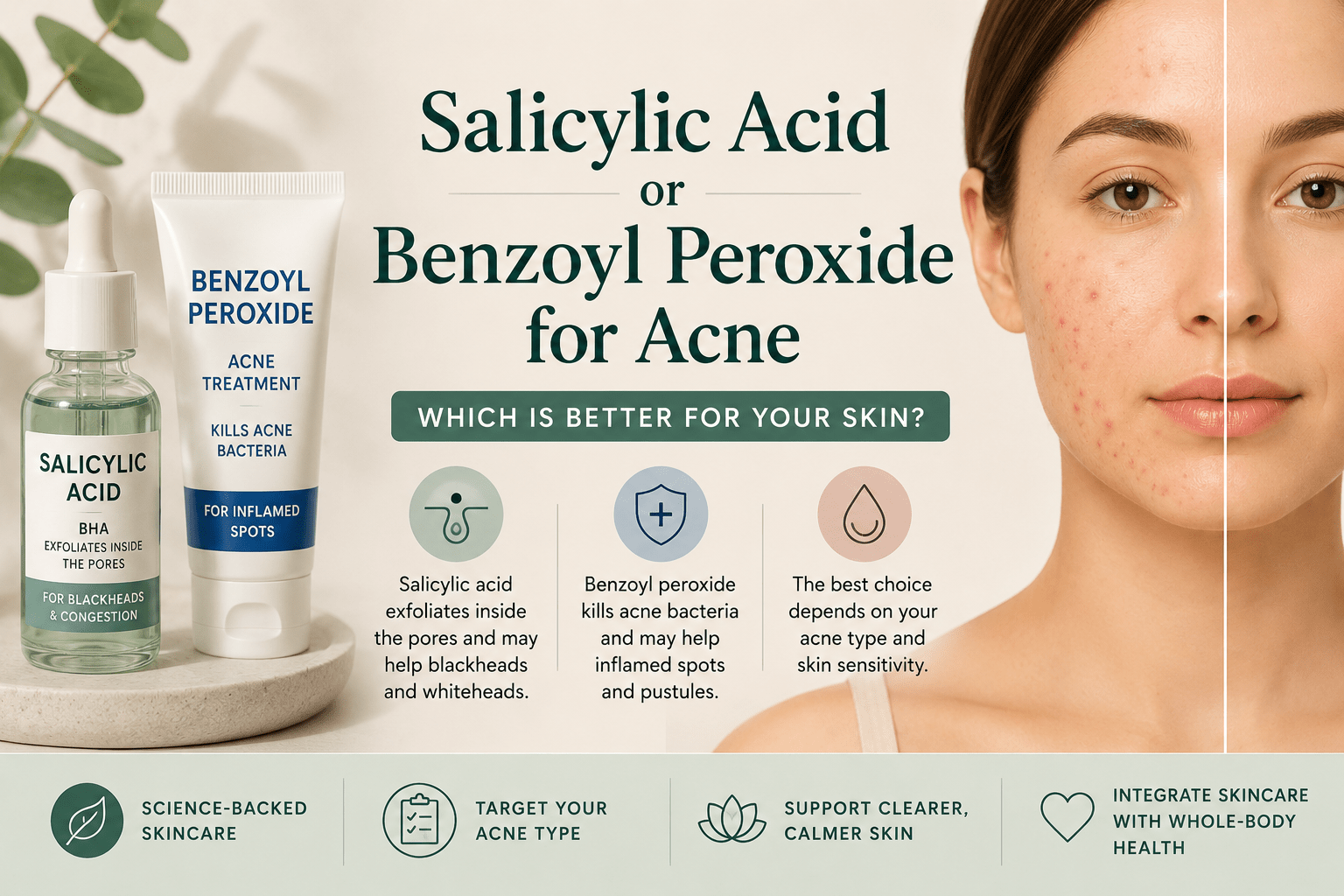
Both ingredients are used in acne care, but they work differently. Salicylic acid helps exfoliate and unclog pores, while benzoyl peroxide reduces acne-associated bacteria and is used in treatments for inflammatory acne (American Academy of Dermatology Association, n.d.; Reynolds et al., 2024).
However, neither ingredient is automatically right for everyone. The best option depends on your acne type, skin sensitivity, skincare routine and what else may be driving your breakouts.
💡 In Plain English
Salicylic acid helps exfoliate inside the pore and may suit blackheads, whiteheads and congestion. Benzoyl peroxide targets acne-associated bacteria and inflammation, so it may suit red, inflamed spots and pustules.
✅ Key Takeaways
- Salicylic acid may be more useful for blackheads, whiteheads, oily skin and clogged pores.
- Benzoyl peroxide may be more useful for inflamed spots, pustules and acne involving bacteria.
- Both ingredients can irritate or dry the skin if overused.
- Using both together can be too harsh for some people, especially sensitive skin.
- Persistent acne often needs a wider root-cause approach alongside skincare.
🔬 Research Snapshot
Current acne guidance recognises both benzoyl peroxide and salicylic acid as topical treatment options, but the strength of the supporting recommendations differs. The 2024 American Academy of Dermatology guideline gives a strong recommendation for benzoyl peroxide and a conditional recommendation for salicylic acid. NICE includes benzoyl-peroxide-containing regimens among its recommended treatment options and advises selecting treatment according to acne severity, preferences, benefits and possible disadvantages (NICE, 2026; Reynolds et al., 2024).
What Is Salicylic Acid?
Salicylic acid is a beta-hydroxy acid, also known as a BHA. It is oil-soluble, which means it can move into oily pores and help loosen the build-up of oil and dead skin cells.
This makes it a commonly used option for acne-prone skin, particularly where clogged pores, blackheads and whiteheads are present (American Academy of Dermatology Association, n.d.).
Salicylic acid may help:
- Exfoliate inside the pore
- Reduce clogged pores
- Support smoother skin texture
- Reduce blackheads and whiteheads
- Support oily or congested skin
🧴 Salicylic Acid May Suit
- Blackheads
- Whiteheads
- Congested pores
- Oily skin
- Rough or bumpy texture
⚠️ Use With Care If
- Your skin is very dry
- Your skin barrier feels irritated
- You already use strong exfoliants
- You use prescription acne treatments
- Your skin stings or burns easily
What Is Benzoyl Peroxide?
Benzoyl peroxide is an acne treatment ingredient that works partly by reducing acne-associated bacteria on the skin. It can also help reduce inflammation and may support inflamed acne lesions.
It is commonly used in treatment plans for inflammatory acne, including red spots and pustules (American Academy of Dermatology Association, n.d.; Reynolds et al., 2024).
Benzoyl peroxide may help:
- Reduce acne-associated bacteria
- Calm inflamed spots
- Support pustules and red breakouts
- Reduce the number of inflamed lesions
- Support acne on the face, chest or back
🧪 Benzoyl Peroxide May Suit
- Inflamed spots
- Pustules
- Red acne bumps
- Acne-associated bacteria
- Chest or back acne
⚠️ Use With Care If
- Your skin is sensitive
- Your skin is already dry or peeling
- You have eczema-prone skin
- You use retinoids or strong actives
- You are prone to irritation
⚠️ Safety Note
Benzoyl peroxide can bleach towels, pillowcases, clothing and hair. Let it fully dry before contact with fabrics, and use white towels where possible.
Salicylic Acid vs Benzoyl Peroxide: Key Differences
🔎 How Salicylic Acid Works
Salicylic acid helps exfoliate inside the pore, loosen dead skin cells and reduce congestion. It is often chosen for blackheads, whiteheads and oily skin.
🦠 How Benzoyl Peroxide Works
Benzoyl peroxide helps reduce acne-associated bacteria and inflammation. It is often chosen for red, inflamed spots and pustules.
🧴 Best For Congestion
Salicylic acid may be better if your main concern is clogged pores, blackheads, whiteheads or oily skin.
🔥 Best For Inflammation
Benzoyl peroxide may be better if your main concern is red, inflamed spots, pustules or acne that feels more active and irritated.
Which One Is Better for Blackheads and Whiteheads?
Salicylic acid is usually the better starting point for blackheads and whiteheads because these are forms of comedonal acne, where pores become blocked with oil and dead skin cells.
Because salicylic acid is oil-soluble, it can work inside the pore and may help reduce congestion over time.
If your acne is mostly blackheads, whiteheads and texture, you may also find
Different Types of Acne helpful.
Which One Is Better for Inflamed Spots?
Benzoyl peroxide is often more useful for inflamed acne, especially red bumps, pustules and acne that appears swollen or angry.
It can be effective, but it can also be drying. Starting slowly and avoiding too many active ingredients at once can reduce the risk of irritation.
💡 In Plain English
If your skin feels blocked and bumpy, salicylic acid may make more sense. If your spots are red, inflamed or pus-filled, benzoyl peroxide may be more suitable.
Can You Use Salicylic Acid and Benzoyl Peroxide Together?
Some professionally designed acne regimens combine topical treatments with different mechanisms of action. However, starting several active products at once without guidance can make it difficult to identify irritation or work out which product is helping (Reynolds et al., 2024).
Using salicylic acid and benzoyl peroxide together can increase the risk of:
- Dryness
- Peeling
- Redness
- Stinging
- Skin barrier irritation
- Acne looking worse due to irritation
If you are choosing over-the-counter products yourself, a cautious approach is to introduce one active at a time, follow its instructions and allow your skin time to respond. Ask a pharmacist, GP or dermatologist for advice if you use prescription acne treatment or are unsure how products can be combined.
⚠️ Avoid Overloading Your Skin
More active ingredients do not always mean better results. If your skin barrier becomes irritated, acne may look worse, feel more inflamed and take longer to calm down.
How Often Should You Use Them?
How often you use salicylic acid or benzoyl peroxide depends on the product strength, product type and your skin sensitivity.
A cautious approach may include:
🧴 Salicylic Acid
Follow the instructions for your specific cleanser, gel or leave-on product. Use less often or stop if irritation develops, and ask a pharmacist or clinician for advice if you are unsure.
🧪 Benzoyl Peroxide
Follow the product instructions and apply only the recommended amount. Lower-strength products may be less irritating for some people, but the right option depends on the product and your skin.
Always follow the instructions on the product you are using. If you are using prescription acne treatments, ask your GP, pharmacist or dermatologist before combining active ingredients.
Can These Ingredients Make Acne Worse?
They can appear to make acne worse if they irritate the skin.
This may happen if:
- You start with too high a strength
- You use them too often
- You combine too many active ingredients
- Your skin barrier is already damaged
- You do not moisturise properly
- You use harsh cleansers at the same time
Do not assume marked worsening is normal “purging”. If your skin becomes very sore, swollen, itchy, cracked or painful, stop using the product and seek advice from a pharmacist, GP or dermatologist.
⚠️ Safety Note
If you are pregnant, planning a pregnancy or breastfeeding, check with a pharmacist, GP or dermatologist before starting or combining active acne treatments.
What If Neither Works?
If salicylic acid or benzoyl peroxide does not improve your skin, this does not identify the reason on its own. The product may not suit your skin, the treatment may need more time, your acne may need a different evidence-based treatment, or the spots may need reassessment.
Questions worth discussing with an appropriate professional may include:
- Whether your acne pattern changes with your menstrual cycle or other hormonal symptoms
- Whether stress, sleep or skincare habits coincide with flares
- Whether a medicine or supplement change preceded the breakouts
- Whether another condition could be causing acne-like spots
- Whether persistent digestive or other health symptoms need their own assessment
🌿 Good to Know
“Fungal acne” is an informal term often used online for Malassezia folliculitis, which is not acne vulgaris and cannot be diagnosed from appearance or symptoms alone. Folliculitis and other conditions can resemble acne, so unusual, itchy or persistent spots may need clinical assessment (American Academy of Dermatology Association, n.d.).
If you are unsure whether your acne is hormonal, bacterial or fungal, read
Hormonal Acne vs Bacterial Acne vs Fungal Acne.
If your acne feels connected to digestion, you may also find
Can Gut Health Cause Acne? helpful.
Skincare ingredients can be useful, but persistent acne deserves an individual assessment rather than more guesswork. I would want to understand the acne pattern, products already tried, possible hormonal features, medications, stress, sleep and any wider symptoms, while making sure appropriate medical treatment is not delayed.
Beth Mulvey, Registered Nutritional Therapist
When to Seek Professional Support
It may be time to seek support if your acne is:
🔎 Signs This May Be Worth Exploring
- Painful or cystic
- Leaving scars or dark marks
- Spreading to the chest, back or neck
- Not improving despite consistent skincare
- Getting worse with active ingredients
- Linked with irregular periods or hormonal symptoms
- Linked with bloating, constipation or gut symptoms
- Affecting your confidence or mental wellbeing
For severe, painful, cystic, scarring, rapidly worsening or infected-looking acne—or acne that is affecting your mental wellbeing—speak to your GP or a dermatologist. Nutritional therapy may support the wider picture alongside, but does not replace, appropriate medical care (NICE, 2026).
Frequently Asked Questions
Is salicylic acid or benzoyl peroxide better for acne?
It depends on your acne type. Salicylic acid may be better for blackheads, whiteheads and clogged pores. Benzoyl peroxide may be better for red, inflamed spots and pustules.
Can I use salicylic acid and benzoyl peroxide together?
Some treatment plans combine topical ingredients, but irritation is possible. If you are choosing products yourself, introduce one active at a time and follow the instructions. Ask a pharmacist, GP or dermatologist for advice about combining products, especially if you use prescription treatment.
Which is better for blackheads?
Salicylic acid is usually more suitable for blackheads because it helps exfoliate inside the pore and reduce congestion.
Which is better for inflamed spots?
Benzoyl peroxide is often more suitable for inflamed spots and pustules because it helps reduce acne-associated bacteria and inflammation.
Can benzoyl peroxide bleach clothes?
Yes. Benzoyl peroxide can bleach towels, pillowcases, clothes and hair. Let it dry fully before contact with fabric.
Can salicylic acid damage the skin barrier?
It can irritate the skin barrier if overused or combined with too many active ingredients. Start slowly and moisturise well.
Final Thoughts
Salicylic acid and benzoyl peroxide can both be useful acne ingredients, but they are not the same.
Salicylic acid may be more suitable for clogged pores, blackheads, whiteheads and oily skin. Benzoyl peroxide may be more suitable for red, inflamed spots and pustules.
If breakouts keep returning, seek an individual assessment rather than assuming one underlying cause. Acne can require a different treatment plan, and unusual or persistent spots may need a diagnosis from a GP or dermatologist.
Still Unsure What Is Driving Your Acne?
If consistent skincare has not improved your acne and you feel unsure what to try next, you do not have to keep guessing.
At VitaminBeth, we take a personalised look at your skin pattern, health history, diet and lifestyle alongside appropriate medical care. Nutritional therapy does not diagnose or replace treatment from your GP or dermatologist.
Learn more about the Skin Therapy Programme
📚 Continue Your Acne Learning
You’re reading one of VitaminBeth’s acne guides. Visit the Acne Resource Centre to explore all of our evidence-informed articles on acne causes, hormones, gut health, nutrition, lifestyle and personalised support in one place.