
 VitaminBeth Guide
 Estimated reading time: 8–10 minutes
 Reviewed by Beth Mulvey, Registered Nutritional Therapist
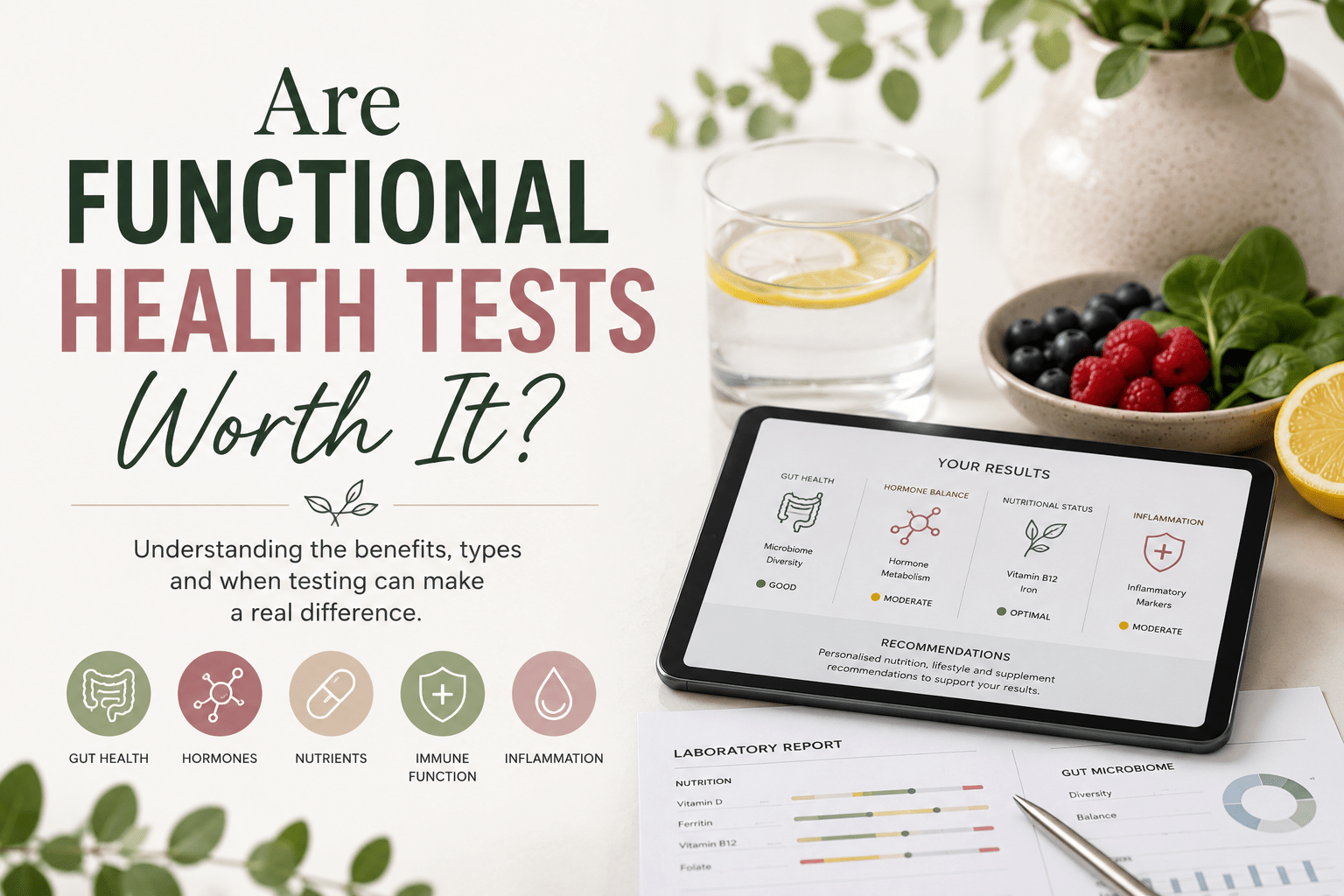
Are Functional Health Tests Worth It?
If you have been struggling with ongoing symptoms such as bloating, fatigue, acne, rosacea, eczema, hormonal symptoms, poor sleep, food sensitivities or digestive discomfort, you may have wondered whether functional health testing is worth it. The honest answer is: sometimes, yes. Functional testing can be useful when it answers a clear question and helps guide a more personalised plan. However, testing should never be done simply for the sake of collecting more information. The real value of functional testing is not the results alone. It is understanding what those results may mean, how they relate to your symptoms and whether they should change your nutrition, lifestyle or medical care. In Plain English
Functional testing can be useful when it helps answer a specific question. Tests are only helpful when the results are interpreted properly and used to guide a clear, personalised plan.
 Key Takeaways
- Functional testing can be useful when symptoms are persistent, complex or unclear.
- Testing should answer a specific question, not be carried out for the sake of it.
- Functional tests do not replace conventional medical testing or GP support.
- The real value comes from interpretation, prioritisation and appropriate action.
- You do not always need testing to make progress.
What Is Functional Health Testing?
Functional health testing is a broad term used for tests intended to explore patterns relating to how different systems of the body may be functioning. Depending on the test, these assessments may explore areas such as gut health, hormone patterns, nutrient status, inflammation, blood sugar balance, digestion, microbiome composition and stress response. Functional testing does not replace conventional medical testing. If you have new, severe or worrying symptoms, your GP should always be your first point of contact. In some circumstances, functional testing may provide additional information when conventional investigations have not fully explained persistent symptoms. However, the usefulness of any test depends on its scientific validity, the clinical question being asked and whether the result will meaningfully change the plan. Important Safety Note
Functional testing should not replace medical assessment. If you have new, severe, worsening or worrying symptoms, speak to your GP or an appropriate healthcare professional first.
Why Symptoms Do Not Always Tell the Whole Story
Symptoms are important, but they do not always reveal the full picture. Two people can both experience acne, fatigue, bloating or poor sleep, but the factors contributing to those symptoms may be different. For example:- One person with acne may experience a pattern linked with hormonal changes.
- Another may have digestive symptoms and wider inflammatory concerns.
- Another may have a clinically confirmed nutrient deficiency.
- Another may be affected by stress, poor sleep, blood sugar instability or reactions to particular foods.
Testing should answer an important clinical question. Good practitioners do not order tests simply because they can. They recommend them when the findings are likely to change the support they provide.
Beth Mulvey, Registered Nutritional Therapist
What Can Functional Testing Look At?
The type of testing considered should depend on your symptoms, health history, existing medical investigations, goals and the information that would genuinely help guide your plan. Gut Health Testing
May explore digestive function, inflammatory markers, gut microorganisms, yeast, parasites where clinically appropriate, short-chain fatty acids and selected markers associated with intestinal health.
 Hormone Testing
May assess hormone patterns such as oestrogen, progesterone, testosterone or cortisol where relevant to the symptoms and clinical question.
 Nutrient Status Testing
May review nutrients such as iron, ferritin, vitamin D, vitamin B12, folate and, where appropriate, other markers such as zinc or omega-3 status.
 Food Reaction Testing
May appear to provide clues in some situations, but results must be interpreted cautiously and should not be used alone to create unnecessary food restrictions.
 Organic Acids and Metabolic Testing
May report patterns associated with organic acid metabolism, nutritional pathways and energy production, although the clinical relevance of individual markers varies and requires careful interpretation.
Gut Health Testing
Gut health testing may explore areas such as digestive function, inflammation, gut microorganisms, yeast, parasites where appropriate, short-chain fatty acid production and selected markers associated with intestinal health. This may be considered for people experiencing symptoms such as:- Bloating
- Constipation
- Diarrhoea
- IBS-type symptoms
- Reactions to particular foods
- Reflux
- Skin flare-ups alongside digestive symptoms
- Fatigue or brain fog alongside gastrointestinal concerns
 Research Snapshot
Microbiome testing is a rapidly developing area, but the evidence is still evolving. Current expert consensus advises that results should not be treated as a standalone diagnosis and should instead be considered alongside symptoms, health history and recognised clinical investigations (Porcari et al., 2024).
Hormone Testing
Hormone testing may be considered when symptoms suggest that hormonal patterns could be influencing how you feel. This may include symptoms such as:- Irregular periods
- PMS
- Acne around the jawline or chin
- Low mood or anxiety around the menstrual cycle
- Sleep disruption
- Low libido
- Fatigue
- Stress-related symptoms
Nutrient Status Testing
Nutrient testing can be useful when symptoms, diet history, medication use or medical history suggest a possible deficiency or increased nutritional need. This may include looking at nutrients such as:- Iron and ferritin
- Vitamin D
- Vitamin B12
- Folate
- Magnesium
- Zinc
- Omega-3 status
Food Reaction and Sensitivity Testing
Food reactions can be complicated. Some people experience recognised food allergies involving the immune system. Others may experience food intolerances or digestive symptoms linked with factors such as lactose malabsorption, poor digestion, IBS, histamine-related symptoms, stress or other gastrointestinal conditions. Commercial food sensitivity tests can appear to provide clear answers, but results should never be interpreted in isolation or used to create unnecessarily restrictive diets. In many cases, a structured elimination and reintroduction process, combined with symptom tracking and appropriate professional guidance, may provide more useful practical information. Avoid Unnecessary Restriction
Food sensitivity results should be interpreted carefully. Removing too many foods can reduce nutrient intake, increase stress around eating and make symptoms harder to understand. Suspected food allergy should be discussed with a GP or appropriately qualified allergy professional.
Organic Acids and Metabolic Testing
Organic acids testing measures selected compounds produced during metabolic processes and excreted in urine. These tests may be marketed as providing information about energy production, nutritional pathways, oxidative stress, yeast-related markers and other aspects of metabolism. However, the clinical relevance of many individual markers can be uncertain, and results should not be treated as proof of a diagnosis or deficiency without appropriate supporting evidence. This type of testing may occasionally be considered where symptoms are complex or long-standing, but only when there is a clear question and the findings are likely to alter the support provided.Who Might Benefit from Functional Testing?
 Functional Testing May Be Worth Considering If You Experience
- Persistent IBS-type symptoms
- Ongoing bloating or digestive discomfort
- Constipation or diarrhoea
- Suspected reactions to particular foods
- Fatigue or low energy
- Brain fog
- Acne, eczema, rosacea or recurring skin flare-ups
- Hormonal symptoms
- PMS or irregular cycles
- Sleep issues
- Recurring symptoms that have not improved despite appropriate changes
- Symptoms involving several body systems
Do You Always Need Functional Testing?
No. This is important. You do not always need testing to make progress. Sometimes your symptoms, health history, food diary, lifestyle patterns, medication history and existing medical test results provide enough information to begin making appropriate changes. Testing is most valuable when it changes the plan. In Plain English
You do not need every test available. You need the right information at the right time. If a result is unlikely to change your plan, the test may not be worth doing.
Questions to Ask Before Paying for a Test
Before agreeing to functional testing, it can help to ask:- What specific question is this test intended to answer?
- How reliable and clinically useful is the test?
- Could a conventional medical test answer the same question?
- Will the result change my nutrition, lifestyle or medical plan?
- What happens if the result is normal?
- What happens if the result is outside the laboratory range?
- Who will interpret the findings?
- Are there additional costs for interpretation, supplements or repeat testing?
What Happens After Testing?
Test results alone do not improve health. The real value comes from interpretation and appropriate action. After testing, your practitioner should help you understand:- What the results show
- What the test cannot show
- How the findings may relate to your symptoms
- Which findings are clinically meaningful
- What needs to be prioritised first
- Which nutrition and lifestyle changes are relevant
- Whether supplements are appropriate
- Whether any findings should be discussed with your GP
- How progress will be reviewed
Are Functional Health Tests Worth It?
Functional health tests can be worth it when they provide reliable, useful information that helps guide your next steps. They may help identify patterns relating to gut health, hormone function, nutrient status, metabolism or digestion that deserve further attention. However, functional tests are not magic and should not be used to provide false certainty. They are tools, and the strength of the evidence varies considerably between different types of testing. The most useful results come when testing is combined with:- A clear clinical question
- Appropriate medical assessment
- Professional interpretation
- A personalised nutrition and lifestyle strategy
- Consistent follow-up
Key Takeaways
- Functional testing can be worthwhile when it helps guide a clearer plan.
- Testing should be based on your symptoms, history and a specific question.
- Results need professional interpretation and clinical context.
- Testing is not always necessary to make progress.
- The goal is not to collect data. It is to understand what needs to change.
How VitaminBeth Uses Functional Testing
At VitaminBeth, testing is considered carefully and only when it is likely to provide meaningful information. Depending on your symptoms and goals, testing may be considered as part of programmes such as the Complete Gut Repair 3-Month Programme, the Skin Therapy Programme or the Optimal Health Assessment. The aim is not to test everything. The aim is to understand what information is genuinely needed and create a practical plan that supports progress. If skin symptoms are part of your story, you may also find it helpful to read about the gut-skin axis or how to get rid of acne.Frequently Asked Questions
Are functional health tests worth it?
Functional health tests can be worth it when they answer a clear question and help guide a more personalised plan. They are less useful when carried out without a clear reason, reliable evidence or appropriate interpretation.
Do functional tests replace GP tests?
No. Functional testing does not replace conventional medical assessment or recognised diagnostic testing. If you have new, severe, worsening or worrying symptoms, your GP should be your first point of contact.
Do I always need testing?
No. Sometimes your symptoms, health history, diet, lifestyle patterns and existing medical test results provide enough information to begin making progress.
What can functional testing look at?
Depending on the test, functional testing may explore gut health, hormone patterns, nutrient status, digestion, microbiome composition, organic acids or selected metabolic markers. The evidence and usefulness vary between tests.
Can testing help with acne or skin problems?
Testing may provide additional information where acne, eczema, rosacea or other skin flare-ups appear alongside digestive symptoms, hormonal changes, fatigue or confirmed nutrient concerns. Whether testing is appropriate depends on the individual and the question being investigated.
Can I order functional health tests myself?
Some functional tests can be purchased directly by consumers. However, results can be difficult to interpret without clinical context. The greatest value usually comes from selecting an appropriate test and understanding how the findings relate to your symptoms, health history and existing medical investigations.
What happens after testing?
The findings should be interpreted in context and used to create a clear nutrition and lifestyle plan where appropriate. The value comes from understanding what matters, what does not and what should be prioritised next.
Final Thoughts
Functional health testing can be useful when it is chosen and interpreted carefully. It may help reduce guesswork, identify patterns and guide a more personalised plan. However, testing should never become the goal by itself. The real question is not, “Can I do a test?” The better question is, “Will this test help us understand what needs to change?” If the answer is yes, testing may be worthwhile. If the result is unlikely to alter your nutrition, lifestyle or medical management, it may be more appropriate to focus on building a personalised plan using the information you already have.Ready to Understand What Your Body Is Trying to Tell You?
If you are struggling with digestive symptoms, fatigue, skin concerns, hormonal symptoms, reactions to foods, poor sleep or unexplained symptoms, carefully selected testing may provide useful additional information. As a Registered Nutritional Therapist specialising in gut health, skin health, hormone balance and overall wellbeing, Beth uses a personalised approach to explore the factors that may be contributing to your symptoms and create a tailored nutrition and lifestyle plan around your individual needs. During your discovery call, you can discuss your symptoms, previous investigations and whether functional testing could provide useful additional information. If testing is not appropriate, Beth will explain why. Continue Your Learning
Explore more of VitaminBeth’s evidence-informed guides covering gut health, skin health, hormones, nutrition, functional testing and personalised wellbeing.
References
- Porcari, S. et al. (2024) ‘International consensus statement on microbiome testing in clinical practice’, The Lancet Gastroenterology & Hepatology. Available at: https://pubmed.ncbi.nlm.nih.gov/39647502/
- de Toro-Martín, J. et al. (2017) ‘A review of personalised nutritional approaches for the prevention and management of metabolic syndrome’, Nutrients, 9(8), p. 913. Available at: https://pubmed.ncbi.nlm.nih.gov/28829397/
- Ordovas, J.M. et al. (2018) ‘Personalised nutrition and health’, BMJ, 361, k2173. Available at: https://pmc.ncbi.nlm.nih.gov/articles/PMC6081996/
Stress and Acne: Can Stress Cause Breakouts?
Stress does not appear to be the sole cause of acne, but it may worsen breakouts in some people. Explore the stress–skin connection and practical ways to support both.
What Causes Acne?
Acne is rarely caused by one thing. This guide explains the main causes of acne and how hormones, inflammation, gut health, diet, stress, skincare and lifestyle may all contribute.
Acne Treatments & Skincare: What Actually Helps!
Table of Contents VitaminBeth Guide Estimated reading time: 10–12 minutes Reviewed by Beth Mulvey, Registered Nutritional Therapist Acne Treatments & Skincare: What Actually Helps Acne-Prone Skin? Acne skincare can feel…