
 VitaminBeth Guide
 Estimated reading time: 10–12 minutes
  Reviewed by Beth Mulvey, Registered Nutritional Therapist
Acne Treatments & Skincare: What Actually Helps Acne-Prone Skin?
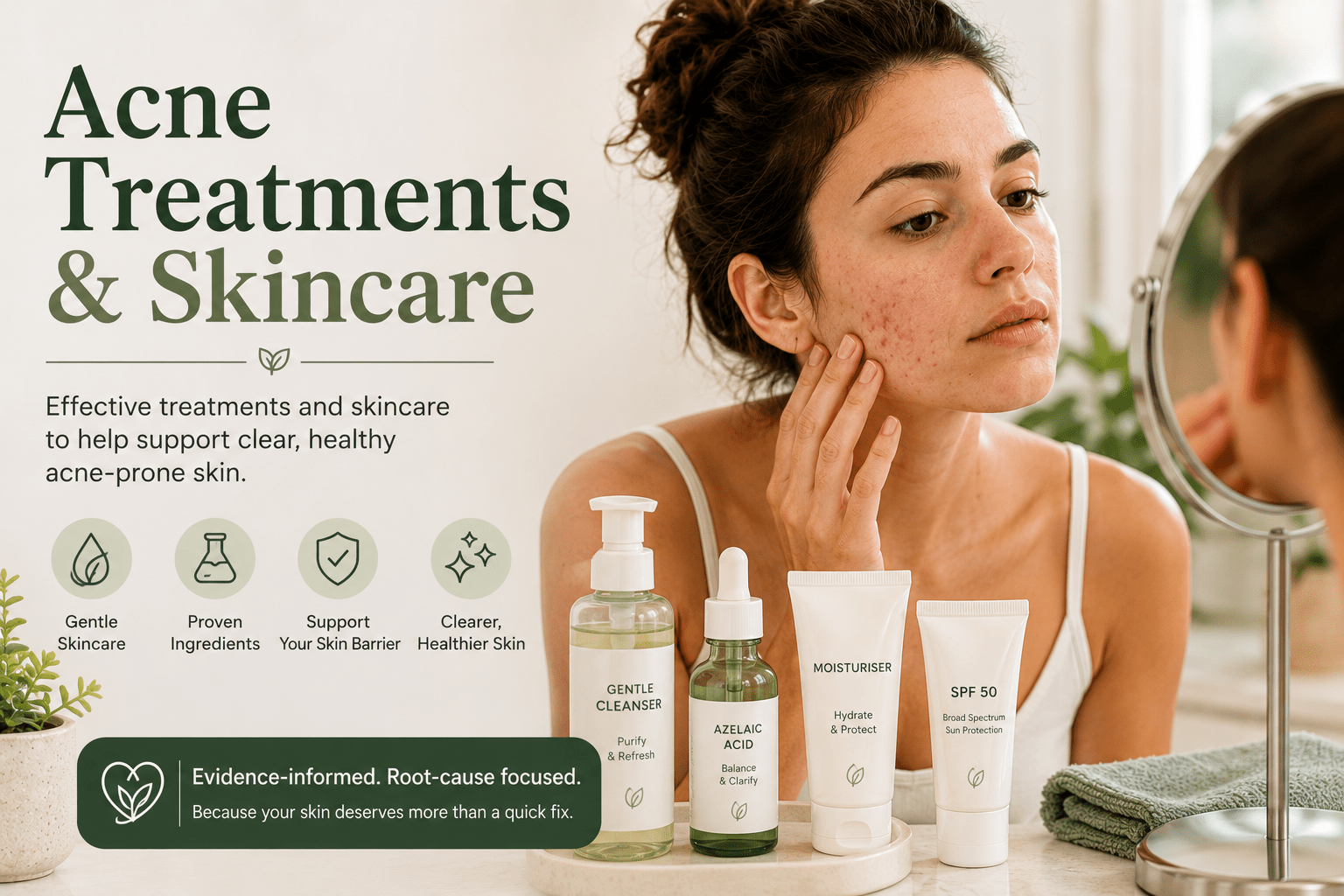
Acne skincare can feel overwhelming. There are cleansers, toners, exfoliants, acids, spot treatments, masks, prescription creams, antibiotics, supplements and social media routines all promising clearer skin. But more products do not always mean better results. For some people, acne improves when they use the right active ingredient consistently. For others, acne gets worse because the skin barrier becomes irritated, dry, stripped or overloaded. Acne treatments can be helpful, but the best approach depends on your acne type, severity, skin sensitivity, lifestyle, medication history and wider root causes. Current clinical guidance recognises that acne management should be based on severity, lesion type, scarring risk, treatment tolerance and individual circumstances (NICE, 2021; NHS, 2025). In Plain English
Acne skincare should support your skin, not fight against it. The goal is to reduce blocked pores, oil build-up, inflammation and acne-associated bacteria while protecting the skin barrier. Stronger is not always better. Key Takeaways
- Acne treatment should match your acne type, severity and skin tolerance.
- A simple routine is often better than using too many products at once.
- Common acne ingredients include salicylic acid, benzoyl peroxide, azelaic acid and retinoids.
- Prescription treatments may be needed for persistent, painful, cystic or scarring acne.
- Skincare can support acne, but root causes such as hormones, stress, gut health, diet and inflammation may also need attention.
One of the biggest skincare mistakes I see is people trying to treat acne by attacking the skin. If the skin barrier is irritated, inflamed and overwhelmed, adding more products can make things worse. Skincare matters, but it needs to work with the skin and fit the wider picture.
Beth Mulvey, Registered Nutritional Therapist
Start With the Basics: What Is Acne Treatment Trying to Do?
Acne treatments usually aim to support one or more of the main acne processes. Acne is understood as a condition involving the hair follicle and oil gland, with sebum production, follicle blockage, inflammation and acne-associated bacteria all playing a role (Sutaria, Masood and Schlessinger, 2023; DermNet, 2023). These treatment targets include:- Reducing blocked pores
- Supporting healthy skin cell turnover
- Reducing excess oil build-up
- Calming inflammation
- Reducing acne-associated bacteria
- Supporting the skin barrier
- Reducing the risk of marks and scarring
First: Identify What Type of Acne You Have
Before choosing acne treatments, it helps to understand what kind of breakouts you are dealing with. Different acne types may respond better to different approaches. Acne can include comedones, papules, pustules, nodules and cysts, and treatment choices often depend on the pattern and severity of these lesions (DermNet, 2023; NICE, 2021). Blackheads
Often linked with open clogged pores. Ingredients that support exfoliation and pore clearing may be useful. Whiteheads
Closed clogged pores may benefit from consistent, gentle treatment that supports skin cell turnover. Papules
Small red inflamed bumps suggest inflammation is involved. Pustules
Inflamed spots with visible pus may involve bacteria, oil build-up and inflammation. Nodules
Deep, painful lumps usually need medical support because they can increase scarring risk. Cystic Acne
Deep, inflamed, painful lesions should be assessed by a GP or dermatologist.What Should a Basic Acne Skincare Routine Include?
A good acne skincare routine does not need to be complicated. For many people, the foundations are:- A gentle cleanser
- A suitable moisturiser
- Daily SPF in the morning
- One acne treatment ingredient introduced gradually
- Consistency for several weeks
 Good to Know
Most acne treatments take time. It is common to need several weeks before judging whether a product is helping. Constantly changing products can make it harder to know what is working.Morning Skincare for Acne-Prone Skin
A simple morning routine may include:1. Gentle Cleanser
Use a non-stripping cleanser if your skin feels oily, sweaty or product-heavy in the morning. Some people only need water if their skin is dry or sensitive.2. Lightweight Moisturiser
A suitable moisturiser can help support the skin barrier, especially if you use acne treatments that cause dryness.3. SPF
Daily sun protection can help protect the skin and reduce the risk of post-breakout marks becoming darker.Evening Skincare for Acne-Prone Skin
A simple evening routine may include:1. Cleanse Properly
Remove SPF, makeup, sweat, pollution and product build-up without scrubbing aggressively.2. Acne Treatment
Use one active treatment at a time, such as salicylic acid, benzoyl peroxide, azelaic acid or a retinoid, depending on your skin and acne type.3. Moisturise
Moisturiser can reduce dryness, flaking and irritation from acne treatments.Salicylic Acid for Acne
Salicylic acid is a beta-hydroxy acid often used for oily, congested or blackhead-prone skin. It is commonly used in acne products because it can help exfoliate and support pore clearing (DermNet, 2023). It may be useful for:- Blackheads
- Whiteheads
- Clogged pores
- Oily skin
- Uneven skin texture
In Plain English
Salicylic acid is often used when pores feel clogged, oily or bumpy. It may help with blackheads and congestion, but too much can irritate the skin barrier.Benzoyl Peroxide for Acne
Benzoyl peroxide is commonly used for inflamed acne because it helps reduce acne-associated bacteria on the skin and can also reduce inflammation (NICE, 2021; NHS, 2025). It may be useful for:- Inflamed spots
- Pustules
- Red bumps
- Acne involving bacterial overgrowth within blocked pores
Benzoyl Peroxide Safety Note
Benzoyl peroxide can irritate the skin if used too often or applied too heavily. Start slowly, use as directed and avoid combining it with multiple strong products unless advised by a healthcare professional.Azelaic Acid for Acne
Azelaic acid is often used for acne-prone skin, redness and post-breakout marks. It may be used in acne management, particularly where inflammatory lesions or pigmentation concerns are part of the picture (NICE, 2021; DermNet, 2023). It may be useful for:- Mild acne
- Inflamed spots
- Redness
- Post-breakout marks
- Skin that does not tolerate stronger acids well
Retinoids for Acne
Retinoids are vitamin A-related compounds used in acne treatment. They help support skin cell turnover and reduce blocked pores (NICE, 2021; DermNet, 2023). They may be useful for:- Blackheads
- Whiteheads
- Clogged pores
- Recurring acne
- Acne prevention
Retinoid Safety Note
Retinoids are not suitable for everyone. They are especially important to avoid during pregnancy unless specifically advised by an appropriately qualified healthcare professional. If you are pregnant, trying to conceive or breastfeeding, seek medical advice before using retinoid products.Antibiotics for Acne
Antibiotics may be prescribed for some types of inflammatory acne. They may be topical or oral depending on acne severity and medical assessment (NICE, 2021; AAD, 2024). Antibiotics are usually used to reduce acne-associated bacteria and inflammation, but they should be used carefully to reduce the risk of antibiotic resistance. Current acne guidance recommends avoiding antibiotic monotherapy and limiting antibiotic use where possible (NICE, 2021; AAD, 2024). They are often combined with other acne treatments such as benzoyl peroxide rather than used alone long-term. Good to Know
Antibiotics can be useful for some people with inflammatory acne, but they are not usually a long-term standalone solution. Your GP or dermatologist can advise what is appropriate.Oral Isotretinoin for Severe Acne
Oral isotretinoin is a prescription medication used for severe, persistent or scarring acne. It is related to vitamin A and must be prescribed and monitored by a specialist (NHS, 2025; NICE, 2021). It can be very effective for some people, but it also has important safety considerations and is not suitable for everyone. Medical supervision is essential, especially because isotretinoin must not be used during pregnancy (NHS, 2025). Seek medical advice if your acne is:- Severe
- Cystic
- Painful
- Leaving scars
- Not responding to other treatments
- Having a major impact on confidence or mental wellbeing
Natural Skincare and Acne
Many people move towards natural skincare after finding conventional acne products too harsh. Natural does not automatically mean better or safer. Some natural ingredients can still irritate acne-prone skin, especially essential oils, harsh scrubs or fragranced products. Natural skincare may be helpful if it supports the skin barrier and reduces irritation, but it should still be chosen carefully. In Plain English
Natural skincare can still irritate the skin. The most important question is not whether a product is natural, but whether your skin tolerates it and whether it supports your acne pattern.Common Skincare Mistakes That Can Make Acne Worse
Acne-prone skin often becomes worse when it is irritated, stripped or overloaded. Common mistakes include: Signs Your Routine May Be Too Harsh
- Your skin feels tight after cleansing
- Your skin stings when applying moisturiser
- Your acne looks redder and more inflamed
- Your skin is peeling, flaky or sore
- You are using several acids or actives at once
- You are scrubbing spots aggressively
- You keep changing products every few days
- Skipping moisturiser because the skin is oily
- Using spot treatments across the whole face too often
- Layering salicylic acid, benzoyl peroxide and retinoids without guidance
- Using harsh physical scrubs
- Picking or squeezing spots
- Not washing makeup brushes or pillowcases regularly
- Ignoring products that touch the skin, such as hair oils or beard balms
Skincare for Acne by Location
Where acne appears can offer clues about what may be contributing, although location alone cannot diagnose the cause of acne (Sutaria, Masood and Schlessinger, 2023). Forehead Acne
May be linked with hair products, sweat, hats, helmets, SPF or fungal acne-like bumps. Cheek Acne
May involve phones, pillowcases, makeup, masks, shaving products, irritation or gut-related patterns. Chin Acne
May be linked with hormones, stress, skincare, food triggers or digestion. Jawline Acne
May involve hormones, shaving, beard products, stress, gut health or friction. Back Acne
May involve sweat, friction, body products, gym clothing, hormones or folliculitis. Shoulder Acne
May involve straps, backpacks, sportswear, hair products, body products or body acne patterns.When Skincare Is Not Enough
Skincare can be important, but acne is not always a skincare problem. If acne keeps returning despite a consistent routine, it may be worth looking deeper. Possible internal contributors include:- Hormone patterns
- PCOS-related symptoms
- Stress and poor sleep
- Blood sugar imbalance
- Gut symptoms
- Food triggers
- Nutrient deficiencies
- Inflammation
- Medication or supplement changes
How to Build a Simple Acne Routine
A simple routine may be a better starting point than using several active products.Step 1: Cleanse
Choose a gentle cleanser that removes sweat, SPF, makeup and product build-up without leaving the skin tight or sore.Step 2: Treat
Choose one acne treatment ingredient based on your acne type and tolerance. Introduce it slowly.Step 3: Moisturise
Use a suitable moisturiser to support the skin barrier and reduce irritation from acne treatments.Step 4: Protect
Use SPF in the morning, especially if using treatments that increase sensitivity or if you are prone to marks.When to Seek Medical Support
Speak to your GP, pharmacist or dermatologist if your acne is painful, cystic, scarring, spreading, infected-looking, not improving with over-the-counter products or affecting your confidence or mental wellbeing (NICE, 2021; NHS, 2025). Seek support if your acne is:- Painful or cystic
- Leaving scars or dark marks
- Spreading across the face, chest, back or shoulders
- Very itchy, infected-looking or unusual
- Not improving despite consistent skincare
- Worsening quickly
- Affecting your confidence or mental wellbeing
Beth’s Insight
The best acne plan is usually not just “use stronger products”. It is about matching the treatment to the acne type, protecting the skin barrier and understanding what is driving the breakouts internally. For many people, skincare is one part of the solution, not the whole solution.
Beth Mulvey, Registered Nutritional Therapist
Frequently Asked Questions
What is the best treatment for acne?
The best acne treatment depends on your acne type, severity and skin tolerance. Mild clogged pores may need a different approach from inflamed, cystic or scarring acne. Persistent or severe acne should be assessed by a healthcare professional.
Is salicylic acid or benzoyl peroxide better for acne?
Salicylic acid is often used for clogged pores, blackheads and oily congestion. Benzoyl peroxide is often used for inflamed spots because it helps reduce acne-associated bacteria and inflammation. The best choice depends on your acne pattern.
Can skincare make acne worse?
Yes. Harsh cleansers, too many active ingredients, heavy products, comedogenic makeup, over-exfoliation or skin barrier damage may worsen acne-prone skin.
How long do acne treatments take to work?
Many acne treatments need several weeks of consistent use before results can be judged. If acne is severe, painful, cystic or scarring, seek medical advice rather than waiting too long.
Should I moisturise if I have acne?
Yes, many acne-prone skins still benefit from moisturiser. A suitable moisturiser can support the skin barrier and reduce irritation from acne treatments.
When should I see a doctor for acne?
You should seek medical support if acne is painful, cystic, scarring, spreading, infected-looking, not improving with over-the-counter products or affecting your confidence or mental wellbeing.
Final Thoughts
Acne treatments and skincare can be helpful, but the right approach depends on your acne type, skin barrier, severity and wider health picture. A simple routine with a gentle cleanser, suitable moisturiser, SPF and one carefully chosen treatment ingredient is often a better starting point than using multiple strong products at once. For persistent acne, skincare may only be one part of the solution. Hormones, gut health, stress, diet, inflammation, medication history and nutrient status may also need to be considered.Need Help Understanding What Your Acne Needs?
If your acne keeps returning and you feel unsure whether the problem is skincare, hormones, gut health, food triggers, stress, inflammation or something else, you do not have to keep guessing. At VitaminBeth, we use a personalised, root-cause approach to help identify what may be contributing to acne, including gut health, hormones, inflammation, stress, diet and nutrient status. Continue Your Acne Learning
You’re reading one of VitaminBeth’s acne guides. Visit the Acne Resource Centre to explore all of our evidence-informed articles on acne causes, hormones, gut health, nutrition, lifestyle and personalised support in one place.
References
- American Academy of Dermatology Association (AAD) (2024) ‘Guidelines of care for the management of acne vulgaris’. Available at: https://pubmed.ncbi.nlm.nih.gov/38300170/
- Baldwin, H. and Tan, J. (2021) ‘Effects of diet on acne and its response to treatment’, American Journal of Clinical Dermatology, 22(1), pp.55–65. Available at: https://pmc.ncbi.nlm.nih.gov/articles/PMC7847434/
- DermNet (2023) ‘Acne management’. Available at: https://dermnetnz.org/topics/acne-treatment
- Meixiong, J. and Bhutani, T. (2022) ‘Diet and acne: A systematic review’, JAAD International, 7, pp.95–112. Available at: https://pmc.ncbi.nlm.nih.gov/articles/PMC8971946/
- NHS (2025) ‘Acne: Treatment’. Available at: https://www.nhs.uk/conditions/acne/treatment/
- National Institute for Health and Care Excellence (NICE) (2021) ‘Acne vulgaris: management’. Available at: https://www.nice.org.uk/guidance/ng198
- Sutaria, A.H., Masood, S. and Schlessinger, J. (2023) ‘Acne Vulgaris’, StatPearls. Available at: https://www.ncbi.nlm.nih.gov/books/NBK459173/
Stress and Acne: Can Stress Cause Breakouts?
Stress does not appear to be the sole cause of acne, but it may worsen breakouts in some people. Explore…
What Causes Acne?
Acne is rarely caused by one thing. This guide explains the main causes of acne and how hormones, inflammation, gut…
Acne Treatments & Skincare: What Actually Helps!
Table of Contents VitaminBeth Guide Estimated reading time: 10–12 minutes Reviewed by Beth Mulvey, Registered Nutritional Therapist Acne Treatments &…