📚 VitaminBeth Guide
⏱️ Estimated reading time: 9–11 minutes
👩⚕️ Reviewed by Beth Mulvey, Registered Nutritional Therapist
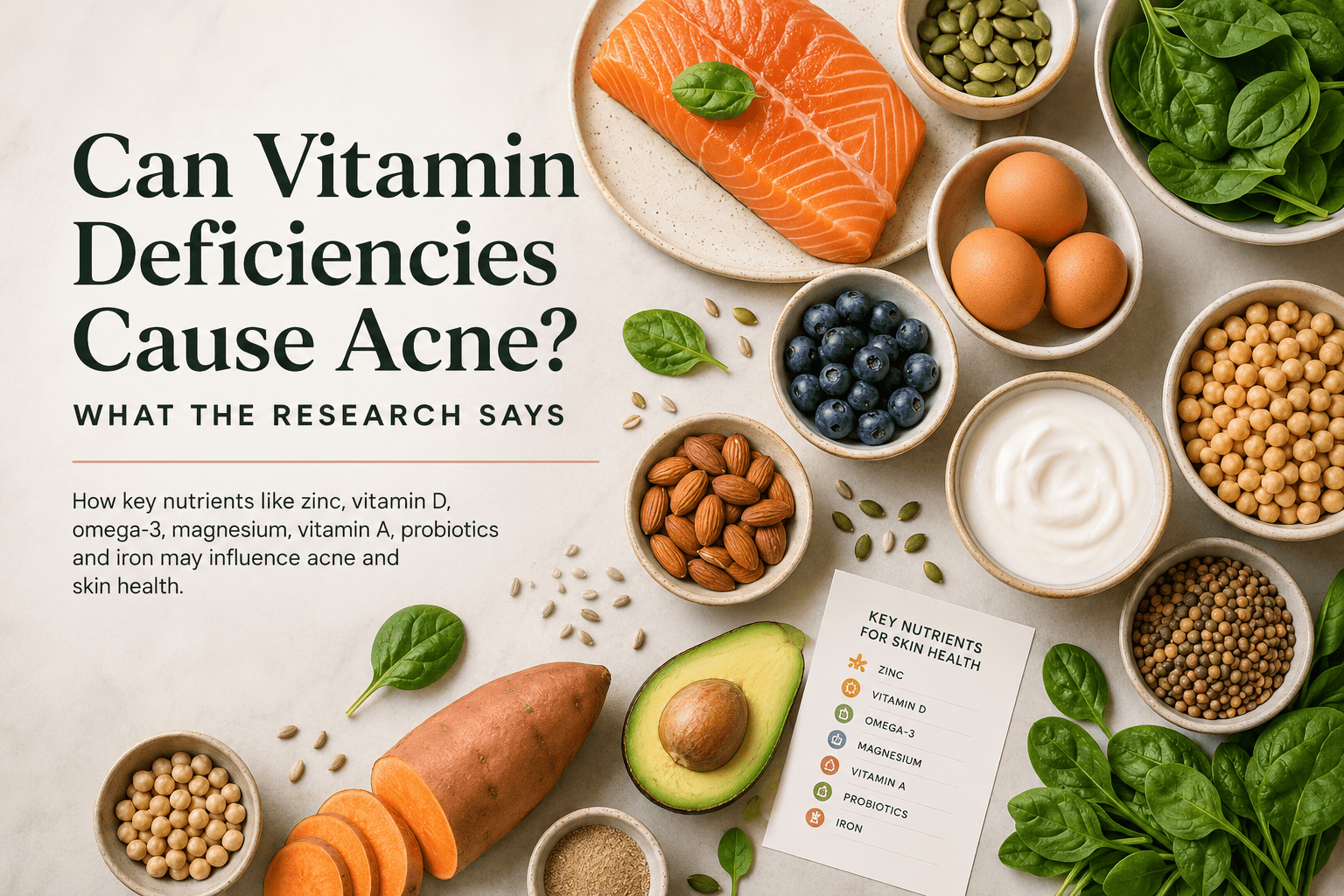
Can Vitamin Deficiencies Cause Acne? What the Research Says
Acne is often thought of as a skin problem, but the skin is influenced by many internal factors, including hormones,
inflammation, immune function, blood sugar balance, stress, digestion and nutrient status.
Because of this, many people ask whether vitamin or mineral deficiencies can cause acne.
The answer is more nuanced. Acne is rarely caused by one single nutrient deficiency. However, inadequate levels of
certain nutrients may influence processes involved in skin health, including inflammation regulation, immune function,
skin repair, hormone metabolism and the body’s ability to recover from inflammation.
Research has explored several nutrients in relation to acne, including zinc, vitamin D, vitamin A, omega-3 fatty
acids, probiotics and iron. However, the evidence does not suggest that one deficiency explains acne in everyone.
This guide explores which nutrients may be relevant for acne-prone skin, what the research says, when testing may be
useful and why a personalised approach is usually more valuable than guessing with supplements.
💡 In Plain English
A vitamin deficiency is unlikely to be the only reason someone develops acne. However, if your body is low in
nutrients involved in skin repair, inflammation control, immunity or hormone balance, it may make it harder for your
skin to heal and regulate itself.
✅ Key Takeaways
- Acne is usually influenced by multiple factors rather than one nutrient deficiency alone.
- Zinc, vitamin D, omega-3 fats, vitamin A, magnesium, probiotics and iron may all be relevant to skin health in
different ways.
- Nutrients can influence inflammation, skin repair, immunity, hormones, digestion and overall skin resilience.
- Some supplements can be harmful when taken unnecessarily, particularly iron and vitamin A.
- A food-first and evidence-informed approach is usually better than randomly trying multiple supplements.
When someone has persistent acne, I do not assume they are missing one specific nutrient. I look at the wider
pattern: diet, digestion, symptoms, menstrual cycle, stress, energy levels and, where appropriate, testing.
Nutrients matter, but they need to be understood in context.
Beth Mulvey, Registered Nutritional Therapist
Can Nutrient Deficiencies Contribute to Acne?
Nutrient deficiencies do not usually cause acne in the same way that increased sebum production, blocked pores,
inflammation and changes in skin bacteria are involved in acne development.
However, nutrients provide the building blocks that allow the skin and body to function properly.
Nutrients may influence:
- Skin barrier function
- Skin repair and wound healing
- Immune regulation
- Inflammatory pathways
- Hormone metabolism
- Blood sugar regulation
- Antioxidant protection
- Gut health and nutrient absorption
If nutrient intake is low, absorption is impaired or dietary variety is limited, this may affect how effectively the
body manages inflammation and repairs damaged tissue.
🔬 Research Snapshot
Research has explored several nutrients in relation to acne, including zinc, vitamin D, vitamin A, omega-3 fatty
acids, probiotics and iron.
However, most studies show associations rather than proving that a nutrient deficiency directly causes acne. A
nutrient imbalance may be relevant for some people, but acne usually involves several interacting factors.
Signs Nutrient Status May Be Worth Exploring
Not everyone with acne requires nutrient testing. However, nutrient status may be worth exploring when acne appears
alongside other symptoms that suggest possible nutritional, hormonal, digestive or lifestyle factors.
🔎 Signs This May Apply To You
Nutrient status may be worth exploring if acne appears alongside:
- Fatigue or low energy
- Heavy periods
- Hair shedding
- Slow wound healing
- Frequent infections
- Dry, flaky or irritated skin
- Poor sleep or high stress levels
- Digestive symptoms such as bloating, constipation or loose stools
- Restrictive eating patterns
- A vegan, vegetarian or very limited diet
Key Nutrients Linked With Acne and Skin Health
The nutrients below are not acne cures. However, they may be relevant because of their roles in inflammation,
immunity, skin repair, hormones and gut health.
Understanding whether a nutrient matters for your skin depends on your individual symptoms, diet, lifestyle and
overall health picture.
1. Zinc and Acne
Zinc is one of the most researched minerals in relation to acne.
It plays an important role in immune function, wound healing, skin repair and inflammatory regulation.
Some studies have found that people with acne may have lower zinc levels compared with people without acne, although
this does not prove that zinc deficiency is the cause of acne (Podgórska et al., 2021).
Zinc may be particularly relevant where acne appears alongside slow healing, inflammation or a diet that is low in
zinc-rich foods.
🥩 Animal Zinc Sources
- Beef
- Seafood
- Chicken
- Eggs
🌱 Plant Zinc Sources
- Pumpkin seeds
- Lentils
- Chickpeas
- Cashews
🌿 Good to Know
Zinc supplements are not suitable for everyone. Taking high amounts of zinc over time may affect copper balance and
cause unwanted effects.
Food sources are usually a good starting point, unless testing or professional guidance suggests supplementation may
be appropriate.
Read the full guide:
Is Zinc Good for Acne?
2. Vitamin D and Acne
Vitamin D plays a role in immune regulation, inflammation and skin health.
Some studies have explored whether people with acne are more likely to have lower vitamin D levels, although this does
not prove that low vitamin D directly causes acne (Wang et al., 2021).
Vitamin D status may be particularly relevant for people with limited sun exposure, low dietary intake or risk factors
for deficiency.
🐟 Vitamin D Food Sources
- Salmon
- Sardines
- Mackerel
- Egg yolks
🍄 Other Sources
- Fortified foods
- Fortified plant milks
- UV-exposed mushrooms
- Supplements when appropriate
💡 In Plain English
Vitamin D supports immune and inflammatory regulation. Low vitamin D may be one factor worth exploring for some
people with acne, but it is not a universal acne solution.
Read the full guide:
Vitamin D and Acne: What the Research Says
3. Omega-3 and Acne
Omega-3 fatty acids are essential fats involved in inflammatory regulation, cell membrane health and immune function.
Because acne is an inflammatory skin condition, omega-3 intake has been explored as a possible factor that may
influence acne severity.
Research suggests omega-3 status may be relevant for some people with acne, although more high-quality studies are
needed before omega-3 can be considered a specific acne treatment (Guertler et al., 2024).
Omega-3 fats are not vitamins, but they are important nutrients for skin health and are often discussed alongside acne
nutrition.
🐟 Marine Omega-3 Sources
- Salmon
- Sardines
- Mackerel
- Anchovies
🌱 Plant Omega-3 Sources
- Chia seeds
- Flaxseeds
- Walnuts
- Hemp seeds
Plant sources provide alpha-linolenic acid (ALA), which the body can convert into EPA and DHA. However, this
conversion is limited, meaning oily fish remains one of the most reliable sources of active omega-3 fats.
Read the full guide:
Omega-3 and Acne: What the Research Says
4. Magnesium and Acne
Magnesium is involved in hundreds of processes throughout the body, including energy production, nervous system
function, muscle function, sleep regulation and stress response.
Magnesium is not considered a direct acne treatment. However, it may be relevant where acne appears alongside factors
such as stress, poor sleep, cravings, PMS symptoms or blood sugar fluctuations.
Stress and sleep can influence inflammation, hormones and skin healing, which is why magnesium may form part of the
wider picture for some people.
🌿 Magnesium-Rich Foods
- Dark leafy greens
- Pumpkin seeds
- Almonds
- Cashews
🍫 Other Sources
- Dark chocolate
- Avocado
- Beans
- Lentils
🌿 Good to Know
Magnesium is unlikely to be the main cause of acne improvement on its own. It may be more relevant when stress,
sleep, energy levels or blood sugar balance are part of the wider picture.
Read the full guide:
Magnesium and Acne: What the Research Says
5. Vitamin A and Acne
Vitamin A has a unique relationship with acne because prescription acne medications such as isotretinoin are derived
from vitamin A compounds called retinoids.
Vitamin A itself supports skin cell turnover, immune function, skin barrier health and tissue repair.
However, dietary vitamin A and prescription retinoids are not the same thing.
Eating vitamin A-rich foods supports normal health, but taking high-dose vitamin A supplements is not equivalent to
using prescribed acne medication and may be harmful.
🥩 Retinol Sources
- Liver
- Egg yolks
- Butter
- Full-fat dairy
🥕 Beta-Carotene Sources
- Carrots
- Sweet potato
- Butternut squash
- Spinach
⚠️ Supplement Safety: Vitamin A
Vitamin A is one nutrient where more is not always better.
High-dose vitamin A supplements can build up in the body and may be harmful, particularly during pregnancy or when
trying to conceive.
Vitamin A supplementation should be approached carefully and not used as a replacement for prescribed acne
treatment.
Read the full guide:
Vitamin A and Acne: What the Research Says
6. Probiotics and Acne
Probiotics are not vitamins, but they may be relevant to acne because of the relationship between the gut microbiome,
immune function, inflammation and the skin.
This connection is often described as the gut-skin axis.
Some research suggests certain probiotic strains may support acne-prone skin, but results vary depending on the
strain, dose, duration and individual factors (Sánchez-Pellicer et al., 2022).
Rather than choosing a probiotic based only on marketing claims, it is important to consider the reason for taking it
and whether it fits the individual’s symptoms.
🌿 Good to Know
Probiotics are not one-size-fits-all.
Different strains can have different effects, and a probiotic that supports general digestion may not be the same as
one studied in relation to acne.
Read the full guide:
Probiotics and Acne: What the Research Says
7. Iron and Acne
Iron is important for oxygen transport, energy production, immune function and tissue repair.
Low iron may be relevant for some people with acne, particularly when acne appears alongside symptoms such as fatigue,
heavy periods, dizziness, hair shedding or poor recovery.
However, current research does not prove that low iron directly causes acne.
🥩 Haem Iron Sources
- Red meat
- Poultry
- Fish
- Eggs
🌱 Non-Haem Iron Sources
- Lentils
- Beans
- Tofu
- Pumpkin seeds
- Leafy greens
Vitamin C can improve absorption of plant-based iron sources, so pairing foods such as lentils, beans and leafy greens
with peppers, citrus fruits or berries may be beneficial.
⚠️ Supplement Safety: Iron
Iron should not be taken simply because you have acne.
Too little iron can affect health, but excessive iron can also be harmful. Supplementation should ideally be guided
by symptoms, appropriate testing and professional advice.
Read the full guide:
Iron and Acne: What the Research Says
Should You Take Supplements for Acne?
Supplements may be useful when there is a clear reason to use them, such as a confirmed deficiency, increased
requirement or dietary limitation.
However, supplements should not replace the foundations of skin health, including:
- A varied nutrient-rich diet
- Adequate protein intake
- Good sleep
- Stress management
- Balanced blood sugar regulation
- Appropriate skincare
- Addressing digestive or hormonal factors where relevant
Taking multiple supplements at once can make it difficult to understand what is helping, what is causing side effects
and whether unnecessary nutrients are being consumed.
💡 In Plain English
The goal is not to find the biggest supplement stack. The goal is to understand what your body may need and support
the areas most relevant to your skin.
Food First: Nutrient-Rich Foundations for Acne-Prone Skin
A food-first approach is usually the best starting point when considering nutrient status and skin health.
This does not mean food alone will resolve acne. Acne is complex and can involve hormones, inflammation, skincare,
stress, sleep, digestion and genetics.
However, a nutrient-rich diet can provide the building blocks needed for:
- Skin repair and barrier function
- Immune regulation
- Inflammation balance
- Hormone metabolism
- Healthy digestion
- Stable energy levels
🥚 Protein and Repair
- Eggs
- Fish
- Chicken
- Lentils
- Beans
🥦 Fibre and Gut Health
- Vegetables
- Berries
- Oats
- Chickpeas
- Ground flaxseed
🐟 Healthy Fats
- Oily fish
- Olive oil
- Avocado
- Chia seeds
- Walnuts
🌈 Micronutrients
- Leafy greens
- Pumpkin seeds
- Sweet potato
- Citrus fruits
- Colourful vegetables
When Might Nutrient Testing Be Helpful?
Not everyone with acne needs blood tests or nutritional testing.
However, testing may be worth considering when acne appears alongside symptoms that suggest possible nutrient
depletion, hormonal changes, digestive issues or poor recovery.
Depending on symptoms and personal circumstances, healthcare professionals may consider markers such as:
- Vitamin D status
- Ferritin and iron markers
- Vitamin B12
- Folate
- Thyroid markers where clinically appropriate
- Other markers based on individual symptoms
🌿 Good to Know
A single test result rarely explains everything.
Nutrient status should be interpreted alongside symptoms, diet, menstrual history, digestion, lifestyle, medication
use and overall health.
Beth’s Insight
The biggest mistake I see is people taking multiple acne supplements without understanding whether they actually
need them. Nutrients can absolutely matter for skin health, but the goal is not to take everything. The goal is to
understand what your body needs and support the areas that are most relevant for you.
Beth Mulvey, Registered Nutritional Therapist
What This Means For You
Vitamin and nutrient deficiencies may be one part of the acne picture, but they are rarely the complete explanation.
If your acne is persistent, painful, recurring or affecting your confidence, it may be helpful to look beyond
individual supplements and consider the wider factors that influence skin health.
This may include:
- Hormone balance
- Gut health and digestion
- Blood sugar regulation
- Stress and sleep
- Inflammation
- Diet quality
- Skincare routine
- Nutrient status
For a broader starting point, read:
How to Get Rid of Acne
If digestive symptoms are also present, you may find:
The Gut-Skin Axis
helpful.
✅ Key Takeaways
- Nutrients support many processes involved in skin health, including repair, immunity and inflammation
regulation.
- Zinc, vitamin D, omega-3, vitamin A, magnesium, probiotics and iron may all be relevant in different ways.
- No single nutrient deficiency explains acne in everyone.
- Iron and vitamin A require particular caution because unnecessary supplementation can be harmful.
- A personalised, food-first approach is usually more useful than guessing with supplements.
Frequently Asked Questions
Can vitamin deficiencies cause acne?
Vitamin deficiencies are unlikely to be the only cause of acne. However, low nutrient status may influence
processes involved in skin health, including inflammation, immunity, repair and hormone regulation.
Which vitamin deficiency is linked to acne?
Research has explored nutrients including zinc, vitamin D, vitamin A, omega-3 fatty acids, magnesium, probiotics
and iron. However, no single deficiency explains acne for everyone.
Should I take supplements if I have acne?
Supplements may be useful when there is a clear reason to use them, such as confirmed deficiency or increased
need. However, taking multiple supplements without understanding what you need may not be helpful and may cause
unwanted effects.
Is zinc good for acne?
Zinc may support acne-prone skin through its role in immune function, wound healing and inflammation regulation.
However, supplementation is not suitable for everyone and excessive intake can affect copper balance.
Read the full zinc guide →
Can vitamin D improve acne?
Some research has found differences in vitamin D levels between people with acne and those without acne.
However, low vitamin D does not automatically mean it is the cause of acne or that supplementation will resolve
it.
Read the full vitamin D guide →
Can probiotics help acne?
Probiotics may support some people through effects on the gut microbiome, immune function and inflammation.
However, results vary depending on the strain, dose and individual factors.
Read the full probiotics guide →
Should I take vitamin A for acne?
Vitamin A is important for skin health, but high-dose vitamin A supplements are not the same as prescribed
retinoid medication and may be harmful, particularly during pregnancy or when trying to conceive.
Final Thoughts
Nutrient status can be an important part of understanding acne, but acne is rarely caused by one missing vitamin or
mineral.
The most useful question is not:
“Which supplement will clear my acne?”
A better question is:
“What factors may be contributing to my skin, and what support does my body actually need?”
For some people, improving nutrient intake may be an important part of their progress. For others, hormones, gut
health, stress, sleep, skincare or lifestyle factors may play a larger role.
Understanding the bigger picture is usually more valuable than chasing individual supplements.
Need Help Understanding What Is Driving Your Acne?
The Skin Therapy Programme is designed to help identify and address possible contributors to acne, including
nutrition, gut health, hormones, inflammation and lifestyle factors.
Learn more about the Skin Therapy Programme
📚 Continue Your Acne Learning
You’re reading one of VitaminBeth’s acne guides. Visit the Acne Resource Centre to explore all of our
evidence-informed articles on acne causes, hormones, gut health, nutrition, lifestyle and personalised support in
one place.
References
-
Podgórska, A. et al. (2021) ‘Acne Vulgaris and Intake of Selected Dietary Nutrients’, Nutrients, 13(6),
1873.
Available at:
https://pmc.ncbi.nlm.nih.gov/articles/PMC8226785/
-
Bowe, W.P. and Logan, A.C. (2010) ‘Diet and acne’, Journal of the American Academy of Dermatology,
63(1), pp.124–141.
Available at:
https://pubmed.ncbi.nlm.nih.gov/20338665/
-
Pappas, A. (2009) ‘The relationship of diet and acne: A review’, Dermato-Endocrinology, 1(5),
pp.262–267.
Available at:
https://pmc.ncbi.nlm.nih.gov/articles/PMC2836431/
-
Vaidya, T. et al. (2024) ‘Evaluating Common Ingredients Contained in Dietary Acne Supplements’, Journal of
Clinical and Aesthetic Dermatology.
Available at:
https://pmc.ncbi.nlm.nih.gov/articles/PMC10941853/
-
Wang, M. et al. (2021) ‘Vitamin D status and efficacy of vitamin D supplementation in acne patients’,
Dermatologic Therapy.
Available at:
https://pubmed.ncbi.nlm.nih.gov/33690970/
-
Guertler, A. et al. (2024) ‘Deficit of Omega-3 Fatty Acids in Acne Patients’, Journal of Clinical
Medicine.
Available at:
https://pmc.ncbi.nlm.nih.gov/articles/PMC11050840/
-
Sánchez-Pellicer, P. et al. (2022) ‘Acne, Microbiome, and Probiotics: The Gut-Skin Axis’,
Microorganisms.
Available at:
https://pmc.ncbi.nlm.nih.gov/articles/PMC9318165/