
Acne Case Study: How One Client Improved Persistent Jawline and Neck Acne by Addressing the Root Cause
Client details have been kept general to protect privacy. This case study is shared for educational purposes and individual results can vary.
Acne is often viewed as a skin problem, but in many cases, the skin can be a reflection of what is happening internally. Recently, I worked with a young male client who had been struggling with persistent acne around his jawline, chin, and neck. Despite using skincare products, maintaining good hygiene, and generally taking care of himself, the breakouts continued and were beginning to affect his confidence and social life. Rather than focusing solely on treating the symptoms, we took a root-cause approach to understand why his skin was struggling in the first place.💡 In Plain English
This client’s acne was not simply treated as a skin issue. We looked at the wider pattern, including gut health, inflammation, nutrient status, hormone function, digestion, energy and lifestyle.✅ Client Snapshot
- Young male client with persistent jawline, chin and neck acne.
- Breakouts continued despite skincare and good hygiene.
- Previous history of SIBO.
- Blood testing showed low vitamin D and signs of inflammation.
- Main goals included clearer skin, better digestion, improved energy and reduced inflammation.
The Client’s Main Goals
When we first started working together, his goals were:- Clearer skin and fewer breakouts
- Better gut health and digestion
- Improved energy levels
- Better hormonal balance
- Reduced inflammation throughout the body
The Case Study Timeline
🔎 Step 1: Initial Assessment
We reviewed his acne pattern, health history, digestion, energy, lifestyle and previous SIBO diagnosis.🧪 Step 2: Blood Test Review
We reviewed comprehensive blood test results to look for clues beneath the surface.🦠 Step 3: Gut Health Focus
Because of his SIBO history and digestive symptoms, gut health became a key part of the plan.🥗 Step 4: Personalised Nutrition
We focused on skin-supportive foods, fibre, antioxidants, omega-3 fats, hydration and meal quality.🧘 Step 5: Lifestyle Support
We reviewed stress, sleep, recovery, hydration and everyday exposure to potential hormone disruptors.✨ Step 6: 12-Week Outcome
Over the following weeks, his skin, digestion, energy, sleep and confidence improved.Looking Beyond the Skin
As part of his personalised nutrition programme, we reviewed comprehensive blood test results. While the results did not show any major medical concerns, they did reveal several imbalances that could have been contributing to his symptoms.☀️ Low Vitamin D
Vitamin D status may be relevant because of its role in immune function, inflammation regulation and skin health.⚖️ Hormone Function
The results suggested suboptimal testosterone function and possible issues with hormone production and utilisation.🔥 Inflammation
There were signs of increased inflammation, which may have been contributing to persistent breakouts.🧬 Detoxification Support
Some blood markers suggested the body’s natural detoxification processes may have required additional nutritional support.🦠 Gut Function
There were indicators that gut dysfunction may have been affecting nutrient absorption and inflammation.🔬 Research Snapshot
Research has explored the relationship between vitamin D and acne, with some studies suggesting vitamin D status may be relevant in inflammatory acne. This does not mean vitamin D is the only answer, but it can be one useful piece of the wider picture.Understanding the Gut-Skin Connection
One of the most significant findings from the client’s health history was a previous diagnosis of Small Intestinal Bacterial Overgrowth, also known as SIBO. Although he had received treatment in the past, digestive symptoms and blood markers suggested that his gut health still required support. This is important because the gut and skin are closely connected through what is often referred to as the gut-skin axis, a bidirectional relationship involving the immune system, gut microbiome, and inflammatory pathways. When the gut microbiome becomes imbalanced, it can contribute to:- Increased inflammation throughout the body
- Poor nutrient absorption
- Hormonal imbalances
- Reduced efficiency in the body’s natural detoxification processes
- Increased stress on the immune system
💡 In Plain English
His skin was not improving because the issue may not have been only on the skin. His gut history, inflammation markers and nutrient status gave us clues that his acne may have been part of a wider internal pattern.Addressing the Foundations of Health
Rather than simply treating the acne itself, we focused on restoring the foundations of health by supporting the gut, improving digestion, reducing inflammation, and helping the body function more efficiently.The Personalised Nutrition Strategy
Instead of relying on restrictive diets or quick fixes, we focused on supporting the body through nutrition and lifestyle changes.🥦 Skin-Supportive Foods
We increased foods known to support hormone balance, detoxification, and skin health, including broccoli, kale, Brussels sprouts, spinach, colourful fruits and vegetables, oily fish, avocado, olive oil, nuts, seeds and daily green smoothies.🦠 Gut Health Support
Improving digestive health was a major priority. We focused on increasing fibre intake, introducing beneficial bacteria through probiotics, improving meal quality and supporting a healthier gut microbiome.🔥 Inflammation Support
To help calm inflammation throughout the body, we introduced spearmint tea, green tea, omega-3 rich foods, improved hydration and daily ginger and lemon water.♻️ Hormone Disruptor Reduction
We reviewed everyday products and reduced exposure to potential hormone-disrupting chemicals by replacing plastic water bottles, choosing cleaner skincare products and reviewing household products where appropriate.🧘 Stress and Recovery
We introduced daily mindfulness practices, breathing exercises, better sleep habits and recovery-focused lifestyle strategies.Why Gut Health Was a Key Focus
Because of his history of SIBO, gut health became a key focus of the programme. We worked on increasing microbial diversity, supporting digestion, improving bowel regularity, reducing inflammatory triggers, and creating an environment that supported a healthier balance of gut bacteria. As gut function improved, we began to see positive changes not only in digestion but also in skin clarity, energy levels, and overall wellbeing. If you are interested in this area, you may also find it helpful to read more about the link between gut health and skin health, or explore Beth’s Complete Gut Repair 3-Month Programme.Beth Mulvey, Registered Nutritional Therapist
The Results
Over the following weeks, the client began noticing significant improvements.✅ Key Outcomes After 12 Weeks
- Fewer inflammatory breakouts
- Reduced congestion around the jawline and neck
- Less redness and irritation
- Improved digestion
- Better energy levels
- Improved sleep quality
- Greater resilience to stress
- Increased confidence
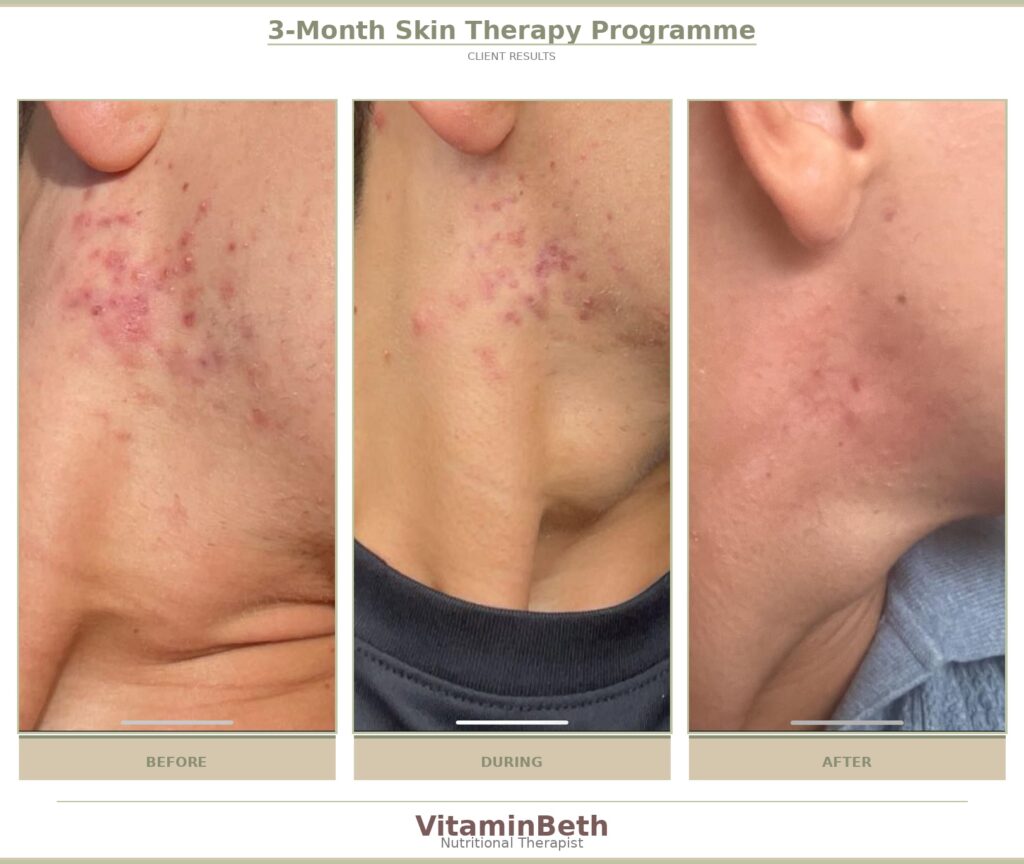
Client result after personalised nutrition and lifestyle support. Individual results vary.
Client Feedback
VitaminBeth Client
The Takeaway
This case highlights an important message: Skin issues are often a symptom, not the root cause. While skincare products can be helpful, persistent acne frequently has deeper drivers such as inflammation, gut imbalances, nutrient deficiencies, stress, hormone dysfunction, or reduced efficiency in the body’s natural detoxification processes. By addressing these underlying factors through personalised nutrition and lifestyle support, we were able to create meaningful improvements not only in this client’s skin but also in his overall health and wellbeing. If you’re struggling with stubborn acne, digestive issues, hormonal symptoms, or unexplained inflammation, looking beneath the surface may be the key to finding long-term results.💡 In Plain English
The goal was not just to suppress breakouts. The goal was to understand what may have been driving them, then support the body in a way that improved the skin and the wider health picture.What This Means For You
If your acne keeps returning despite skincare, good hygiene or trying different products, it may be worth looking deeper. Acne can be influenced by gut health, inflammation, hormones, blood sugar balance, nutrient status, stress, sleep and lifestyle. For some people, personalised support can help identify which of these areas are most relevant. For a broader starting point, read How to Get Rid of Acne. If your acne feels hormone-related, you may also find Acne and PCOS helpful.Ready to Get to the Root Cause?
As a Nutritional Therapist specialising in gut health, skin health, and hormone balance, I help clients uncover the underlying causes of their symptoms and create personalised plans that support lasting change. If you’re struggling with stubborn acne, digestive issues, hormonal symptoms, or unexplained inflammation, you don’t have to navigate it alone. If you’d like to explore whether nutritional therapy could support your journey towards clearer skin, improved digestion, and better overall wellbeing, I’d love to hear from you.📚 Continue Your Acne Learning
You’re reading one of VitaminBeth’s acne case studies. Visit the Acne Resource Centre to explore our evidence-informed articles on acne causes, hormones, gut health, nutrition, lifestyle and personalised support in one place.References
- Lim, S.K. et al. (2016) ‘Comparison of Vitamin D Levels in Patients with and without Acne: A Case-Control Study Combined with a Randomized Controlled Trial’, PLOS ONE, 11(8). Available at: https://pubmed.ncbi.nlm.nih.gov/27560161/
- Mahmud, M.R. et al. (2022) ‘Impact of gut microbiome on skin health: gut-skin axis observed through the lenses of therapeutics and skin diseases’, Gut Microbes, 14(1). Available at: https://pubmed.ncbi.nlm.nih.gov/35866234/

Stress and Acne: Can Stress Cause Breakouts?
Stress does not appear to be the sole cause of acne, but it may worsen breakouts in some people. Explore the stress–skin connection and practical ways to support both.
What Causes Acne?
Acne is rarely caused by one thing. This guide explains the main causes of acne and how hormones, inflammation, gut health, diet, stress, skincare and lifestyle may all contribute.
Acne Treatments & Skincare: What Actually Helps!
Table of Contents VitaminBeth Guide Estimated reading time: 10–12 minutes Reviewed by Beth Mulvey, Registered Nutritional Therapist Acne Treatments & Skincare: What Actually Helps Acne-Prone Skin? Acne skincare can feel…