📚 VitaminBeth Guide
⏱️ Estimated reading time: 12 minutes
👩⚕️ Reviewed by Beth Mulvey, Registered Nutritional Therapist
Chest Acne: Common Causes and Effective Solutions
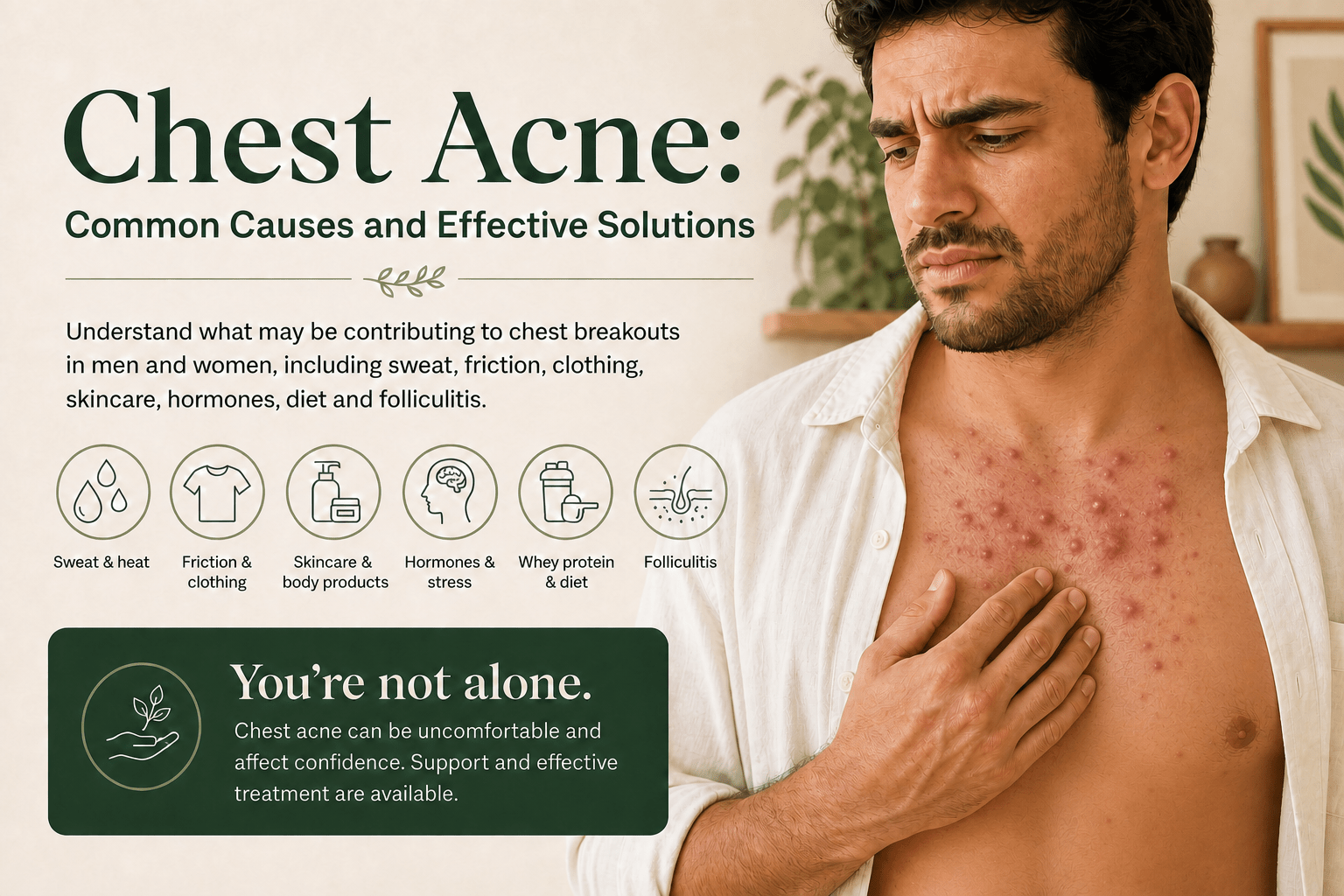
Chest acne can be uncomfortable, difficult to reach and frustrating when it keeps returning. It may also affect confidence, clothing choices, exercise and intimacy.
It can affect people of any sex and age. Some people develop a few clogged pores or inflamed spots across the upper chest, while others experience deeper, painful breakouts that may leave dark marks or scars.
Chest acne is rarely explained by one factor alone. Sweat, friction, tight or occlusive clothing, sports equipment, body products, hormones and some dietary patterns may aggravate acne-prone skin. However, small itchy or very uniform bumps may be folliculitis rather than acne and can require a different approach.
💡 In Plain English
Chest breakouts are not a sign that you are dirty. Acne develops within hair follicles, while heat, friction, sweat and products can sometimes aggravate the area. Itchy, similar-looking bumps may be another follicular condition, so the appearance and pattern matter.
✅ Key Takeaways
- Chest acne is a form of truncal acne and can occur with or without facial or back acne.
- Sweat is not inherently dirty, but heat, friction and occlusion may aggravate acne-prone skin.
- Body lotions, oils, sunscreens, hair products and fragranced products may irritate or occlude follicles in some people.
- Small, itchy and very similar-looking bumps can suggest folliculitis rather than acne.
- Painful nodules, cysts, scarring, infection or significant distress deserve prompt medical support.
What Is Chest Acne?
Chest acne is acne vulgaris affecting the chest and is often described as truncal or body acne. Acne develops when hair follicles become blocked and inflamed. The chest and back contain many sebaceous glands, so both areas can be affected (DermNet, 2023; NICE, 2026).
Chest acne may include:
- Closed comedones or whiteheads
- Open comedones or blackheads
- Red inflammatory papules
- Pustules
- Deeper nodules or cysts
- Post-inflammatory marks
- Atrophic, hypertrophic or keloid scars
Truncal acne can be harder to treat consistently because the area is difficult to see and reach. Clothing may rub against it, and topical products can bleach fabrics or feel inconvenient over a larger surface area (Korean Acne and Rosacea Society Experts Panel, 2024).
If you are unsure what type of breakout you have, read
Different Types of Acne.
Common Factors That May Aggravate Chest Acne
Several factors may overlap. The location alone cannot identify the cause.
💧 Sweat and Heat
Heat and prolonged dampness can increase irritation, particularly beneath tight or non-breathable clothing.
👕 Friction and Clothing
Sports bras, compression tops, straps, protective equipment and rough fabrics may rub or occlude the chest.
🧴 Body and Hair Products
Oils, lotions, fragranced washes, sunscreens and hair products can transfer onto the chest and may irritate or occlude follicles.
🏋️ Exercise Habits
Staying in damp clothing, repeated equipment contact and delayed washing may aggravate the area in some people.
⚖️ Hormones
Androgens can influence sebum production, but chest location alone does not confirm a hormonal cause.
🦠 Folliculitis
Inflammation or infection of hair follicles can resemble acne and may need different assessment and treatment.
Sweat, Heat and Exercise
Sweat does not cause acne simply because it is present. Problems may arise when heat and moisture are combined with friction, occlusive clothing, body products or prolonged skin contact.
Chest breakouts may appear worse after:
- Intense exercise
- Hot weather
- Wearing tight synthetic clothing for long periods
- Remaining in damp sportswear
- Using shared or close-fitting protective equipment
- Applying heavy oils or fragranced products before training
🌿 Good to Know
You do not need to avoid exercise because of acne. Breathable clothing, changing out of damp garments and gentle cleansing after sweating may reduce avoidable irritation without over-washing the skin.
Friction, Clothing and Sports Equipment
Repeated friction and pressure can aggravate acne-prone follicles. This is sometimes described as acne mechanica. Possible sources include:
- Sports bras or binding garments
- Compression tops
- Backpack or bag straps
- Seatbelts
- Chest protectors and pads
- Work uniforms
- Tight collars or rough seams
This does not mean the garment is the underlying cause. A repeated pattern in the exact area of rubbing may simply identify an aggravating factor that can be adjusted.
Body Products, Sunscreen and Hair Products
Products applied directly to the chest—or transferred from hair during washing—may affect sensitive or acne-prone skin.
It may help to consider whether symptoms changed after introducing:
- Body oils or massage oils
- Rich body lotions
- Fragranced body sprays
- Heavy or water-resistant sunscreens
- Hair conditioners, masks or leave-in treatments
- Fabric fragrance products
Choose non-comedogenic products where practical and introduce changes one at a time. “Natural” or oil-based products are not automatically non-irritating.
Could Chest Acne Be Folliculitis?
Not every chest breakout is acne vulgaris. Folliculitis is inflammation of the hair follicle and can have bacterial, yeast-related, irritant or other causes.
Malassezia folliculitis commonly affects the upper chest and back. It often produces small, uniform and itchy papules or pustules, whereas acne commonly includes a mixture of comedones and inflammatory lesions (DermNet, 2020).
🔎 Signs Another Follicular Condition May Need Considering
- The bumps are very itchy
- Most lesions look almost identical
- There are no obvious blackheads or whiteheads
- Symptoms spread quickly or appear infected
- Heat and sweating cause marked flares
- Standard acne products make symptoms worse
- The diagnosis remains unclear
These features do not confirm folliculitis. A pharmacist, GP or dermatologist can assess the pattern and advise on appropriate treatment. Avoid self-treating presumed “fungal acne” with oral antifungal medication.
For a broader comparison, read
Hormonal Acne vs Bacterial Acne vs Fungal Acne.
Can Hormones Affect Chest Acne?
Hormones can contribute to acne because androgens influence sebum production and follicular activity. This applies to people of any sex. However, acne appearing on the chest does not prove that hormones are the primary cause.
Hormonal assessment may be worth discussing with a GP when acne appears alongside other relevant symptoms, such as irregular or absent periods, excess facial or body hair, or scalp hair thinning. Do not start, stop or change hormonal contraception or other medication because of acne without medical advice.
If you are exploring a wider hormonal pattern, read
Foods for Hormonal Acne and
Acne and PCOS.
Whey Protein and Gym Supplements
Some people report acne after starting whey protein, but current research is mixed. A 2024 case-control study found an association between whey-protein use and acne, while a small six-month randomised trial did not find worse facial or truncal acne in the whey group (Muhaidat et al., 2024; Sompochpruetikul et al., 2024).
This uncertainty means whey protein should not automatically be labelled as the cause. If a clear flare began after introducing a supplement, record the timing and discuss any planned dietary change with a suitable professional—particularly if the supplement supports medical or sports-nutrition needs.
Introducing several powders, pre-workouts or dietary changes at once makes patterns harder to interpret. Supplements may also contain dairy ingredients, sweeteners or other compounds, so review the complete product rather than assuming whey is responsible.
Read
Does Dairy Cause Acne? for a balanced look at the wider evidence.
Can Diet Affect Chest Acne?
Diet does not determine chest acne by location. Evidence suggests high-glycaemic dietary patterns and dairy may be relevant for some people, but findings vary and do not justify removing foods without an individual reason (Baldwin and Tan, 2021).
A supportive foundation may include regular balanced meals with adequate protein, fibre-rich carbohydrates, vegetables, fruit and unsaturated fats. This supports general health without promising to cure acne.
Avoid restrictive elimination diets based solely on breakout location. If you suspect a repeated food pattern, keep a simple symptom record and seek qualified support if removing a food group could affect nutrition.
Read
Foods That May Trigger Acne for more context.
Skincare and Treatment Considerations
Chest skin may tolerate products differently from facial skin, and treating a large or hard-to-reach area can be inconvenient. A gentle, consistent routine is usually more useful than harsh scrubbing.
It may help to review:
- Whether cleansing products sting or leave skin tight
- Whether body oils, lotions or sunscreen feel occlusive
- Whether hair conditioner rinses over the chest
- Whether multiple active ingredients are being layered
- Whether clothing is being bleached by benzoyl peroxide
- Whether the affected area is difficult to reach safely
Salicylic acid and benzoyl peroxide are established acne ingredients, but suitability depends on diagnosis, severity, skin tolerance, pregnancy considerations and other individual factors (NICE, 2026). A pharmacist, GP or dermatologist can help you choose safely.
Read
Salicylic Acid or Benzoyl Peroxide for Acne.
⚠️ Avoid Scrubbing or Picking
Rough exfoliation, squeezing and repeated picking can increase irritation, pigmentary changes and scarring. Seek professional advice rather than escalating several strong products at once.
Practical Steps That May Help
👕 Reduce Occlusion
Choose breathable clothing where practical and review straps, seams or equipment that repeatedly rub the same area.
💧 Change After Sweating
Change damp clothing and gently cleanse when convenient rather than leaving sweat and tight fabric against the skin.
🧴 Simplify Products
Use a simple routine and introduce new body, hair or sunscreen products one at a time.
🧺 Review Fabrics
Wash sportswear and bedding regularly and consider whether fragranced laundry products irritate your skin.
🥗 Avoid Random Restriction
Build balanced meals and investigate repeated patterns instead of removing multiple foods at once.
📷 Track the Pattern
Record timing, products, clothing, exercise and symptoms so a clinician can see how the breakout changes.
When to Seek Medical Support
Seek advice from a pharmacist, GP or dermatologist if chest breakouts are:
- Painful, nodular or cystic
- Causing scars or persistent pigmentary changes
- Very itchy, rapidly spreading or infected-looking
- Leaving raised or keloid scars
- Not improving after an appropriate course of treatment
- Diagnostically unclear
- Associated with another medical condition or medication
- Significantly affecting confidence, mood or daily life
NICE recommends considering specialist referral for acne that is leading to scarring, has not responded to appropriate treatment or is causing persistent psychological distress (NICE, 2026). Truncal acne deserves the same attention as facial acne; it should not be dismissed because it is covered by clothing.
Nutritional therapy may support wider dietary and lifestyle goals, but it does not replace diagnosis or medical treatment for severe, scarring, infected-looking or unclear skin conditions.
Supporting the Wider Picture
Useful foundations may include:
🥗 Balanced Nutrition
Eat regular, varied meals that meet your energy and nutrient needs rather than following an acne “detox”.
🧘 Stress and Sleep
Supportive routines may help overall wellbeing, although stress is not the sole cause of acne.
🧴 Skin Barrier Care
Use gentle products and avoid combining numerous strong actives without guidance.
🏋️ Sustainable Exercise
Keep enjoying movement while adjusting avoidable friction, damp clothing and irritating products.
🧪 Appropriate Testing
Do not assume a nutrient or hormone deficiency from acne alone; testing should be guided by symptoms and clinical need.
🔎 Personalised Assessment
An individual assessment is more useful than trying to diagnose the cause from chest location alone.
When someone has chest acne, I want to understand the whole pattern without assuming it is caused by poor hygiene, hormones or diet. The appearance of the bumps, exercise habits, clothing, products, symptoms elsewhere and the effect on confidence all help guide the next step.
Beth Mulvey, Registered Nutritional Therapist
Chest Acne Compared With Other Locations
Chest acne often overlaps with back, shoulder, neck or facial acne. Breakout location can highlight possible friction or product exposure, but it cannot diagnose an internal cause.
Read
Acne by Location: What Different Breakout Areas May Tell You.
You may also find these guides helpful:
Frequently Asked Questions
What causes chest acne?
Chest acne develops through the same core acne processes as acne elsewhere. Heat, friction, occlusive clothing, body products, hormones and some dietary patterns may aggravate it, but the location alone cannot identify the cause.
Does sweat cause chest acne?
Sweat is not inherently dirty and does not automatically cause acne. Heat, damp clothing, friction and occlusive products may aggravate acne-prone skin when they occur together.
Could chest acne be folliculitis?
Yes. Small, itchy and very uniform bumps—especially without blackheads or whiteheads—may suggest folliculitis. These features are not diagnostic, so seek professional assessment if the pattern is unclear or spreading.
Can whey protein cause chest acne?
Current evidence is mixed. One observational study found an association, while a small randomised trial did not find worse facial or truncal acne. Review a clear personal timing pattern without assuming whey is responsible.
Is chest acne hormonal?
Hormones can contribute to acne in people of any sex, but chest location does not confirm a hormonal cause. Discuss wider signs of androgen excess or menstrual changes with a GP where relevant.
Should I scrub chest acne?
No. Scrubbing and picking can increase irritation, pigmentary changes and scarring. Use gentle cleansing and seek advice about suitable evidence-based treatments.
When should I get help for chest acne?
Seek support for painful nodules or cysts, scarring, persistent pigmentary changes, very itchy or infected-looking bumps, diagnostic uncertainty, treatment-resistant acne or significant effects on confidence and wellbeing.
Final Thoughts
Chest acne is common and can affect people of any sex. It is not evidence of poor hygiene and should not be dismissed simply because clothing can cover it.
The most useful approach is to look at the complete pattern. Are there comedones, mixed lesions or uniform itchy bumps? Does friction, sportswear or a product coincide with flares? Is acne painful, scarring or affecting confidence?
Those details can help distinguish acne from other follicular conditions and guide safer, more effective support.
Need Help Understanding Your Chest Acne?
If chest acne keeps returning and you feel unsure whether skincare, exercise habits, diet, hormones or another factor may be involved, you do not have to keep guessing.
At VitaminBeth, we take a personalised approach to nutrition and lifestyle while recognising when medical or dermatological care is needed.
Learn more about the Skin Therapy Programme
📚 Continue Your Acne Learning
You’re reading one of VitaminBeth’s acne guides. Visit the Acne Resource Centre for evidence-informed articles covering acne, hormones, nutrition, lifestyle and personalised support.
References
- DermNet (2023) ‘Acne vulgaris’. Available at: https://dermnetnz.org/topics/acne-vulgaris
- DermNet (2020) ‘Malassezia (pityrosporum) folliculitis’. Available at: https://dermnetnz.org/topics/malassezia-folliculitis
- NICE (2026) ‘Acne vulgaris: management’. Available at: https://www.nice.org.uk/guidance/ng198
- Korean Acne and Rosacea Society Experts Panel (2024) ‘Consensus report on truncal acne’, Annals of Dermatology, 36(1), pp.35–43. Available at: https://pmc.ncbi.nlm.nih.gov/articles/PMC10861305/
- Baldwin, H. and Tan, J. (2021) ‘Effects of diet on acne and its response to treatment’, American Journal of Clinical Dermatology, 22(1), pp.55–65. Available at: https://pmc.ncbi.nlm.nih.gov/articles/PMC7847434/
- Muhaidat, J. et al. (2024) ‘The effect of whey protein supplements on acne vulgaris among male adolescents and young adults: A case-control study from North of Jordan’, Dermatology Research and Practice, 2024, 2158229. Available at: https://pubmed.ncbi.nlm.nih.gov/38633058/
- Sompochpruetikul, K. et al. (2024) ‘Whey protein and male acne: A double-blind, randomized controlled trial’, The Journal of Dermatology, 51(7), pp.1022–1025. Available at: https://pubmed.ncbi.nlm.nih.gov/38291989/