📚 VitaminBeth Guide
⏱️ Estimated reading time: 11–13 minutes
👩⚕️ Reviewed by Beth Mulvey, Registered Nutritional Therapist
Vitamin A and Acne: What the Research Says
Could vitamin A be relevant to acne-prone skin?
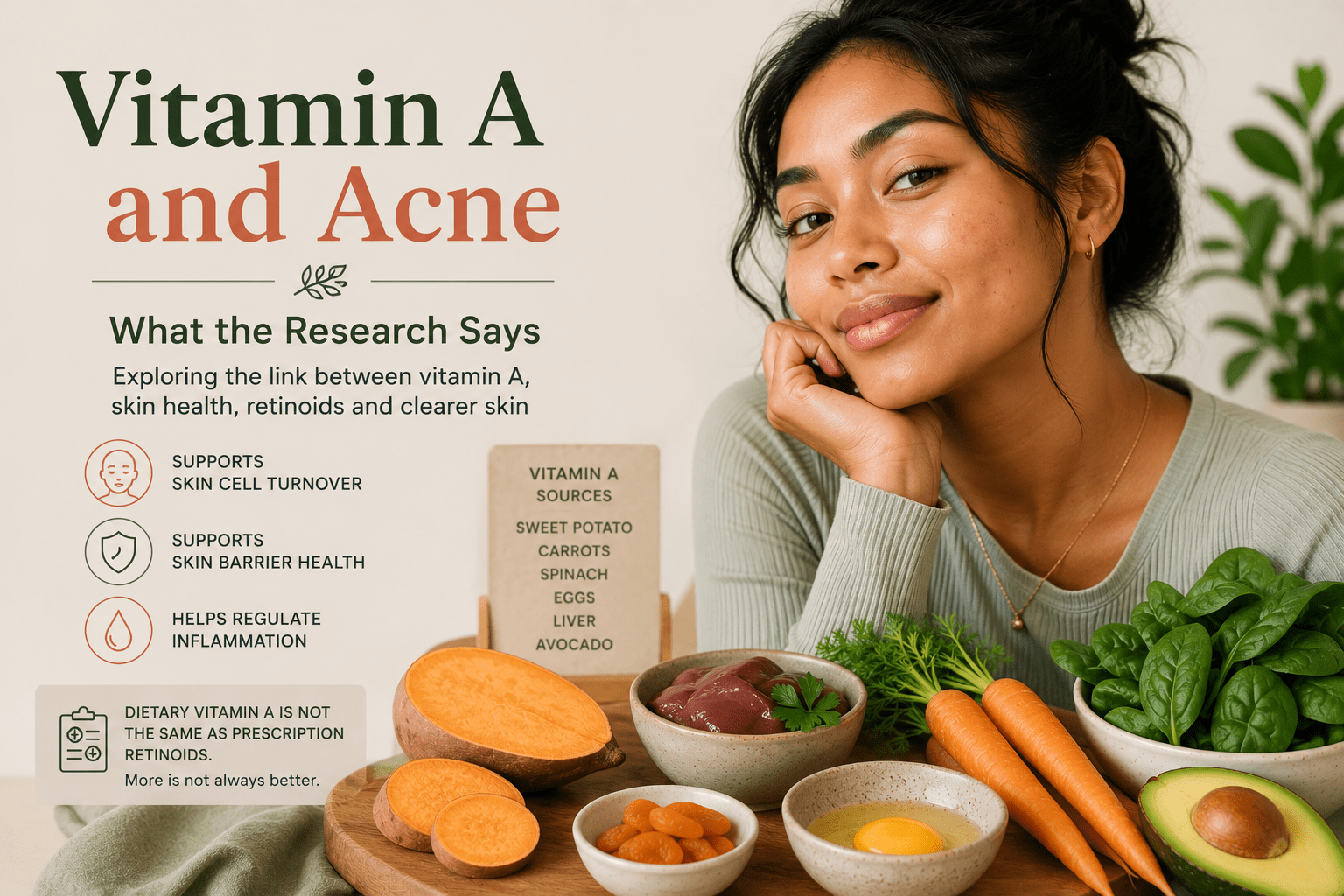
Vitamin A is one of the nutrients most closely associated with skin health. It contributes to normal immune function, vision, cell specialisation and the maintenance of normal skin and mucous membranes.
Vitamin A also has a unique connection with acne treatment. Several prescription acne medicines belong to a group called retinoids, which are chemically related to vitamin A. These include topical retinoids and oral isotretinoin, a medicine sometimes known by the former brand name Roaccutane.
However, this does not mean that eating more vitamin A or taking a high-dose supplement will have the same effect as a medically prescribed retinoid.
Prescription retinoids are carefully formulated medicines with specific doses, clinical uses, possible side effects and monitoring requirements. High-dose preformed vitamin A supplements can also cause harm, particularly during pregnancy and when combined with retinoid medicines (British Association of Dermatologists, 2024; NHS, 2023).
This guide explains what vitamin A does, how food sources differ from retinoid medicines, what current evidence supports, when supplements may be unsafe and why acne should be considered within the wider health picture.
💡 In Plain English
Vitamin A is important for normal skin function, but vitamin A from food or supplements is not the same as prescription retinoid treatment. High-dose supplements should not be used as a do-it-yourself alternative to acne medication.
✅ Key Takeaways
- Vitamin A contributes to normal skin, immune function, vision and cell specialisation.
- Preformed vitamin A is found mainly in animal foods, while plant foods provide provitamin A carotenoids such as beta-carotene.
- Prescription retinoids are related to vitamin A but are not nutritionally equivalent to food or supplements.
- There is limited evidence supporting ordinary vitamin A supplementation as an acne treatment.
- High-dose preformed vitamin A can be toxic.
- Vitamin A safety is especially important during pregnancy and when using retinoid medication.
- Acne is rarely explained by one nutrient alone.
What Is Vitamin A?
Vitamin A is a fat-soluble vitamin. Unlike water-soluble vitamins, it can be stored within the body, particularly in the liver. This means excessive intake of preformed vitamin A can accumulate over time.
There are two main dietary forms.
🥩 Preformed Vitamin A
Preformed vitamin A includes retinol and retinyl esters. It is found mainly in animal-derived foods and can be used directly by the body.
- Liver and liver products
- Egg yolks
- Dairy products
- Some oily fish
- Fortified foods
🥕 Provitamin A Carotenoids
Plant foods provide carotenoids such as beta-carotene. The body can convert some of these compounds into active vitamin A.
- Carrots
- Sweet potato
- Spinach
- Kale
- Red peppers
- Butternut squash
The efficiency with which beta-carotene is converted into vitamin A varies according to the food, meal composition, digestive function, genetics and individual nutrient status.
Vitamin A contributes to:
- Maintenance of normal skin and mucous membranes
- Normal immune-system function
- Normal vision
- Normal iron metabolism
- Normal cell specialisation
Because acne involves changes within the hair follicle, immune activity and inflammation, vitamin A-related compounds have become important within dermatology. However, the actions of prescription retinoids should not be confused with the effects of ordinary dietary intake.
Why Might Vitamin A Be Relevant to Acne?
Acne develops within the pilosebaceous unit, which includes the hair follicle and its associated sebaceous gland.
One feature of acne is abnormal shedding and accumulation of skin cells inside the follicle. When these cells combine with sebum, they can contribute to blocked pores, blackheads and whiteheads. Inflammatory responses can then lead to papules, pustules, nodules or cysts.
Vitamin A-related compounds may be relevant to several areas of acne biology.
🧬 Cell Specialisation
Vitamin A contributes to normal cell specialisation. Prescription retinoids can alter how cells within the follicle develop and shed.
🫧 Follicular Blockage
Topical retinoids can help reduce the formation of comedones by influencing cell turnover within the follicle.
🔥 Inflammation
Retinoid medicines can influence inflammatory activity within acne lesions, although their effects depend on the specific medicine and route of use.
💧 Sebum Production
Oral isotretinoin substantially reduces sebaceous-gland activity. This is a pharmacological effect and should not be expected from ordinary food intake.
🌿 Good to Know
Vitamin A is relevant to skin biology, but this does not mean everyone with acne needs a vitamin A supplement. The strongest acne evidence relates to prescribed retinoid medicines rather than unsupervised nutritional supplementation.
Vitamin A and Retinoids: What Is the Difference?
This is one of the most important distinctions in this guide.
Vitamin A is a nutrient. It is obtained from food and may also be present in supplements.
Retinoids are medicines or active skincare ingredients related to vitamin A. They are formulated to influence specific biological processes within the skin.
Topical Retinoids
Topical retinoids are applied directly to the skin. Examples include adapalene and tretinoin. Depending on the product and local prescribing rules, they may be prescribed alone or combined with another acne treatment.
They may help reduce blocked follicles and prevent new comedones from forming. Common side effects include dryness, irritation, redness and increased sensitivity during the early stages of treatment.
Oral Isotretinoin
Isotretinoin is a powerful prescription retinoid used for severe acne or acne that has not responded adequately to other treatment.
It can influence several important acne mechanisms, including sebaceous-gland activity, follicular blockage and inflammation. It also has significant potential side effects and requires medical supervision, blood tests and strict pregnancy-prevention measures where applicable (British Association of Dermatologists, 2024; European Medicines Agency, 2018).
Food and Supplements
Eating carrots, spinach, eggs or oily fish does not reproduce the pharmacological action of isotretinoin. Similarly, taking a large vitamin A supplement is not a safe substitute for prescribed treatment.
⚠️ Important Distinction
Prescription retinoids are medically supervised treatments. Vitamin A from food or supplements is a nutrient source. They are related, but they are not interchangeable.
Do not copy high-dose vitamin A protocols found online or attempt to reproduce the effects of isotretinoin with supplements.
What Does the Research Say About Vitamin A and Acne?
The evidence needs to be separated into two different questions:
- Do prescription retinoids help treat acne?
- Do ordinary vitamin A supplements help treat acne?
Evidence for Retinoid Medicines
Retinoids are established components of acne treatment. Topical retinoids are used to help reduce follicular blockage, while oral isotretinoin may be prescribed for severe, persistent or scarring acne under specialist supervision (British Association of Dermatologists, 2024).
This provides strong evidence that vitamin A-related compounds can affect acne biology. It does not show that dietary vitamin A has the same therapeutic effect.
Evidence for Vitamin A Supplements
Older studies explored very high doses of vitamin A for acne. However, these approaches are not generally used as routine treatment because high-dose preformed vitamin A can cause toxicity and safer, better-standardised medical options are available.
Reviews of over-the-counter acne supplements have also raised concerns about high or poorly communicated doses of preformed vitamin A. Some products may expose users to unnecessary risk, particularly when they are combined with multivitamins, liver consumption or retinoid medication (Zamil and McDaniel, 2022; Vaidya et al., 2024).
There is therefore insufficient evidence to recommend unsupervised vitamin A supplementation as a standard treatment for acne.
🔬 Research Snapshot
- Vitamin A-related retinoids have an established role in medical acne treatment.
- The evidence relates mainly to formulated topical or oral medicines.
- Dietary vitamin A does not act like prescription isotretinoin.
- Evidence supporting ordinary vitamin A supplements for acne is limited.
- Older high-dose approaches carry important toxicity concerns.
- Over-the-counter acne supplements may contain preformed vitamin A in amounts that require caution.
(British Association of Dermatologists, 2024; Zamil and McDaniel, 2022; Vaidya et al., 2024).
Can Low Vitamin A Contribute to Acne?
Vitamin A deficiency can affect vision, immune function and epithelial tissues, including the skin. However, acne by itself does not indicate vitamin A deficiency.
True deficiency is uncommon in many people eating a varied diet in the UK. Risk may be higher in people with:
- Severely restricted diets
- Very limited food access or intake
- Conditions that impair fat digestion or absorption
- Chronic liver or pancreatic disease
- Previous gastrointestinal surgery
- Other diagnosed malabsorption conditions
Acne is much more commonly influenced by factors such as follicular blockage, sebum production, genetics, hormones, inflammation, skincare and medication than by clinically significant vitamin A deficiency.
💡 In Plain English
Vitamin A deficiency can affect skin health, but acne does not automatically mean you are deficient. Do not use breakouts alone as a reason to start a vitamin A supplement.
Which Foods Contain Vitamin A?
A varied diet can provide vitamin A through both preformed retinol and provitamin A carotenoids.
🥩 Preformed Vitamin A
- Liver
- Liver pâté
- Egg yolks
- Milk and dairy products
- Cheese
- Oily fish
- Fortified spreads
🥕 Orange and Red Vegetables
- Carrots
- Sweet potato
- Butternut squash
- Red peppers
- Pumpkin
🥬 Dark Green Vegetables
- Spinach
- Kale
- Spring greens
- Broccoli
- Watercress
🍑 Fruit Sources
- Apricots
- Mango
- Cantaloupe melon
Fruit and vegetables mainly provide carotenoids rather than preformed retinol.
For most people, regularly including colourful vegetables alongside a varied diet is a safer and more appropriate starting point than taking a high-dose supplement.
How to Support Vitamin A Intake Through Food
🥕 Add Colour to Meals
Include orange, red or dark green vegetables such as carrots, sweet potato, peppers, spinach or kale.
🥚 Include Eggs Where Suitable
Egg yolks provide preformed vitamin A alongside protein and other nutrients.
🐟 Eat a Varied Fish Intake
Oily fish can provide preformed vitamin A alongside omega-3 fatty acids and protein.
🥗 Eat Carotenoids With Some Fat
Including a small amount of dietary fat with carotenoid-rich vegetables may support absorption.
⚠️ Be Careful With Liver
Liver is exceptionally rich in preformed vitamin A. It does not need to be eaten frequently, and pregnancy-related guidance must be followed.
🔍 Check Fortified Products
Some spreads, cereals and other foods contain added vitamin A. Check labels when combining several fortified products or supplements.
Should You Take Vitamin A Supplements for Acne?
Vitamin A supplements should not be routinely used as an acne treatment without professional guidance.
Vitamin A is fat-soluble, and excessive preformed vitamin A can accumulate in the body. Long-term high intake may affect the liver, bones, nervous system and other tissues.
Possible signs of excessive vitamin A intake can include:
- Nausea
- Headaches
- Dizziness
- Dry or peeling skin
- Hair loss
- Joint or bone discomfort
- Liver abnormalities
These symptoms can have many possible causes and should not be self-diagnosed.
Check the Form on the Label
Vitamin A may appear on labels as:
- Retinol
- Retinyl acetate
- Retinyl palmitate
- Beta-carotene
- Mixed carotenoids
Preformed retinol and retinyl esters carry a greater risk of toxicity when consumed in excessive amounts. Beta-carotene does not generally cause classic vitamin A toxicity, although very high-dose beta-carotene supplements are not appropriate for everyone, particularly people who smoke or have smoked.
Review All Sources
Before taking a supplement, consider whether vitamin A is already present in:
- A multivitamin
- A pregnancy supplement
- A skin, hair or nail product
- Cod liver oil
- An acne supplement
- Fortified foods
- Regular servings of liver or liver products
Using several products together can increase total exposure without the user realising it.
⚠️ Supplement Safety: Vitamin A
Do not take high-dose vitamin A for acne without medical advice.
Extra care is required if you:
- Are pregnant or trying to conceive
- Are breastfeeding
- Take oral isotretinoin or another retinoid medicine
- Use several vitamin-containing supplements
- Take cod liver oil
- Eat liver regularly
- Have liver disease
- Drink large amounts of alcohol
- Smoke or previously smoked and are considering high-dose beta-carotene
Vitamin A and Pregnancy Safety
Vitamin A safety is particularly important during pregnancy and when trying to conceive.
Excessive intake of preformed vitamin A can harm a developing baby. NHS guidance advises pregnant people to avoid supplements containing vitamin A and to avoid liver and liver products unless advised otherwise by an appropriate healthcare professional (NHS, 2023).
Oral retinoids such as isotretinoin can cause serious birth defects and must not be used during pregnancy. Strict pregnancy-prevention requirements apply before, during and after treatment according to the medicine and clinical guidance (European Medicines Agency, 2018; British Association of Dermatologists, 2024).
Topical retinoid use also requires pregnancy-related caution. Speak to a GP, pharmacist or dermatologist before using retinoid skincare if you are pregnant, trying to conceive or breastfeeding.
⚠️ Pregnancy Safety
If you are pregnant, trying to conceive or breastfeeding, do not start a vitamin A supplement or retinoid acne product without advice from an appropriate healthcare professional.
Never use oral isotretinoin during pregnancy.
🔎 When Vitamin A Intake May Be Worth Reviewing
These factors do not confirm deficiency, but they may justify reviewing overall dietary intake or discussing testing and assessment with a healthcare professional.
- A severely restricted diet
- Very low intake of colourful vegetables
- Very limited intake of eggs, dairy, fish or fortified foods
- A diagnosed condition affecting fat absorption
- Previous gastrointestinal surgery
- Persistent unexplained night-vision difficulties
- Other signs of general malnutrition
- A medically confirmed nutrient deficiency
Dry skin, slow healing and frequent infections are non-specific and can have many causes. Acne alone does not confirm low vitamin A.
Vitamin A and Hormonal Acne
Vitamin A contributes to normal skin function, but hormonal acne is not usually explained by vitamin A intake alone.
Hormone-related acne may be influenced by:
- Androgen activity
- Menstrual-cycle changes
- PCOS
- Genetics
- Stress
- Sleep
- Blood sugar regulation
- Medication
If breakouts appear mainly around the chin and jawline or worsen before your period, read Foods for Hormonal Acne.
If acne appears alongside irregular periods, excess facial or body hair or thinning scalp hair, read Acne and PCOS.
Could Gut Health Affect Vitamin A Status?
Vitamin A is fat-soluble, so conditions that significantly impair fat digestion or absorption may affect vitamin A status.
This can occur in certain diagnosed gastrointestinal, pancreatic, liver or bile-related conditions. However, common symptoms such as bloating, constipation or reflux do not automatically mean vitamin A is being poorly absorbed.
Persistent diarrhoea, pale or greasy stools, unexplained weight loss, jaundice, blood in the stool or ongoing abdominal pain should be discussed with a GP.
Gut health and skin health may also interact through immune, microbial and inflammatory pathways. This does not mean that all acne originates in the gut.
Read more in Can Gut Health Cause Acne? and The Gut-Skin Axis.
Vitamin A Is Only One Piece of the Acne Puzzle
Vitamin A contributes to normal skin and immune function, but acne is rarely explained by one nutrient alone.
For some people, overall diet quality or nutrient intake may be relevant. For others, more significant contributors may include:
- Hormonal changes
- Genetic susceptibility
- Sebum production
- Blocked hair follicles
- Skincare products
- Medication
- Stress and sleep
- Dietary patterns
- Underlying medical conditions
You may also find these guides helpful:
Vitamin A is important for normal skin function, but it is also a nutrient where more is not always better. I would always rather understand someone’s diet, symptoms, medication, gut health, hormones and wider nutrient picture before recommending a supplement, especially when safety matters.
Beth Mulvey, Registered Nutritional Therapist
When to Speak to Your GP
Speak to your GP, pharmacist or dermatologist before using vitamin A supplements or retinoid products if you:
- Are pregnant, trying to conceive or breastfeeding
- Take isotretinoin or another retinoid medicine
- Have liver disease
- Take several supplements containing vitamin A
- Experience unexplained vision changes
- Have persistent symptoms that may suggest malabsorption
- Are concerned about excessive vitamin A intake
You should also seek medical support if your acne is:
- Painful, nodular or cystic
- Causing permanent marks or scarring
- Sudden or significantly worsening
- Not responding to appropriate over-the-counter care
- Causing distress or affecting your mental wellbeing
⚠️ When to Get Medical Support
Vitamin A supplements should not replace evidence-based acne treatment. Severe, painful or scarring acne should be assessed by a healthcare professional.
What This Means for You
Vitamin A is an important nutrient, but having acne does not mean that you need more of it.
The question is not simply:
Should I take vitamin A for acne?
A more useful question is:
Does my diet provide an appropriate amount of vitamin A, and would supplementation be safe in my circumstances?
Begin by reviewing your intake of colourful vegetables, eggs, dairy products, fish and fortified foods where suitable. Check whether vitamin A is already present in any multivitamin, cod liver oil, pregnancy supplement or skin product you use.
Do not start a high-dose supplement to imitate the effects of a prescription retinoid. Where acne is persistent, painful or scarring, appropriate skincare and medical treatment are more important than experimenting with high-dose vitamin A.
Frequently Asked Questions
Can vitamin A help acne?
Vitamin A is important for normal skin function, and vitamin A-related retinoids are used to treat acne. However, this does not mean an ordinary vitamin A supplement will improve acne. Evidence supporting unsupervised supplementation is limited.
Is vitamin A the same as isotretinoin?
No. Isotretinoin is a powerful prescription retinoid related to vitamin A. It has specific pharmacological effects, possible side effects and strict monitoring requirements. Food and supplements are not equivalent to isotretinoin.
Can low vitamin A cause acne?
Vitamin A deficiency can affect skin and immune health, but acne alone does not indicate deficiency. Acne usually develops through several interacting factors.
Which foods contain vitamin A?
Preformed vitamin A is found in liver, eggs, dairy products, oily fish and some fortified foods. Carrots, sweet potato, spinach, kale, peppers and squash provide provitamin A carotenoids.
Are vitamin A supplements safe for acne?
High-dose preformed vitamin A can be harmful and is not recommended as a do-it-yourself acne treatment. Safety depends on the form, amount, existing diet, medication, liver health and pregnancy status.
Should I take vitamin A while using retinoids?
Do not combine vitamin A supplements with oral isotretinoin or another retinoid medicine unless your prescribing clinician specifically advises it. Combining them may increase the risk of excessive vitamin A-related effects.
Is beta-carotene safer than retinol?
Beta-carotene from food does not generally carry the same toxicity risk as excessive preformed retinol. However, high-dose beta-carotene supplements may be unsuitable for people who smoke or previously smoked.
Can I eat liver if I have acne?
Liver is very rich in preformed vitamin A, but eating more liver is not an established acne treatment. It should not be eaten excessively, and people who are pregnant or trying to conceive should follow NHS advice to avoid liver and liver products.
Final Thoughts
Vitamin A contributes to normal skin, immune function and cell specialisation. Its connection with acne is particularly important because topical and oral retinoid medicines are related to vitamin A and can influence several key acne mechanisms.
However, the evidence supporting prescribed retinoids should not be used to justify high-dose vitamin A supplementation.
Dietary vitamin A, nutritional supplements and prescription medicines are not interchangeable. Excessive preformed vitamin A can be harmful, particularly during pregnancy, in people with liver disease and when combined with retinoid medication.
For most people, a varied diet containing colourful vegetables and appropriate sources of preformed vitamin A is a safer starting point than supplementation.
Persistent, painful or scarring acne usually requires a broader approach that considers skincare, hormones, genetics, medication, stress, sleep, diet and appropriate medical treatment.
✅ Key Takeaways
- Vitamin A contributes to normal skin, immune function and cell specialisation.
- Retinoid medicines are related to vitamin A but are not equivalent to food or supplements.
- Evidence for ordinary vitamin A supplements as an acne treatment is limited.
- High-dose preformed vitamin A can accumulate and cause harm.
- Pregnancy, retinoid medication and liver disease require particular caution.
- Food-first intake is generally more appropriate than unsupervised supplementation.
- Persistent acne should be assessed within the wider clinical and lifestyle picture.
Ready to Understand What May Be Driving Your Acne?
If you are struggling with persistent acne, hormone-related breakouts, digestive symptoms, fatigue or recurring skin flare-ups, you do not have to keep guessing.
At VitaminBeth, we use a personalised approach to explore the factors that may be contributing to acne, including diet, nutrient intake, gut health, hormone-related symptoms, stress, lifestyle and inflammation.
The aim is not to assume that one food or supplement will resolve your skin. It is to help you understand the wider pattern and create a realistic nutrition and lifestyle plan around your individual needs.
Learn more about the Skin Therapy Programme
📚 Continue Your Acne Learning
You’re reading one of VitaminBeth’s acne guides. Visit the Acne Resource Centre to explore all of our evidence-informed articles on acne causes, hormones, gut health, nutrition, lifestyle and personalised support in one place.