📚 VitaminBeth Guide
⏱️ Estimated reading time: 10–12 minutes
👩⚕️ Reviewed by Beth Mulvey, Registered Nutritional Therapist
Omega-3 and Acne: Can Omega-3 Fatty Acids Help Improve Your Skin?
Could your omega-3 intake be relevant to your acne?
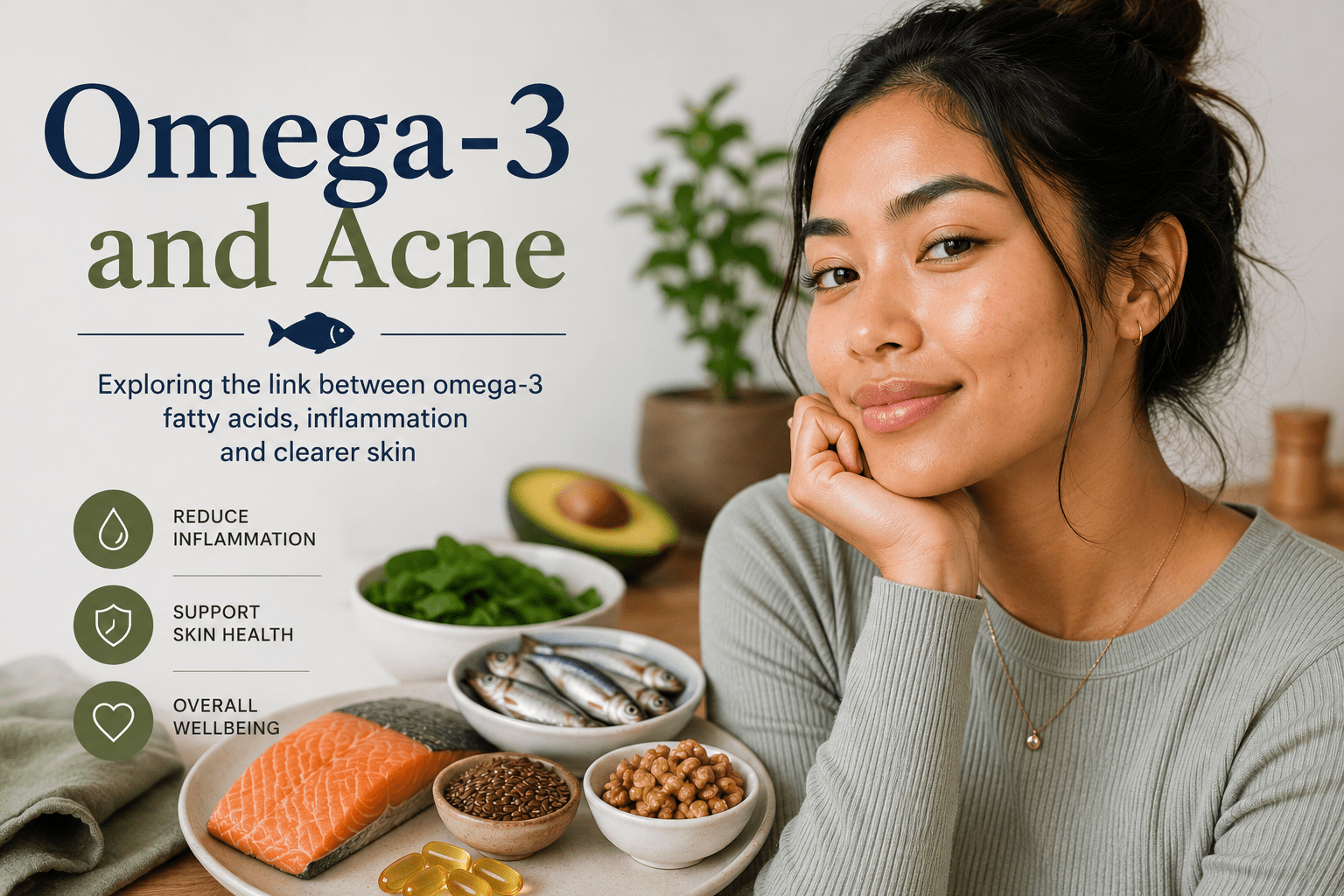
Omega-3 fatty acids are widely discussed for heart and brain health, but researchers have also explored whether they may support acne-prone skin.
This is understandable because acne is not simply a surface-level skin issue. It involves blocked hair follicles, sebum production, immune activity and inflammation. Hormones, genetics, skincare, stress, diet and other health factors may also influence how acne develops and persists.
Research suggests that omega-3 fatty acids may improve inflammatory acne in some people. However, the available studies are generally small, use different interventions and do not show that omega-3 is a universal acne treatment (Khayef et al., 2012; Jung et al., 2014; Guertler et al., 2024).
For some people, low intake of oily fish or other omega-3 sources may be relevant. For others, acne may be influenced more strongly by hormones, skincare, medication, stress, genetics, blood sugar regulation or digestive health.
This guide explains what omega-3 fatty acids are, how they may relate to acne, what the research says, which foods contain them and when supplements require additional care.
💡 In Plain English
Omega-3 fats may support acne-prone skin because they are involved in inflammation regulation and cell function. However, omega-3 does not cure acne, and not everyone with acne needs a fish-oil supplement.
✅ Key Takeaways
- Omega-3 fatty acids are involved in cell-membrane function and inflammatory regulation.
- EPA and DHA are found mainly in oily fish and algae.
- ALA is found in plant foods but is converted only partly into EPA and DHA.
- Small studies suggest omega-3 may improve inflammatory acne in some people.
- Low oily-fish intake may make omega-3 worth considering as part of the wider diet.
- Supplements are not suitable for everyone and product quality matters.
- Persistent acne usually requires a wider assessment rather than a single-nutrient approach.
What Are Omega-3 Fatty Acids?
Omega-3 fatty acids are a family of polyunsaturated fats. Some omega-3 fats are considered essential because the body cannot make them in sufficient amounts and they must come from food.
The three main omega-3 fatty acids discussed in nutrition are:
🐟 EPA
Eicosapentaenoic acid is found mainly in oily fish, fish oil and algae-derived products.
EPA is involved in the production of compounds that help regulate inflammatory processes.
🧠 DHA
Docosahexaenoic acid is found mainly in oily fish and algae.
DHA is an important structural fat within cell membranes and is particularly relevant to brain and eye health.
🌱 ALA
Alpha-linolenic acid is found in plant foods such as flaxseeds, chia seeds and walnuts.
The body can convert ALA into EPA and DHA, but conversion is limited and varies between individuals.
EPA and DHA are the forms most commonly studied in relation to inflammatory pathways. Plant-based ALA still contributes to a healthy diet, but it is not metabolically identical to consuming EPA and DHA directly.
Omega-3 fatty acids contribute to:
- Normal cell-membrane structure
- Inflammatory regulation
- Heart and brain health
- Normal immune-system activity
- Wider metabolic health
Why Might Omega-3 Be Relevant to Acne?
Omega-3 may be relevant to acne because inflammation is involved from the early stages of acne-lesion development.
Inflamed acne may appear as:
- Red papules
- Pustules
- Tender spots
- Nodules
- Cysts
Omega-3 fatty acids influence the production of signalling compounds involved in inflammatory responses. This has led researchers to investigate whether improving omega-3 intake could reduce inflammatory acne lesions.
Possible areas of relevance include:
🔥 Inflammatory Regulation
EPA and DHA are involved in pathways that help regulate the initiation and resolution of inflammation.
🧬 Cell-Membrane Function
Omega-3 fatty acids form part of cell membranes and may influence how cells respond to signals.
🛡️ Immune Activity
Immune responses contribute to inflammatory acne. Omega-3 fats may influence some of the signalling involved.
⚖️ Wider Metabolic Health
Dietary patterns that provide oily fish, vegetables, fibre and minimally processed foods may support several areas relevant to acne, not omega-3 intake alone.
🌿 Good to Know
Omega-3 may be particularly worth considering when acne is inflamed and dietary intake of oily fish is low. However, tenderness or severe inflammation can also indicate a need for appropriate medical acne treatment.
What Does the Research Say About Omega-3 and Acne?
The research is promising, but the evidence base remains limited.
A small pilot study investigated fish-oil supplementation in people with acne. Overall responses varied, but some participants with moderate-to-severe inflammatory acne improved during the intervention (Khayef et al., 2012).
A randomised controlled trial found that supplementation with either omega-3 fatty acids or gamma-linolenic acid for ten weeks was associated with reductions in inflammatory and non-inflammatory acne lesions. However, the participant numbers were relatively small and the study did not establish that the same intervention would benefit everyone (Jung et al., 2014).
A more recent study reported low omega-3 status in many participants with acne. Participants following a Mediterranean-style diet alongside algae-derived omega-3 supplementation experienced improvements in acne severity, particularly when target omega-3 levels were reached. Because the intervention involved both dietary changes and supplementation, the effect cannot be attributed to omega-3 alone (Guertler et al., 2024).
Another study explored whether omega-3 supplementation might influence acne through changes in the gut microbiome and short-chain fatty-acid pathways. Although the findings were of interest, this remains an emerging area and does not yet provide a standard acne treatment recommendation (Huang et al., 2024).
🔬 Research Snapshot
- Small studies suggest omega-3 may improve inflammatory acne in some people.
- Responses are not consistent across every participant.
- Some studies combine omega-3 with wider dietary changes or another fatty acid.
- Participant numbers are generally limited.
- The most appropriate form, amount and duration have not been established for acne.
- Omega-3 should be considered a possible supportive factor rather than a proven standalone treatment.
(Khayef et al., 2012; Jung et al., 2014; Huang et al., 2024; Guertler et al., 2024).
Can Low Omega-3 Intake Affect Acne?
Low omega-3 intake may influence the overall balance of fats available to the body, but it has not been shown to directly cause acne.
Omega-6 fats are also essential and should not be labelled as unhealthy. Both omega-3 and omega-6 fats have important functions. The wider dietary pattern, food sources and balance of fats may be more useful to consider than attempting to remove omega-6 foods.
Omega-3 intake may be worth reviewing if you:
🔎 Signs Omega-3 Intake May Be Worth Exploring
- Rarely or never eat oily fish
- Follow a vegetarian or vegan diet without an algae-derived EPA or DHA source
- Have a very limited or restrictive diet
- Rely heavily on ultra-processed foods
- Experience persistent inflammatory acne
- Are unsure whether your diet provides a balanced range of fats
These factors do not confirm omega-3 deficiency or prove that low omega-3 is causing acne. They suggest that your overall fat intake may be worth reviewing.
Which Foods Contain Omega-3?
Food is usually the best place to begin when considering omega-3 intake.
🐟 Oily Fish
- Salmon
- Mackerel
- Sardines
- Herring
- Trout
- Pilchards
These foods provide EPA and DHA directly.
🌱 Plant Sources of ALA
- Ground flaxseeds
- Chia seeds
- Walnuts
- Hemp seeds
- Rapeseed oil
These foods provide ALA, which the body converts only partly into EPA and DHA.
🌊 Algae-Based Sources
- Algae oil
- Some fortified foods
Algae-derived products can provide DHA and sometimes EPA without using fish.
The NHS recommends eating at least two portions of fish each week, including one portion of oily fish. Separate limits apply to certain groups and some types of oily fish, so current NHS guidance should be followed (NHS, 2022).
How to Increase Omega-3 Through Food
Improving omega-3 intake does not need to involve a complicated diet.
🐟 Add Oily Fish Weekly
Include salmon, sardines, mackerel, trout or pilchards in meals where suitable.
🥣 Add Ground Flaxseed
Stir ground flaxseed into porridge, yoghurt or smoothies. Grinding helps make the nutrients more accessible than eating whole seeds.
🌱 Use Chia Seeds
Add chia seeds to overnight oats, yoghurt or homemade puddings while keeping overall dietary variety in mind.
🥜 Include Walnuts
Use walnuts as a snack or add them to salads, porridge and meals.
🌊 Consider Algae Sources
People who do not eat fish may wish to discuss whether an algae-derived EPA or DHA product is appropriate.
🥗 Review the Whole Diet
Omega-3 works within a wider dietary pattern. Protein, vegetables, fibre, carbohydrates and other fats still matter.
Should You Take Omega-3 Supplements for Acne?
Omega-3 supplements may be appropriate for some people, particularly where oily-fish intake is low or dietary sources are unsuitable.
However, supplements should not be started solely because you have acne. Research has not established one universal product, amount or duration for acne treatment.
Before choosing a supplement, consider:
- The amount of EPA and DHA provided rather than the total amount of fish oil
- Whether the product is fish-derived or algae-derived
- Product freshness and oxidation control
- Independent quality testing where available
- Your current medication and supplement use
- Allergies
- Pregnancy or breastfeeding
- Whether a food-first approach is realistic
Some products advertise a large amount of fish oil but provide a much smaller amount of EPA and DHA. Reading the detailed label is therefore important.
Fish oils can oxidise over time. Products should be stored according to the manufacturer’s instructions and should not be used beyond their expiry date.
If you are unsure whether testing or personalised guidance may be appropriate, read Are Functional Health Tests Worth It?.
⚠️ Supplement Safety: Omega-3
Speak to a GP, pharmacist or appropriately qualified practitioner before using an omega-3 supplement if you:
- Take anticoagulant or antiplatelet medication
- Have a bleeding disorder
- Are due to have surgery or a procedure
- Are pregnant or breastfeeding
- Have a fish or shellfish allergy
- Take several supplements
- Have a medical condition requiring dietary supervision
Do not stop prescribed medication in order to take a supplement.
Is Omega-3 Good for Hormonal Acne?
Omega-3 may be relevant to someone with hormone-related acne because inflammatory and metabolic pathways can interact with hormonal signalling.
However, omega-3 should not be assumed to correct the underlying hormonal causes of acne.
Hormonal acne may be influenced by:
- Androgen activity
- Menstrual-cycle changes
- PCOS
- Blood sugar regulation
- Stress
- Sleep
- Genetics
- Medication
If your acne appears around the jawline or chin or worsens before your period, read Foods for Hormonal Acne.
If acne appears alongside irregular periods, excess facial or body hair or thinning scalp hair, read Acne and PCOS.
Could Gut Health Affect Omega-3 Absorption?
Omega-3 fatty acids are dietary fats, so normal digestion and absorption are relevant.
Diagnosed conditions that affect fat digestion or absorption may reduce the absorption of fat-soluble nutrients and dietary fats. However, common symptoms such as bloating, constipation or reflux do not automatically mean omega-3 is being poorly absorbed.
Persistent diarrhoea, unexplained weight loss, pale or greasy stools or other ongoing digestive symptoms should be discussed with a GP rather than assumed to reflect a food intolerance or microbiome imbalance.
Gut health may also interact with skin health through immune signalling and inflammatory pathways. Read more in Can Gut Health Cause Acne? and The Gut-Skin Axis.
Omega-3 Is Only One Piece of the Acne Puzzle
Omega-3 fatty acids may support inflammatory regulation and wider health, but acne is rarely explained by one nutrient alone.
For some people, low omega-3 intake may be relevant. For others, more important contributors may include:
- Hormonal changes
- Genetic susceptibility
- Skincare products
- Medication
- Stress and poor sleep
- Dietary patterns
- Other nutrient gaps
- Underlying medical conditions
You may also find these guides useful:
Omega-3 fatty acids can be useful to consider because they support inflammatory regulation, but acne is rarely about one nutrient alone. I encourage clients to look at the wider picture, including gut health, hormones, diet, stress, sleep and overall nutrient intake.
Beth Mulvey, Registered Nutritional Therapist
When to Speak to Your GP
Omega-3 foods and supplements should not replace appropriate medical acne care.
Speak to your GP, pharmacist or another appropriate healthcare professional if:
- Your acne is painful, nodular, cystic or scarring
- Your acne is affecting your emotional wellbeing
- Your acne began suddenly or changed significantly
- You suspect medication may be contributing
- You experience persistent digestive symptoms or unexplained weight loss
- You take blood-thinning medication
- You have a bleeding disorder
- You are due to have surgery
- You are pregnant or breastfeeding and are unsure which supplement is suitable
⚠️ When to Get Medical Support
Seek medical advice for painful, cystic, nodular or scarring acne. Omega-3 supplements should not be used as a replacement for evidence-based acne treatment.
What This Means for You
Omega-3 may be worth considering if your acne is inflamed and you rarely eat oily fish or other omega-3-rich foods.
However, the question is not simply:
Should I take omega-3 for acne?
The more useful question is:
Is my overall intake of omega-3 and other healthy fats appropriate for my diet and health needs?
Begin with food where possible. Review how often you eat oily fish, seeds, walnuts or other omega-3 sources and consider whether your wider eating pattern supports adequate protein, fibre and overall nutrient intake.
If you are considering a supplement, check the EPA and DHA content and discuss suitability where medication, allergies, pregnancy or bleeding risk are relevant.
Frequently Asked Questions
Can omega-3 help acne?
Small studies suggest omega-3 may improve inflammatory acne in some people. However, responses vary, and omega-3 is not a proven standalone acne treatment (Khayef et al., 2012; Jung et al., 2014).
Is omega-3 good for hormonal acne?
Omega-3 may support wider inflammatory and metabolic health, but hormonal acne usually involves several factors, including androgen activity, menstrual-cycle changes, PCOS, stress and blood sugar regulation.
Explore Foods for Hormonal Acne →
Should I take fish oil for acne?
Fish oil may be suitable for some people with low oily-fish intake, but it is not appropriate for everyone. Medication use, allergies, pregnancy, bleeding risk and product quality should all be considered.
Which foods are highest in omega-3?
Oily fish such as salmon, mackerel, sardines, herring and trout provide EPA and DHA. Flaxseeds, chia seeds, walnuts and rapeseed oil provide ALA.
Can low omega-3 intake make acne worse?
Low intake may contribute to an overall dietary pattern that provides less EPA and DHA, but it has not been proven to directly worsen acne in everyone.
Is plant-based omega-3 the same as fish oil?
No. Flaxseeds, chia seeds and walnuts provide ALA. The body converts only a limited amount of ALA into EPA and DHA. Algae-derived supplements can provide DHA and, in some products, EPA directly.
How long does omega-3 take to improve acne?
There is no established timeframe that applies to everyone. Existing studies have used different interventions and have generally lasted several weeks. Improvement is not guaranteed.
Can omega-3 supplements interact with medication?
Omega-3 supplements may require additional care alongside anticoagulant or antiplatelet medication and before surgery. Speak to a GP or pharmacist before combining them.
Final Thoughts
Omega-3 fatty acids are important components of a balanced diet and are involved in cell-membrane function and inflammatory regulation.
Small studies suggest omega-3 may support inflammatory acne in some people, particularly where intake or omega-3 status is low. However, the research is limited, interventions vary and results are not universal (Khayef et al., 2012; Jung et al., 2014; Guertler et al., 2024).
Omega-3 should therefore be viewed as one possible supportive factor rather than a cure.
A food-first approach is usually the best place to begin. Supplements should be selected carefully, with attention to EPA and DHA content, product quality, medication use, allergies and individual health needs.
Persistent acne should be assessed within the wider picture, including hormones, skincare, genetics, stress, sleep, medication, diet and medical treatment.
✅ Key Takeaways
- Omega-3 fatty acids are involved in inflammatory regulation and cell-membrane function.
- EPA and DHA are found mainly in oily fish and algae.
- ALA is found in plant foods but converts only partly into EPA and DHA.
- Small studies suggest omega-3 may improve inflammatory acne in some people.
- Omega-3 does not cure acne and will not be relevant to every person.
- Food is generally the best place to begin.
- Supplement suitability depends on medication, allergies, pregnancy, bleeding risk and product quality.
Ready to Understand What May Be Driving Your Acne?
If you are struggling with persistent acne, inflamed breakouts, hormone-related symptoms, digestive concerns or skin that does not improve despite everything you try, you do not have to keep guessing.
At VitaminBeth, we take a personalised approach to exploring the factors that may be contributing to acne, including diet, nutrient intake, gut health, hormone-related symptoms, stress, lifestyle and inflammation.
The aim is not to assume that one food or supplement will resolve your skin. It is to help you understand the wider pattern and create a realistic plan around your individual needs.
Learn more about the Skin Therapy Programme
📚 Continue Your Acne Learning
You’re reading one of VitaminBeth’s acne guides. Visit the Acne Resource Centre to explore all of our evidence-informed articles on acne causes, hormones, gut health, nutrition, lifestyle and personalised support in one place.
References
- Guertler, A. et al. (2024) ‘Exploring the potential of omega-3 fatty acids in acne patients’, Journal of Cosmetic Dermatology. Available at: https://pubmed.ncbi.nlm.nih.gov/38982829/
- Huang, Y. et al. (2024) ‘The adjuvant treatment role of ω-3 fatty acids by regulating gut microbiota in acne vulgaris’, Clinical, Cosmetic and Investigational Dermatology. Available at: https://pubmed.ncbi.nlm.nih.gov/38164791/
- Jung, J.Y. et al. (2014) ‘Effect of dietary supplementation with omega-3 fatty acid and gamma-linolenic acid on acne vulgaris: A randomised, double-blind, controlled trial’, Acta Dermato-Venereologica, 94(5), pp. 521–525. Available at: https://pubmed.ncbi.nlm.nih.gov/24553997/
- Khayef, G. et al. (2012) ‘Effects of fish oil supplementation on inflammatory acne’, Lipids in Health and Disease, 11, p. 165. Available at: https://pubmed.ncbi.nlm.nih.gov/23206895/
- NHS (2022) ‘Fish and shellfish’. Available at: https://www.nhs.uk/live-well/eat-well/food-types/fish-and-shellfish-nutrition/