📚 VitaminBeth Guide
⏱️ Estimated reading time: 12–15 minutes
👩⚕️ Reviewed by Beth Mulvey, Registered Nutritional Therapist
What Causes Acne?
Acne is often blamed on dirty skin, poor hygiene or eating the “wrong” foods, but the reality is much more complex.
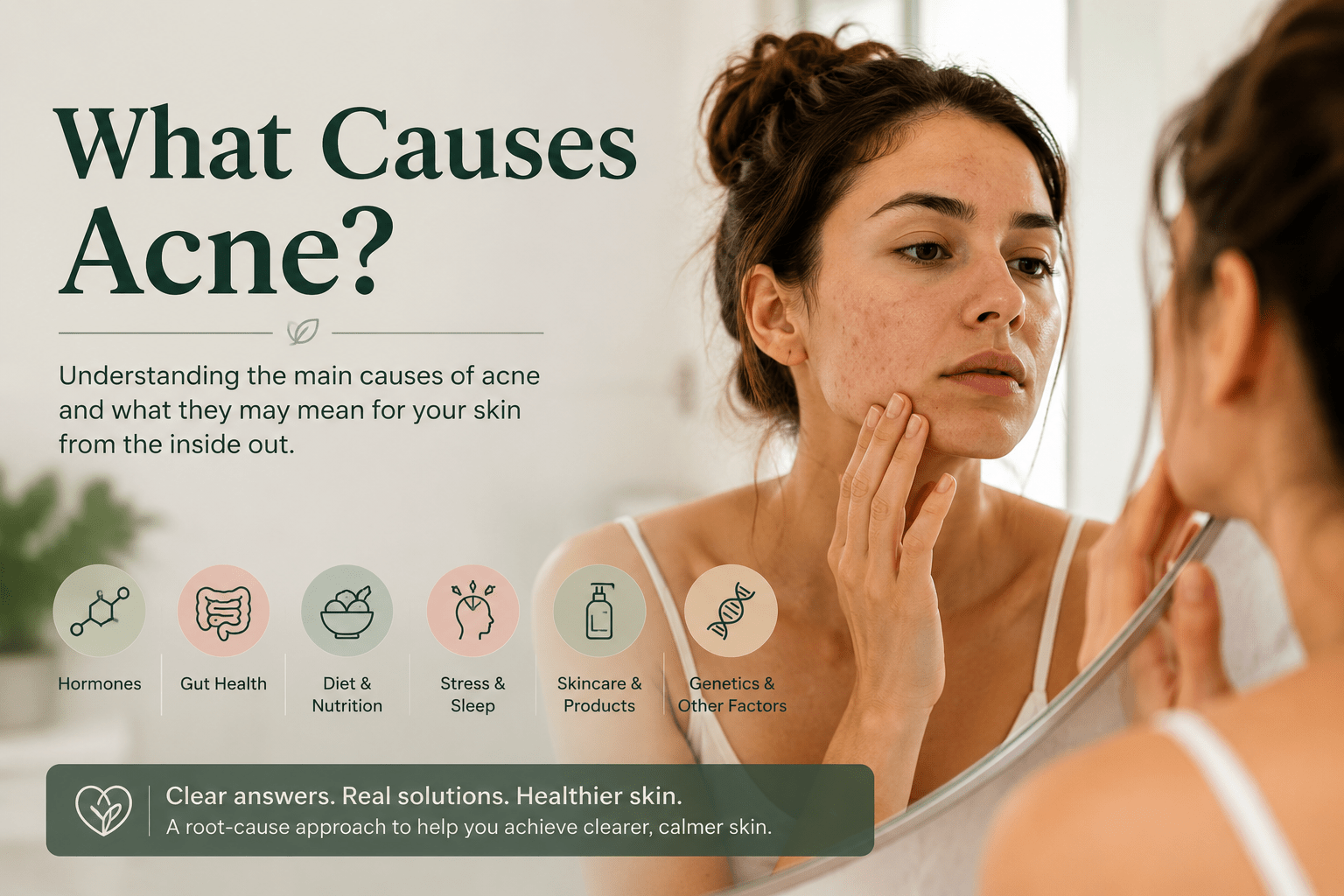
Acne usually develops when several processes happen together. Oil production increases, pores become blocked, inflammation builds, bacteria may become involved, and the skin struggles to clear the blockage properly.
For one person, hormones may be the biggest driver. For another, stress, gut health, food triggers, skincare irritation, medication, genetics or inflammation may be more relevant.
This is why two people can have similar-looking acne but need very different support.
💡 In Plain English
Acne is rarely caused by one thing. It usually happens when oil, blocked pores, inflammation, bacteria, hormones and lifestyle factors overlap. The most useful question is not only “what causes acne?” but “what is driving my acne?”
✅ Key Takeaways
- Acne is usually multifactorial, meaning several factors can contribute at the same time.
- The main acne processes include excess oil production, blocked pores, inflammation and acne-associated bacteria.
- Hormones, stress, gut health, diet, blood sugar balance, skincare, medication and genetics may all influence acne.
- Acne location can offer clues, but it cannot diagnose the cause on its own.
- Persistent, painful, cystic or scarring acne should be assessed by a GP or dermatologist.
When someone asks what causes acne, I rarely think of one single cause. I want to understand the full pattern: hormones, digestion, stress, sleep, diet, skincare, medication history, nutrient status and inflammation. Acne is often the result of several systems interacting.
Beth Mulvey, Registered Nutritional Therapist
How Does Acne Develop?
Acne develops in the pilosebaceous unit, which includes the hair follicle and oil gland.
A simplified acne process looks like this:
- Oil production increases
- Dead skin cells build up inside the pore
- The pore becomes blocked
- Acne-associated bacteria may multiply inside the blocked follicle
- The immune system responds
- Inflammation develops
- Spots, pustules, nodules or cysts may form
This process can create different types of acne, including blackheads, whiteheads, papules, pustules, nodules and cystic acne.
If you want to understand the different forms acne can take, read
Different Types of Acne.
🔬 Research Snapshot
Acne is recognised as a chronic inflammatory skin condition involving the hair follicle and oil gland. Sebum production, follicle blockage, inflammation, acne-associated bacteria, hormones and genetics can all contribute to acne development.
1. Hormones
Hormones are one of the most common acne drivers, especially during puberty, adulthood, stress, menstrual cycle changes, medication changes or hormone-related conditions.
Androgens are hormones naturally present in all bodies. They can increase sebum production, which may make pores more likely to block and become inflamed.
Hormonal acne may be more likely if acne:
- Appears around the chin, jawline, lower cheeks or neck
- Feels deep, sore or cystic
- Continues into adulthood
- Flares during stress or poor sleep
- Flares around the menstrual cycle, where relevant
- Appears alongside PCOS symptoms, where relevant
Hormonal acne can affect men and women. It is not only a women’s issue.
If your acne feels hormone-related, read
Foods for Hormonal Acne,
Acne and PCOS and
Jawline Acne.
2. Excess Oil Production
Sebum is the oily substance produced by sebaceous glands. It helps protect and lubricate the skin, but too much sebum can contribute to clogged pores.
Oil production may be influenced by:
- Androgen activity
- Puberty
- Stress hormones
- Genetics
- Hormone-related conditions
- Some medications
- Skin barrier disruption
Oily skin does not mean your skin is dirty. It means your oil glands may be more active or more responsive to hormonal signals.
💡 In Plain English
Oil is normal and your skin needs it. Acne becomes more likely when excess oil combines with dead skin cells, blocked pores and inflammation.
3. Blocked Pores
Blocked pores are central to acne development. A pore can become blocked when oil and dead skin cells build up inside the follicle.
Blocked pores can appear as:
- Blackheads
- Whiteheads
- Small bumps under the skin
- Congested skin texture
- Inflamed spots if irritation develops
Blocked pores may be influenced by oil production, skin cell turnover, makeup, skincare products, sunscreen, hair products, sweat, friction or not removing products properly.
If you are considering acne ingredients, read
Salicylic Acid or Benzoyl Peroxide for Acne.
4. Inflammation
Acne is not only about blocked pores. Inflammation plays a major role, especially in red, painful, swollen or cystic breakouts.
Inflammation may be influenced by:
- Stress
- Poor sleep
- Blood sugar imbalance
- Gut health
- Diet quality
- Low intake of anti-inflammatory nutrients
- Skin barrier irritation
- Underlying health patterns
Inflammatory acne may look red, sore, swollen, angry or slow to heal.
Nutrients such as omega-3 fats, zinc, vitamin D and magnesium may be relevant for some people, depending on diet, symptoms and wider health patterns. You can read more in
Omega-3 and Acne,
Is Zinc Good for Acne?,
Vitamin D and Acne and
Magnesium and Acne.
5. Acne-Associated Bacteria
Acne is sometimes described as bacterial acne, but this can be misleading.
The bacteria linked with acne, often called
Cutibacterium acnes, naturally lives on the skin. It is not simply an infection from poor hygiene.
Problems may arise when the follicle becomes blocked, oil builds up and the skin environment changes. This can contribute to inflammation and immune activity.
🌿 Good to Know
Acne bacteria are not the same as “dirty skin”. Over-washing, scrubbing or using harsh products can irritate the skin barrier and may make inflammation worse.
If you are unsure whether your spots are hormonal, bacterial or fungal acne-like bumps, read
Hormonal Acne vs Bacterial Acne vs Fungal Acne.
6. Gut Health
Gut health does not directly cause acne in everyone. However, the gut may influence several systems involved in acne, including inflammation, immune function, nutrient absorption, blood sugar balance and hormone metabolism.
Gut health may be worth exploring if acne appears alongside:
- Bloating
- Constipation
- Diarrhoea or loose stools
- Reflux or indigestion
- IBS-type symptoms
- Food reactions
- Low energy after meals
- Frequent antibiotic use in the past
This connection is often called the gut-skin axis.
💡 In Plain English
Your gut and skin are not separate. If your digestion is inflamed, sluggish or imbalanced, it may affect immune activity, nutrient absorption and inflammation, which can influence acne in some people.
Read
Can Gut Health Cause Acne? and
The Gut-Skin Axis.
7. Diet and Blood Sugar Balance
Food does not cause acne for everyone, but diet can influence acne-related pathways in some people.
Research has explored links between acne and high-glycaemic diets, dairy intake, Western dietary patterns and inflammation.
Dietary factors that may be relevant include:
- Frequent high-sugar foods
- High-glycaemic meals
- Dairy in some people
- Whey protein in some people
- Low protein intake
- Low fibre intake
- Low intake of omega-3 fats
- Low intake of zinc and other skin-supportive nutrients
This does not mean you need to follow a perfect acne diet. It means food may be one part of the wider picture.
🔬 Research Snapshot
Research suggests high-glycaemic diets may be associated with acne development and severity in some people. Dairy, especially milk, has also been associated with acne in some studies, although it does not affect everyone.
For more detail, read
Foods That May Trigger Acne,
Does Dairy Cause Acne? and
Foods for Hormonal Acne.
8. Stress and Poor Sleep
Stress does not usually cause acne alone, but it can make acne-prone skin more reactive.
Stress may influence:
- Cortisol patterns
- Oil production
- Inflammation
- Blood sugar balance
- Sleep quality
- Food choices and cravings
- Gut function
- Skin healing
Poor sleep can also affect immune function, hormone regulation, cravings, stress resilience and tissue repair.
If acne worsens during stressful periods, this does not mean it is “all in your head”. Stress creates real biological changes that may influence the skin.
9. Skincare, Makeup and Skin Barrier Irritation
Skincare can help acne, but it can also aggravate acne-prone skin if products are too harsh, too heavy or poorly matched to your skin.
Possible skincare-related contributors include:
- Over-cleansing
- Scrubbing the skin
- Using too many active ingredients
- Heavy moisturisers or oils
- Comedogenic makeup
- Thick sunscreens
- Not removing makeup or SPF properly
- Damaging the skin barrier
A damaged skin barrier may feel dry, tight, flaky, sore, hot, itchy or more reactive than usual.
⚠️ Avoid Overloading Your Skin
If your skin becomes more red, sore, dry, flaky or inflamed after starting acne products, your skin barrier may be irritated. Stronger is not always better.
10. Genetics
Genetics can influence how acne-prone your skin is.
Your genes may affect:
- How much oil your skin produces
- How your pores behave
- How your immune system responds
- How easily inflammation develops
- Whether you are more prone to scarring
- How your skin responds to hormones
If acne runs in your family, this may partly explain why you are more prone to breakouts. However, genetics are not the whole story. Lifestyle, diet, stress, skincare, hormones and gut health may still influence how your skin behaves.
11. Medications and Supplements
Some medications and supplements may contribute to acne or acne-like breakouts in some people.
Possible examples include:
- Corticosteroids
- Some hormone-related medications
- Testosterone or anabolic steroid use
- Lithium
- Some anti-seizure medications
- High-dose vitamin B12 in some people
- Whey protein in some people
- Multiple supplements started at once
Do not stop prescribed medication without speaking to your GP or prescribing clinician.
If acne appears suddenly after starting a medication or supplement, it is worth discussing this with a healthcare professional.
12. Sweat, Friction and Lifestyle Factors
Sweat, friction and pressure can contribute to acne, especially on the forehead, neck, chest, back and shoulders.
Common triggers may include:
- Helmets
- Hats
- Masks
- Backpacks
- Tight gym clothing
- Sports equipment
- Work uniforms
- Hair products
- Body lotions and oils
This can be especially relevant for body acne.
If acne appears in a specific location, read
Acne by Location. You may also find the guides on
Back Acne,
Shoulder Acne,
Forehead Acne and
Neck Acne helpful.
Can Acne Have More Than One Cause?
Yes. This is one of the most important things to understand.
Acne is rarely caused by one factor alone.
Two people may both have cheek acne, but one person’s biggest trigger may be skincare irritation and pillowcase contact, while another person may have inflammation, gut symptoms and stress-related flare-ups.
Two people may both have jawline acne, but one may have PCOS-related hormone patterns while another may have shaving irritation, beard product build-up or stress-related breakouts.
Person A
Jawline acne linked with hormone patterns, blood sugar crashes and stress.
Person B
Forehead acne linked with hair products, sweat and fungal acne-like bumps.
Person C
Back acne linked with tight gym clothing, whey protein and delayed showering.
Person D
Cheek acne linked with makeup, pillowcases, food triggers and gut symptoms.
The acne may look similar, but the support needed may be completely different.
What Your Acne Location May Suggest
Acne location does not diagnose the cause, but it can offer useful clues.
📍 Chin Acne
Often discussed with hormonal patterns, but skincare, stress, food triggers and digestion may also contribute.
📍 Jawline Acne
May involve hormones, shaving, beard products, stress, gut health or friction.
📍 Forehead Acne
May be linked with hair products, sweat, hats, helmets, skincare or folliculitis.
📍 Cheek Acne
May involve phones, pillowcases, makeup, masks, shaving, gut health or inflammation.
📍 Back Acne
May involve sweat, friction, gym clothing, body products, hormones or folliculitis.
📍 Shoulder Acne
May involve backpacks, straps, sportswear, sweat, hair products or body acne patterns.
Read the full guide here:
Acne by Location: What Different Breakout Areas May Tell You.
Signs It May Be Time to Look Deeper
It may be worth taking a more personalised approach if your acne:
🔎 Signs Your Acne May Need a Root-Cause Approach
- Keeps returning despite consistent skincare
- Is painful, inflamed or cystic
- Leaves scars or dark marks
- Flares with stress or poor sleep
- Appears alongside bloating, constipation or IBS-type symptoms
- Appears alongside irregular periods or possible PCOS symptoms, where relevant
- Worsens after certain foods or supplements
- Appears on the face and body
- Has not improved despite trying multiple products
This does not mean something serious is always happening. It simply means your acne may need a wider view.
When to Seek Medical Support
Acne should be assessed by a GP or dermatologist if it is severe, painful, cystic, scarring or affecting your mental wellbeing.
You should also seek medical support if:
- Acne appears suddenly and severely
- Breakouts are infected-looking
- Spots are very itchy, spreading or unusual-looking
- There are signs of PCOS or hormone-related concerns
- Acne is leaving scars
- Over-the-counter products are not helping
- Your confidence or mental health is being affected
Nutritional therapy can support the wider picture, but it should not replace medical care where acne is severe, scarring, infected-looking or linked with possible medical concerns.
How to Start Understanding What Causes Your Acne
Instead of changing everything at once, it can help to track patterns.
You may want to notice:
- Where acne appears
- What the spots look like
- Whether they are painful, itchy, cystic or inflamed
- Whether breakouts flare with stress
- Whether sleep affects your skin
- Whether certain foods or supplements seem linked
- Whether digestion changes alongside acne
- Whether skincare products improve or irritate the skin
- Whether sweat, friction or clothing affects body acne
A food, skin and symptom diary for 2–4 weeks can sometimes reveal useful patterns.
🌿 Good to Know
Try not to change five things at once. If your skin improves or worsens, you will not know what caused the change. A structured approach gives you better information than guessing.
What This Means For You
Acne is not a sign that you are dirty or doing everything wrong.
It is a complex inflammatory skin condition that can be influenced by hormones, oil production, blocked pores, bacteria, genetics, stress, diet, gut health, skincare, medication, sweat, friction and lifestyle factors.
The most useful approach is to identify which factors are most relevant to you.
For a practical step-by-step guide, read
How to Get Rid of Acne.
If you want to see how a root-cause approach can work in real life, read the
Acne Case Study.
Frequently Asked Questions
What causes acne?
Acne is usually caused by several factors working together, including excess oil production, blocked pores, inflammation, acne-associated bacteria, hormones, genetics, stress, diet, skincare, gut health and lifestyle factors.
Is acne caused by dirty skin?
No. Acne is not caused simply by dirty skin. Over-washing or scrubbing can irritate the skin barrier and may make inflammation worse. Acne is usually influenced by internal and external factors.
What causes adult acne?
Adult acne may be linked with hormones, stress, poor sleep, skincare products, medication changes, gut health, diet, inflammation, blood sugar balance or genetics. It often needs a wider approach than skincare alone.
Can hormones cause acne?
Yes. Hormones, especially androgens, can increase oil production and contribute to blocked pores and inflammation. Hormonal acne can affect men and women.
Can gut health cause acne?
Gut health is unlikely to be the only cause of acne, but it may contribute in some people through inflammation, immune regulation, nutrient absorption, blood sugar balance and hormone metabolism.
Can food cause acne?
Food does not cause acne for everyone, but some people notice acne flares with high-glycaemic foods, high-sugar foods, dairy or whey protein. Diet may also influence inflammation, blood sugar and nutrient status.
Can stress cause acne?
Stress may worsen acne in some people by affecting hormones, inflammation, sleep, blood sugar balance, cravings and skin healing. Stress is rarely the only cause, but it can be an important trigger.
Why does my acne keep coming back?
Acne may keep returning if the underlying drivers have not been addressed. These may include hormones, stress, gut health, food triggers, skincare irritation, inflammation, medication, nutrient status or lifestyle factors.
Final Thoughts
Acne is rarely caused by one single thing.
The main acne processes include excess oil, blocked pores, inflammation and acne-associated bacteria. But these processes may be influenced by hormones, genetics, stress, gut health, diet, blood sugar balance, skincare, medication, sweat, friction and lifestyle.
This is why generic acne advice often fails. Your acne pattern matters.
If your acne keeps returning, the goal is not to blame one food, one product or one habit. The goal is to understand what your skin may be reflecting and create a realistic plan that supports your body as a whole.
Need Help Understanding What Is Causing Your Acne?
If your acne keeps returning and you feel unsure whether it is linked with hormones, gut health, food triggers, stress, skincare, inflammation or something else, you do not have to keep guessing.
At VitaminBeth, we use a personalised, root-cause approach to help identify what may be contributing to acne, including gut health, hormones, inflammation, stress, diet and nutrient status.
Learn more about the Skin Therapy Programme
📚 Continue Your Acne Learning
You’re reading one of VitaminBeth’s acne guides. Visit the Acne Resource Centre to explore all of our evidence-informed articles on acne causes, hormones, gut health, nutrition, lifestyle and personalised support in one place.
References
- DermNet (2023) ‘Acne vulgaris’. Available at: https://dermnetnz.org/topics/acne-vulgaris
- NICE (2026) ‘Acne vulgaris: management’. Available at: https://www.nice.org.uk/guidance/ng198
- Sutaria, A.H., Masood, S. and Schlessinger, J. (2023) ‘Acne Vulgaris’, StatPearls. Available at: https://www.ncbi.nlm.nih.gov/books/NBK459173/
- Baldwin, H. and Tan, J. (2021) ‘Effects of diet on acne and its response to treatment’, American Journal of Clinical Dermatology, 22(1), pp.55–65. Available at: https://pmc.ncbi.nlm.nih.gov/articles/PMC7847434/
- Meixiong, J. and Bhutani, T. (2022) ‘Diet and acne: A systematic review’, JAAD International, 7, pp.95–112. Available at: https://pmc.ncbi.nlm.nih.gov/articles/PMC8971946/
- Juhl, C.R. et al. (2018) ‘Dairy intake and acne vulgaris: A systematic review and meta-analysis of 78,529 children, adolescents, and young adults’, Nutrients, 10(8), p.1049. Available at: https://pubmed.ncbi.nlm.nih.gov/30096883/